

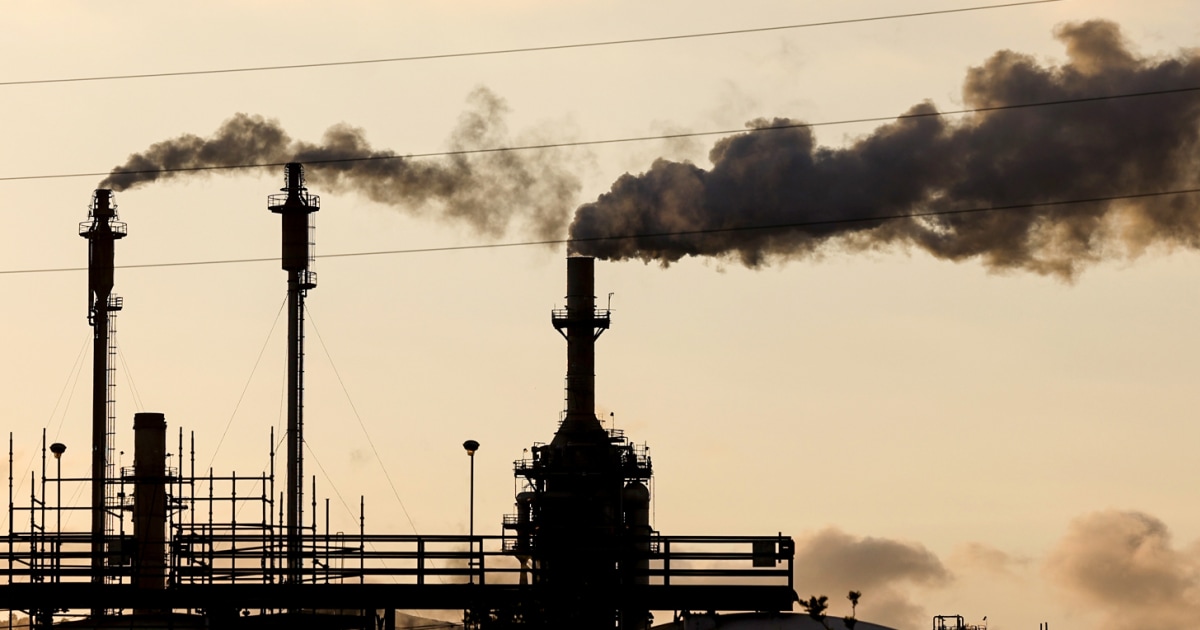
US greenhouse gas emissions increased by about 1.3% in 2022, rebounding for the second year in a row after disruptions caused by the pandemic in high-emitting industries like shipping and travel.
That’s according to a preliminary analysis by the Rhodium Group, a research company that tracks annual emissions and US progress toward its climate goals.
Emissions fell by around 10.6% in 2020 as the US acknowledged the consequences of the pandemic. As the economy picked up in 2021, so did US greenhouse gases, rising 6.5%.
Before the pandemic, emissions were slightly down. The new analysis suggests that emissions are back on that trend line despite several volatile years.
“Greenhouse gas emissions have yet to return to 2019 levels. They will potentially never go up to that level again. Time will tell on that front,” said Ben King, co-author of the report and associate director of Rhodium Group’s Energy and Climate practice. “We continue on the trajectory of decline. The challenge is that we need big reductions.”
Rhodium’s analysis suggests that the US is far from meeting fast-approaching climate targets in 2025 and 2030. Cuts to landmark climate bills Congress passed in 2022, the infrastructure bill, and the of Reducing Inflation, have not yet been launched. Even then, the US is expected to miss its targets.

“If we were to stop today and not make any policy adjustments and just rely on the Inflation Reduction Act, we wouldn’t make it,” said King, who leads federal policy research at Rhodium. «Further political action will be absolutely necessary to achieve those goals.»
The US aims to reduce greenhouse gas emissions by at least 50% from 2005 levels by 2030. Rhodium’s analysis suggests the US has taken steps that will reduce emissions by 32% and 42% by 2030, King said.
Some notable emissions trends unfolded in the past year.
For the first time, renewables surpassed coal in electricity generation. Wind, solar, hydro and other renewables accounted for about 22% of total electric power, while coal dropped to 20%.
But the gains from cleaner energy sources were offset by rising emissions from buildings, which rose about 6% last year, largely due to home heating needs during a relatively cold winter. Emissions from air travel increased and returned to levels close to 2019.
Rhodium’s analysis for 2022 is preliminary. The independent research group collects real-time data on energy markets and transportation fuels to estimate annual emissions.
The Environmental Protection Agency publishes official, detailed greenhouse gas inventories about 15 months after the end of the year. Rhodium analysis is typically accurate to within a few fractions of a percentage point.


