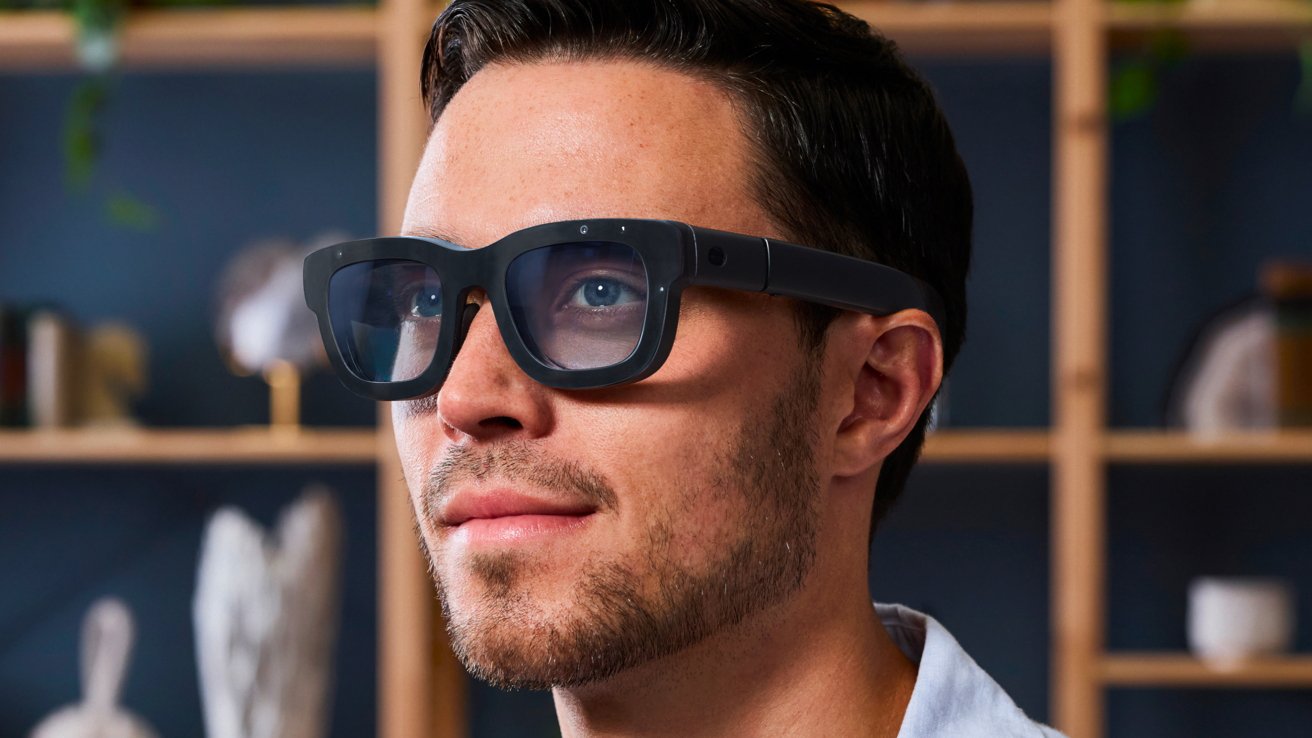
Augmented reality glasses and spatial computing platforms are evolving from niche experimental devices into essential computing instruments, a transition propelled by breakthroughs in hardware miniaturization, artificial intelligence, networking, and robust software ecosystems, all converging to reshape how digital experiences merge with the physical world and transform the ways people work, study, and engage with information.
Focusing on Compact Form and Enhanced Wearability in Fundamental Design
One of the most influential trends is the push toward lighter, more comfortable AR glasses that resemble everyday eyewear. Early headsets were bulky and power-hungry, limiting adoption. New generations focus on balanced weight distribution, thinner waveguides, and low-power components.
- MicroLED and next‑generation OLED displays deliver greater luminance while drawing less power.
- Custom silicon, frequently engineered internally by leading platform makers, minimizes thermal output and extends battery performance.
- Refinements in optical waveguides provide broader viewing angles without adding lens bulk.
These improvements are critical for long-duration use cases such as navigation, enterprise workflows, and social interaction.
AI-Driven Contextual Insights and Advanced On-Device Intelligence
Artificial intelligence is emerging as the central driver of spatial computing, as contemporary AR glasses depend more and more on embedded AI to analyze their environment, identify objects, and interpret user intent instantly.
- Computer vision models generate spatial maps of rooms, surfaces, and objects to place digital elements with precise alignment.
- Natural language processing enables conversational interactions that take the place of menus or physical controllers.
- Personalization engines tailor content according to user behavior, location, and individual preferences.
For instance, enterprise AR platforms can deliver instant object recognition that detects machinery components and projects guided steps, helping reduce both training time and errors.
Spatial Operating Systems and Integrated Platform Ecosystems
Spatial computing is no longer just about hardware; it depends on robust operating systems and developer platforms. A clear trend is the emergence of spatial operating systems that treat three-dimensional space as the primary interface.
Key characteristics include:
- Durable spatial anchors built to preserve where digital elements remain positioned across successive sessions.
- Unified development frameworks that allow apps to run fluidly on glasses, headsets, tablets, and desktop platforms.
- App marketplaces and monetization approaches tailored expressly for immersive digital spaces.
This platform approach mirrors the evolution of smartphones, where strong ecosystems ultimately determined market leaders.
Bringing Together Cloud and Edge Computing
AR glasses are increasingly designed as lightweight front-end devices that rely on powerful cloud and edge infrastructures, reducing the need for heavy onboard processing while still enabling advanced functionality.
- Edge computing lowers latency for spatial mapping and real-time collaboration.
- Cloud rendering supports high-fidelity 3D graphics beyond local hardware limits.
- Shared spatial environments allow multiple users to see and interact with the same digital objects.
Industrial and design teams are already leveraging these capabilities to collaborate on 3D models from different continents, speeding up development timelines and lowering travel expenses.
Enterprise-Driven Adoption Accelerating Organizational Growth
Although consumer adoption continues to rise, enterprise-focused needs increasingly guide key platform choices, with industries like manufacturing, healthcare, logistics, and field services demonstrating a clear return on investment.
- Remote assistance tools reduce equipment downtime and travel expenses.
- AR-guided assembly and maintenance improve accuracy and speed.
- Medical visualization tools assist in surgical planning and training.
Market data from industry analysts consistently shows that enterprise AR deployments can deliver task-specific productivity gains of roughly 20 to 30 percent.
Privacy, Security, and Ethical Design
As AR glasses continuously sense the environment, privacy and security concerns are shaping both technology and regulation. Platforms are incorporating visible recording indicators, local data processing, and stricter permission systems.
Trends in this area include:
- Device-side processing that helps cut down on unnecessary data transmissions.
- Enterprise-grade encryption safeguarding spatial mapping and visual data.
- Design principles that clearly signal whenever cameras or sensors are in operation.
Trust is steadily emerging as a crucial factor that sets consumer-facing products apart.
Interoperability and Open Standards
Another important trend is the push toward interoperability across devices and platforms. Developers and enterprises increasingly demand standards that prevent lock-in and allow shared spatial data.
- Open file formats for 3D assets and spatial maps.
- Cross-platform APIs for tracking, gestures, and spatial anchors.
- Compatibility between AR glasses, mixed reality headsets, and mobile devices.
This trend strengthens ecosystem health and hastens innovation by reducing development hurdles.
The Broader Shift Toward Ambient Computing
AR glasses and spatial computing platforms illustrate a broader evolution toward ambient computing, a space where technology recedes into the background and responds naturally to human behavior, with screens no longer confined to fixed rectangles as information appears exactly when and where it is needed.
The merging of lightweight devices, advanced software, and interconnected infrastructure suggests a future where digital layers flow naturally into the physical world, and as these innovations progress, spatial computing is set to become as fundamental as mobile tech, reshaping daily life not with dramatic gestures but through a subtle, constant integration.