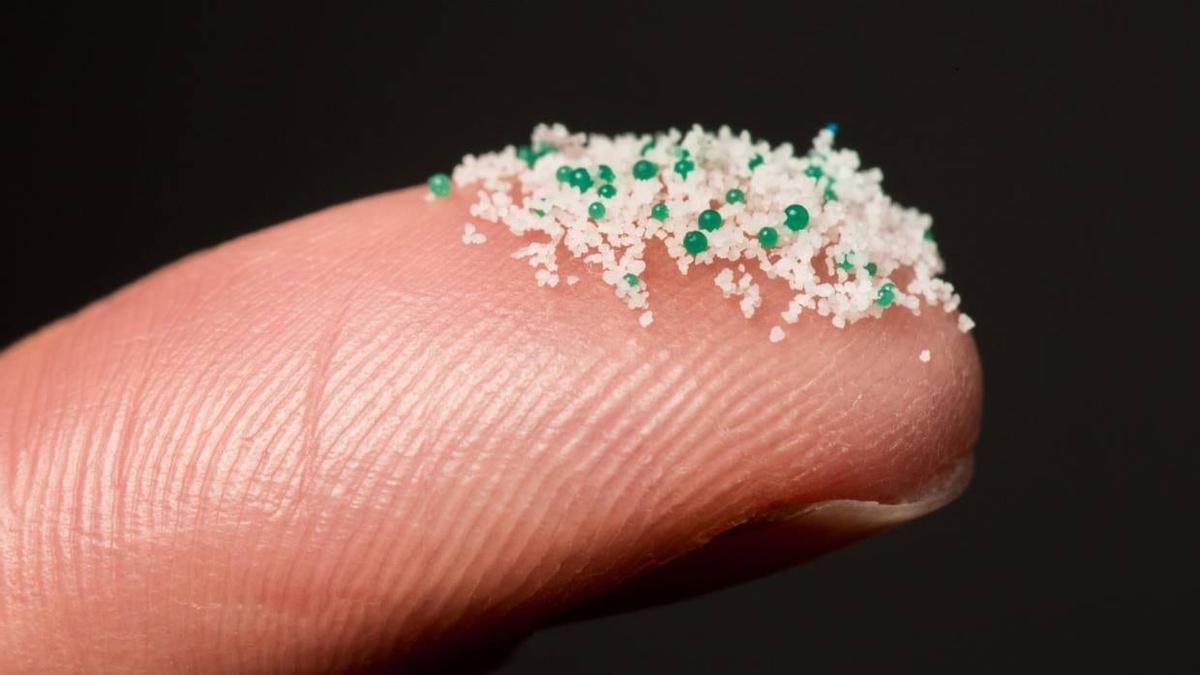
Microplastics already flood all corners of the planet. These tiny fragments of debris, often imperceptible to the human eye, have been found from the top of Everest to the inside of the human body. There are already studies that confirm the presence of these plastics in the intestines, liver and human blood. But how do they get there and, above all, excellent are its effects? According to a study published this Tuesday in the journal ‘Physics of Fluids’, one of the main routes of entry of microplastics into the human body is the respiratory system. It is there where these microscopic residues find a way to ‘sneak’ into our body.
The study, led by an international team of researchers, is based on a computational model specifically designed for understand how microplastics can enter the human body, travel through different systems and, finally, be deposited in our body. To do this, the experts discovered by exploring the movement of different types of microplastics (of different shapes and sizes) in the respiratory system. Next, also discuss how this dynamic might change based on whether a person was breathing faster or slower. From there, the model was able to map the ‘hot spots’ of microplastic accumulation.
Where do they accumulate?
According to this research, microplastics tend to accumulate mainly in the nasal cavity and at the back of the throat. «The anatomically complicated and highly asymmetric shape of the airways (and the complex flow behavior in the nasal cavity and oropharynx) cause microplastics to be deposited in those areas,» explains Mohammad S. Islam, one of the lead authors of this work. In this sense, according to the expert, factors such as the respiratory flow ratethe particle inertia and the anatomical characteristics of each individual it also influences the concentration of microplastics in the body.
But are they the factors that most influence this process? According to the computational model developed for this work, people who breathe faster (that is, those that have a more accelerated respiratory flow) paradoxically are the ones that tend to accumulate the least amount of microplastics in their respiratory system. Simulations also suggest that the largest microplastics (greater than 5.6 microns) tend to be deposited more frequently than smaller ones. Of course, all these findings for now are only limited to a computational study. To check its validity, will have to wait for more detailed investigations in real people.
What is the danger?
More and more studies are warning about the presence of microplastics both in the environment and in the human body. And that, in turn, raises the question of what is the real danger of these elementss. The answer, according to various experts, is that we still do not know to some adequate science what the risks of these compounds are. As explained by the scientist Ethel Eljarrat in an interview with EL PERIÓDICO, «we know that among the more than 3,000 chemical compounds used to manufacture plastic there are at least 60 that are associated with a high health risk. Recent research suggesting that these could act as endocrine disruptors, cause neurological damage and even have carcinogenic effects«.
«Some compounds could act as endocrine disruptors, cause neurological damage and even have carcinogenic effects»
Related news
There are studies that suggest that, on average, humans ingest 120,000 microplastic particles per year. Several investigations have found the presence of microplastics in different types of food (especially in fish and shellfish but also in agricultural products), in compounds like table salt and even in water fountains (from bottled products to the same tap water in big cities like Barcelona and Madrid). Elevated concentrations of these microscopic substances have also been found in the air. Especially in areas where there are high levels of plastic pollution or industrial activities related to this material.
Everything indicates that the toxicity of these substances could depend on their long-term accumulation. Especially considering that many organisms such as humans are not able to metabolize chemical compounds associated with the ingestion of microplastics. For now, although more and more studies are beginning to warn about the consequences of this phenomenon, there is still no conclusive evidence on the damage caused by microplastics. The World Health Organization (WHO), for its part, has called for more in-depth research on this phenomenon and, meanwhile, «do everything possible to reduce plastic pollution«.