

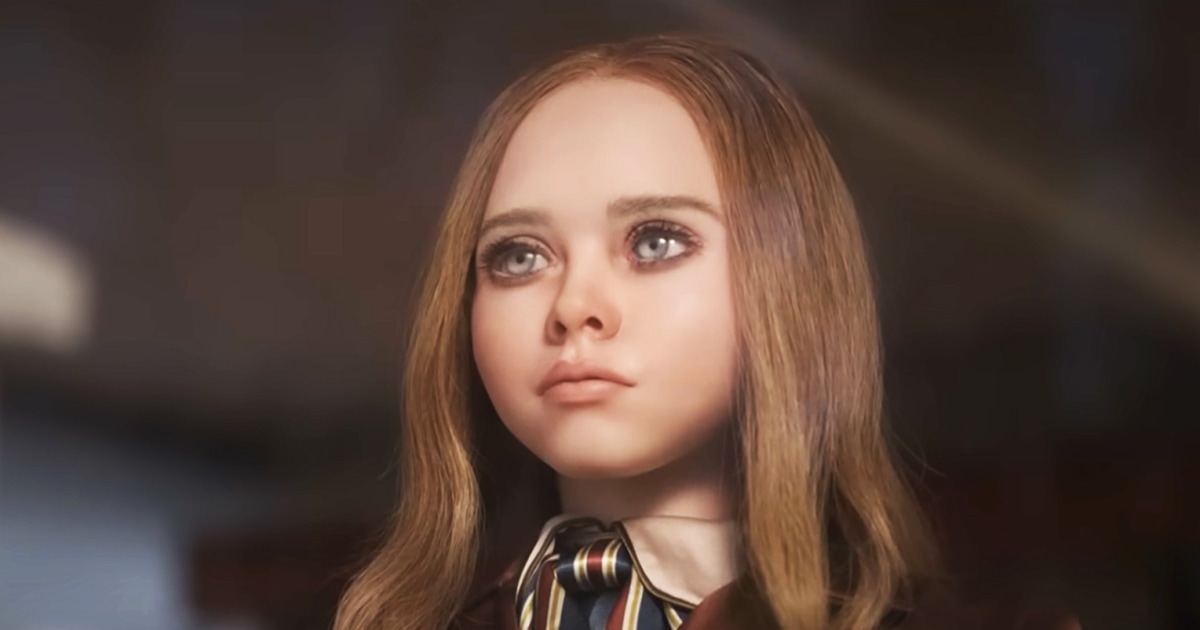

The most chilling moment in Gerard Johnstone’s new horror movie, “M3GAN,” comes early. It comes from Gemma (Allison Williams), who is the head of robotics at «Funki Toys»; Her biggest hit to date has been «PurRpetual Pets,» pet-like robots operated with a combination of artificial intelligence and tablet control.
Now, Gemma casually says that she has used the technology of pet robots to develop the company’s next big product: the title character, a robot doll for children.
It’s meme designed, packed with crazy images, memorable one-liners, and welcoming winks. The filmmakers know exactly what they are doing and the audience has a great time.
It’s not a big deal, is it? It’s a throwaway comment: let your attention wander for a second and you’ll miss it. Except the doll’s AI is partially built from a listening device installed in all the PurRpetual Pets, which observes children’s conversation patterns.
«I didn’t hear that!» exclaims its CEO (Ronny Chieng), and his response is pretty universal: none of us wants to know how well our smart devices and personal assistants are listening, watching, and reacting. And when it comes to the dangers of artificial intelligence, we’d rather imagine the fantastical, blood-soaked disasters of a story like this than the small moral and personal compromises we make every day.
None of which takes anything away from the simple pleasures of “M3GAN,” a movie far better than its early January release date and PG-13 rating. The first month of the calendar year is traditionally the dumping ground for the reddest stepchildren on the studio slate, and a PG-13 rating is usually a bad sign for horror movies, though this one grimly tests the limits of that guideline. It’s tremendously popular and immediately viral – The trailer seems to tell the whole story, beat by beat, but what it can’t convey is the film’s deliciously weird tone, which finds itself at a peculiar juncture of slasher horror and self-aware satire. It’s meme designed, packed with crazy images, memorable one-liners, and welcoming winks. The filmmakers know exactly what they are doing and the audience has a great time.
And it’s not the kind of movie designed to wow us with its narrative ingenuity. It’s a tale as old as time, a «Frankenstein» for the digital age, with generous portions of «Child’s Play» and «The Terminator.» The common flavor of all those ingredients is the juicy theme of playing God, of what happens when we create life, or a reasonable facsimile of it, and the dangers inherent when that form of life begins to think (and feel, and eventually kill) by itself.
The flannel-clad Gemma, just so you know she’s an antisocial nerd, has developed M3GAN, short for Model 3 Generative ANDroid. But her timing couldn’t be better; just as she is putting the finishing touches, she is granted temporary protective custody of Cady (Violet McGraw), her newly orphaned niece in a harrowing prologue sequence. With her cool personality and overall meticulousness, Gemma isn’t terribly motherly, but she quickly realizes that Cady will make a perfect test case for M3GAN, who «pairs» with her childish partner, learning their behaviors and how to be a better friend.
As a character, M3GAN is a marvel of design, combining an actor’s body (Amie Donald), voice (Jenna Davis), animatronics, makeup and special effects. She’s made to look like a demented Olsen twin, and her not-quite-human movements (head to the side, her solid, lithe gait) and too-good-to-be-true personality of hers make her quite creepy even before his inevitable transition to demon. Akela Cooper’s screenplay (from a story invented with prolific horror filmmaker James Wan) checks the boxes carefully, setting up the conflicts, the villains, and the oversights (“Didn’t you code the parental controls?!?” she asks. one of your programmers) that will change the M3GAN switch for the line. The logic at work is sound: her main goal is to protect Cady from harm, and since she’s programmed to learn and recalibrate, she easily becomes a cold-blooded little killing machine when Cady is in danger.
“M3GAN” works at the level of a slasher origin story, believable as horror and just over-the-top enough to keep audiences on their toes (its third act especially is grim and wildly funny). But it also plays, often and effectively, as a scathing comment on our obsession with the convenience that technology brings. A key part of the robot’s sales pitch is that its attention to the boring details of parenting «will leave you with more time, so you can focus on the things that matter to you.» (This notion is illustrated by the image of Gemma relaxing… opening her laptop.) The implication of this statement is that what matters is not your children and their nonsense, raising the provocative question of whether our devices and screens serve to complement or replace us as parents.
The filmmakers underscore this point by surrounding their sci-fi premise with facsimiles of real, current technology: smartphones, smart cars, and personal assistants, the latter in the form of an Alexa-style home assistant named Elsie. That device’s stress opportunities are mostly unexplored, though some fear is raised when it starts asking unscheduled questions and ignoring requests; can’t help but pale in comparison to something like Steven Soderbergh’s «Kimi,» set squarely in the real world, where surveillance, tracking, and the information we willingly feed our devices endangers the protagonist’s life. , instead of an object. of Science fiction.
That, it seems, is where the movies keep getting it wrong about the disturbing possibilities and consequences of artificial intelligence: that the killer robots of “M3GAN” and “Terminator 2: Judgment Day” are such an obvious and overwhelming danger that we have allowed the slow advance of more subtle but equally terrifying threats to our privacy and security, all in the name of ease and convenience. («Humanity kills every day, just to make its existence more bearable,» laughs M3GAN, presumably after doing some reading online about The Longhua facilities of Apple and Foxconn.) The final shot of the film is easy to read as the inevitable setting for the slasher sequel, a guarantee that evil is not permanently vanquished, but temporarily halted. But the real implications of that composition make it the second most horrifying image in the picture.


