

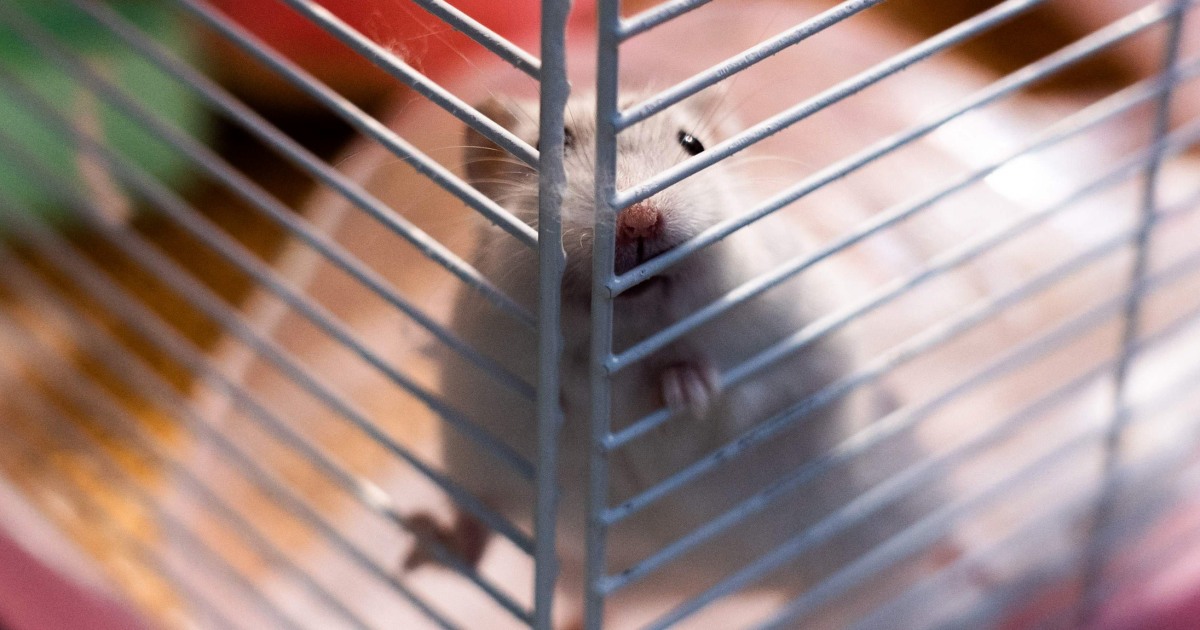
HONG KONG — Hong Kong is lifting a ban on importing hamsters for sale, a year after ordering the culling of more than 2,000 hamsters and other small mammals in an effort to prevent pets from spreading Covid-19 to people.
“Based on the most recent risk assessment and the current situation, this department believes that the import ban on hamsters could be lifted,” the Department of Agriculture, Fisheries and Conservation said in an emailed statement Thursday.
The department said it was preparing for commercial hamster imports to resume in the middle of this month, with all imported hamsters forced to undergo quarantine and released to the market only after they test negative for the coronavirus. In May, the ban on commercial imports of other small mammals such as chinchillas and guinea pigs was lifted.
The Hong Kong government ordered the culling last January after a small virus outbreak was traced to a pet shop called Little Boss that had imported hamsters from the Netherlands. Eleven of the store’s hamsters tested positive for the delta variant, which had not been seen in the city in months.
Hong Kong residents who had recently purchased hamsters were advised to hand over their pets, shops selling hamsters were temporarily closed and an import ban was enacted. Pet owners and animal welfare groups criticized the government’s decision at the time as disproportionate and cruel, and tens of thousands of people signed an online petition against it.

While there is «no doubt» that the hamsters transmitted the virus to a pet store worker, in retrospect the culling of hamsters outside of the infected shipment was «unnecessary,» Vanessa Barrs, a professor of veterinary medicine at the University of Hong Kong City, he told NBC News. Hamsters living in people’s homes are unlikely to have covid, and the culling caused stress for pet owners and tension in the community, she added.
But at the time of the Hong Kong government’s decision last year, the Chinese territory was following a strict «covid zero» approach in line with mainland China, prompting officials to act aggressively. In recent weeks, both Hong Kong and mainland China have eased anti-Covid restrictions that minimize cases and deaths but also cause widespread public frustration.
The Hong Kong Animal Law and Protection Organization, an advocacy group, said the ban on importing hamsters was «one of the most absurd decisions the Hong Kong government has made in response to the Covid-19 pandemic.»
The real harm that arose from the incident at the pet store, the group said, was «the fear that the government instilled in pet owners and the subsequent mistreatment of animals in response to this fear.»
Calls to the Little Boss Pet Store office Friday went unanswered.
Louis Yeung, owner of the Chinchilla & Pets Shop in Hong Kong, said that although he received compensation from the government, the import ban severely hurt his business and supported his uprising.
“The world is removing Covid restrictions on humans. Why should we continue to maintain unreasonable restrictions on small animals? he said.
Animal-to-human transmission of Covid-19 is rare and usually occurs when animals are kept in large groups, such as in warehouses or farms. Domestic hamsters in Hong Kong are one of the few cases reported worldwide of infected animals passing the virus to people, according to the Centers for Disease Control and Prevention. Other known cases of animal-to-human transmission involve a mink farm in Denmark, white-tailed deer in Canada, and a cat in Thailand.


