

Each year, EPA distributes federal funds for drinking water and waste infrastructure through state «revolving funds» that issue low-interest and forgivable loans and grants. That funding has been critical for Baltimore: Over the past 20 years, the city has received nearly $2 billion through Maryland’s revolving funds and through the Water Infrastructure Financing and Innovation Act program, a federal credit administered by the EPA.
But the $50 billion that the Bipartisan Infrastructure Act set aside for water infrastructure improvements represents the largest single investment in water the federal government has ever made. The dollars will be used to install new infrastructure, replace lead service lines, and clean up emerging water contaminants such as PFAS, among other projects. The EPA has specifically directed states to prioritize projects in historically underserved communities.
In Baltimore, the funds will be used to upgrade major components of the city’s wastewater treatment and water distribution facilities.
Continued federal investment, Garbark said, is «the only way we can really modernize and fix these things.»
“We need a lot more than that to really become the best-maintained system that we need,” he added.
‘In all the country’
Even those billions are a drop in the ocean.
The American Society of Civil Engineers (ASCE) rates the nation’s water infrastructure a C minus, based on its most recent report. There is a water main break every two minutes and an estimated 6 billion gallons of treated water are lost in the US every day, according to the group.
Water infrastructure is inherently expensive to build and maintain, said Upmanu Lall, a civil engineer and director of the Columbia University Water Center. By EPA’s own estimates, the nation’s drinking water and wastewater infrastructure will require more than $744 billion over the next 20 years, just to meet existing environmental and health standards.
The nation’s water infrastructure problems are due in large part to the fact that the federal government’s share of capital investment in water infrastructure has declined dramatically over the past five decades, he said.
The federal government’s share of capital spending in the water sector fell from 63% in 1977 to about 9% of total capital spending in 2017, according to the ASCE. That shifted most of the responsibility for raising funds to state and local governments and left water utility managers to deal with aging water systems by deferring upgrades for as long as possible and funding upgrades. at taxpayer expense.
“It’s not a surprise when you look across the country, it’s the smaller communities that are in trouble,” Lall said. «And the other areas that are in trouble are the slightly larger cities that have been depopulating.»
Over the past year, EPA’s Regan has visited Lowndes County, Alabama, where residents without septic systems are forced to pipe waste directly from their homes into nearby waterways or backyards. She also visited McDowell County, West Virginia, where some residents have to collect drinking water from roadside springs. Both West Virginia and Alabama received millions in funding through the infrastructure act.

“These are unacceptable conditions that we are seeing across the country,” Regan said.
“These are the communities that are most at risk from a health standpoint,” he added. “These are also communities that have suffered from lack of investment and indifference. And so we want to put those who need these resources the most at the front of the line.”
‘Maybe we shouldn’t drink it’
Ongoing infrastructure problems and headline-dominating water crises from Flint to Jackson to Baltimore have created a trust gap in low-income neighborhoods and communities of color across the country, Exum said.
“I think we’re now entering that dangerous place where people ask, ‘Can we trust the water system? Maybe we shouldn’t drink it,’” she said.
In Baltimore, as throughout the country, the costs of infrastructure improvements and repairs are passed on to consumers. By doing so, Baltimore’s water rates have risen faster than the national average. A 2018 study found that typical residential bills in Baltimore increased by 127 percent from 2010 to 2018, and estimated bills would triple the 2010 average by 2022. Last year, the city launched a program to help residents pay their water bills.
“Every time we respond to an emergency, that’s more expensive,” Garbark said. “That takes away our income and our money that we have to use for our capital projects. Every dollar we spend has to be collected from our taxpayers.”
For residents who have experienced sewer overflows, discolored water and other problems, those high bills are hard to balance.
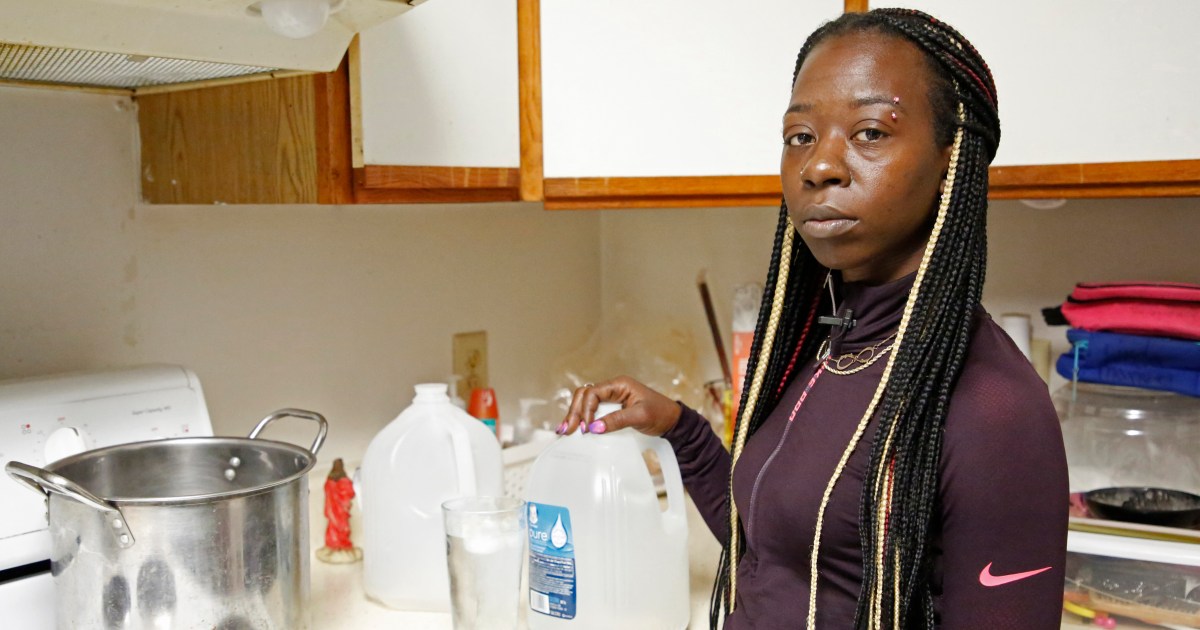
Whether the problem is in her building or in the city’s pipes, the water that comes out of the faucet at Stacy Beahm’s South Baltimore home is often brown and gritty. Her toilet water stains the bowl yellow. Every month, she spends about $150 a month on bottled water and brings home heavy jugs for herself and her children. That’s on top of her water bill, which averages $200 a month.
Sometimes, she said, she has to choose between paying the bill or buying food.
“I still have to pay a water bill for the water that goes down the drain,” he said.
“Would you trust tan and brown water? I don’t and I’m afraid to give it to my kids. I’m pretty sure nobody wants to drink dirty water.»
It’s that trust that Regan said the federal government needs to help restore.
“As we rebuild the water infrastructure, we also rebuild trust with the communities,” Regan said. “I can understand the concern that people across the country have because the water systems have been failing in our communities. It’s time for the government to step up, and that’s what we’re doing.»


