

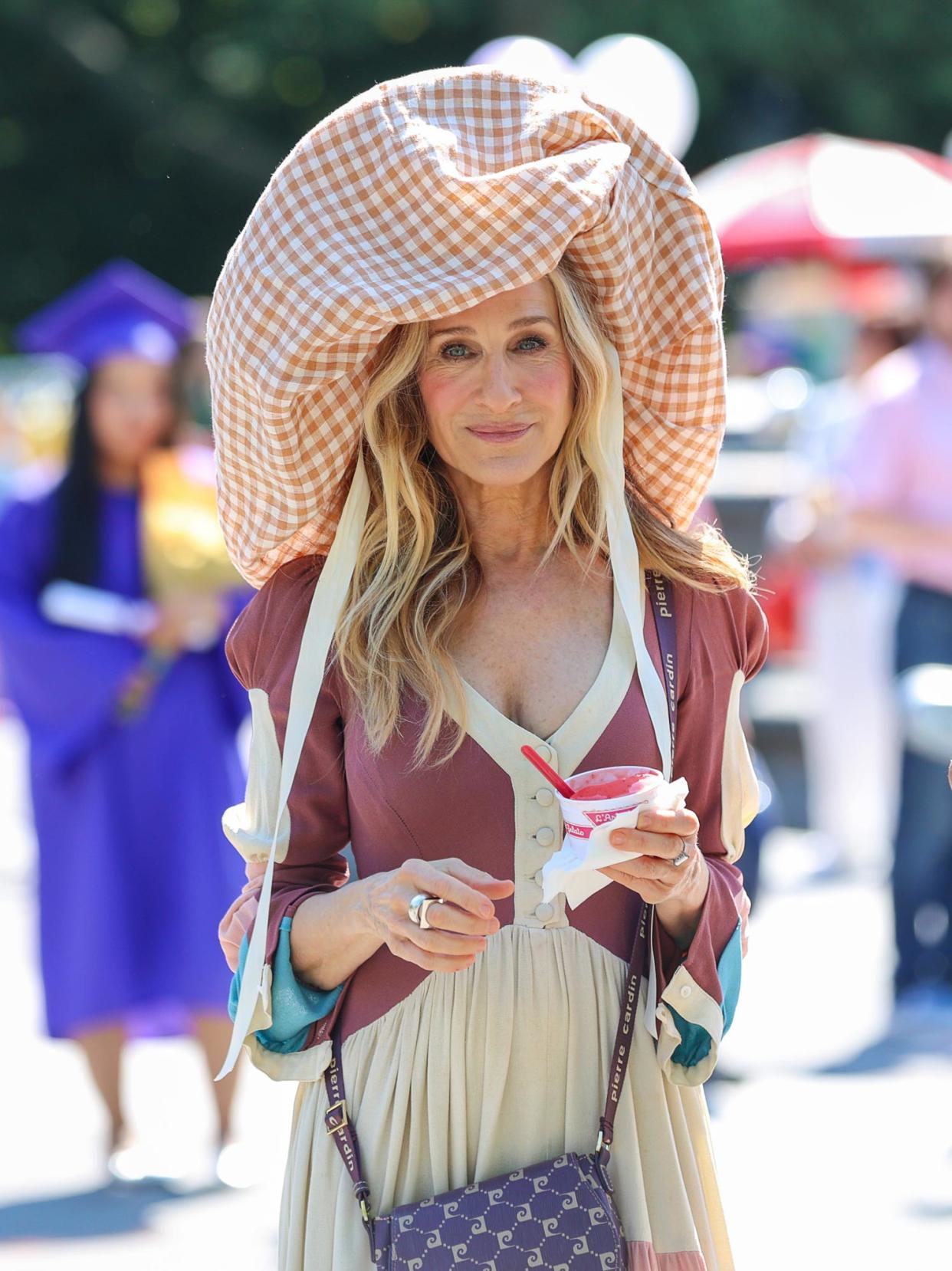
The revival of the iconic series “Sex and the City” through its sequel “And Just Like That…” has led to numerous discussions about modern fashion, particularly with regard to the bold and often eccentric choices made by the characters. Among these choices, one standout moment has captured the attention of audiences and critics alike: the wearing of a hat that many are describing as bordering on performance art. This particular fashion statement has prompted conversations about the evolving nature of style in television and its cultural implications.
Fashion has always been a central theme in “Sex and the City,” with characters like Carrie Bradshaw setting trends and influencing viewers’ perceptions of style. However, “And Just Like That…” takes this to another level by not only revisiting classic looks but also embracing avant-garde pieces that challenge conventional aesthetics. The hat in question serves as a prime example of this trend, prompting viewers to reexamine what fashion means in the context of storytelling and character development.
The hat’s design is striking, characterized by its unconventional shape and vibrant colors. It is more than just an accessory; it functions as a narrative device that reflects the character’s state of mind and personality. As viewers witness the character don this remarkable piece, it becomes clear that the hat is not merely about fashion but also about self-expression and individuality. The boldness of the design resonates with the show’s overarching themes of empowerment and reinvention, particularly in the context of navigating life’s complexities.
Critics have pointed out that the hat’s audacity pushes the boundaries of typical television fashion. While some viewers may find it perplexing or even off-putting, others appreciate its artistic flair and the statement it makes. This division of opinion highlights the broader conversation about the role of fashion in media and its power to evoke strong reactions. In a landscape where viewers are increasingly drawn to authenticity and uniqueness, the hat exemplifies a willingness to take risks in fashion that can be both celebrated and critiqued.
The inclusion of such a bold fashion choice in “And Just Like That…” also reflects the changing dynamics of television storytelling. As contemporary viewers become more engaged with character-driven narratives, the way characters dress can significantly impact their relatability and appeal. The hat serves to elevate the character’s personality, allowing audiences to connect with her journey in a more profound way. This relationship between character and wardrobe underscores the importance of fashion as a storytelling tool in modern television.
Furthermore, the event has ignited conversations on social media, where supporters and fashion aficionados delve into the meaning of the hat within the larger framework of the series. Sites such as Instagram and Twitter have turned into platforms for discussion, where audiences express their thoughts and responses to the style decisions featured in the show. This online conversation enhances the hat’s influence, turning it into an emblem of modern fashion dialogue and societal analysis.
Considering the wider impact, this scene in “And Just Like That…” highlights the changing dynamics of fashion within mainstream media. As cultural standards evolve and stylistic horizons broaden, TV keeps mirroring these transformations through its cast and their decisions. The hat, though potentially unusual, symbolizes a sense of innovation and personal expression that connects with viewers looking for diverse aesthetic representation.
As the series progresses, it will be interesting to see how fashion continues to play a role in shaping characters and their narratives. The response to the hat suggests that viewers are eager for more than just traditional fashion; they are looking for pieces that challenge norms and provoke thought. This desire for innovation in style may push future productions to explore even bolder fashion choices, fostering a culture where creativity can flourish.
In summary, the hat shown in “And Just Like That…” marks a pivotal point in TV fashion, merging style with performance art. Its unique design and the debates it has sparked highlight the changing scenery of fashion within media and underscore the value of self-expression in character development. As viewers keep connecting with the series, the dialogue on fashion is expected to expand, highlighting the influential part style takes in storytelling and cultural reflection. This instance serves as a reminder that fashion goes beyond attire; it is an art form capable of challenging views and sparking conversation in a swiftly evolving world.




:max_bytes(150000):strip_icc()/fashion-designer-coco-chanel--1883-1971----c--early-50-s-89865776-5c85557f46e0fb0001a0be81.jpg "Coco Chanel, Famed Fashion Designer and Executive")