

Two of this summer’s biggest sporting events will look a little different thanks to small but significant changes made to allow female stars to focus solely on their performance and not fear period leaks.
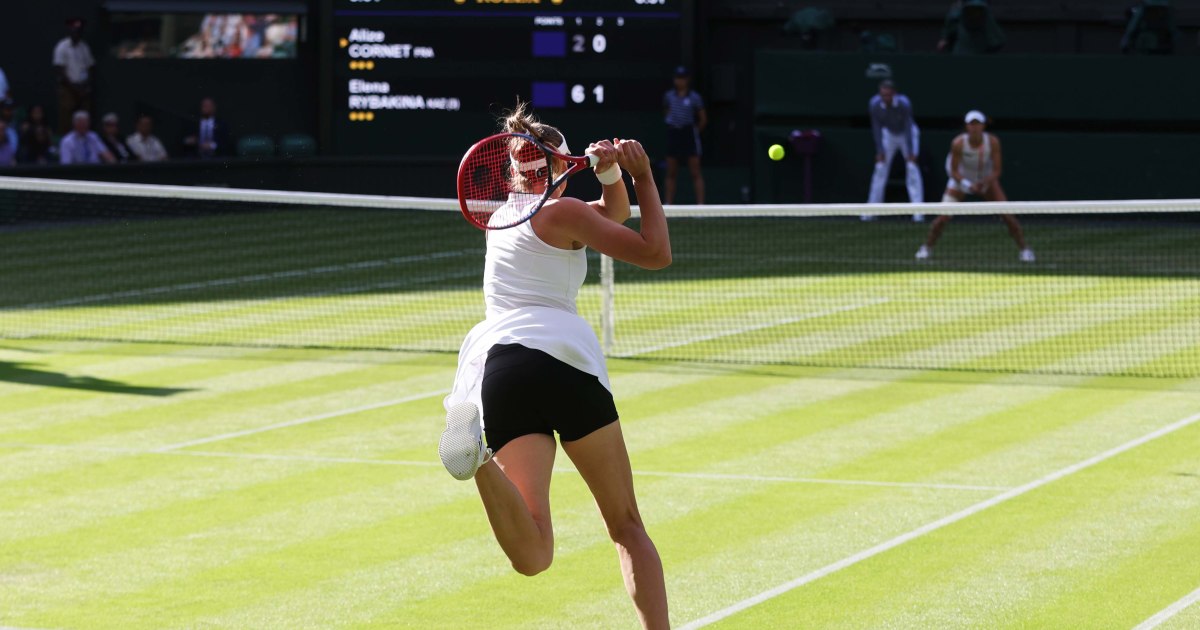
Wimbledon, known for its strict all-white dress code, for the first time allowed female tennis players to wear dark-colored briefs, a change that came after years of complaints from current and former players who said it was an unnecessary source. anxiety.
More period kits have also gained traction in women’s football, just in time for the World Cup in Australia and New Zealand later this month, with several teams moving away from the traditionally white shorts.
The changes shed more light on how menstruation affects female athletes and also reflect women’s growing status as global stars.
American tennis star Coco Gauff She said last week that the change would “remove a lot of stress for me and other girls in the locker room.”
“I had my period last year during Wimbledon and it was very stressful”, Gauff told British broadcaster Sky News. (Sky News is owned by Comcast, the parent company of NBC News.)

Wimbledon, the world’s oldest and most prestigious tennis tournament, has long had the strictest dress code in-game and made it even stricter in 2014, banning even cream and off-white clothing, as well as any undergarment that wasn’t all-white, except for a single colored border no more than 0.4-inch wide.
For years, players have shared stories of anxiety while playing in all white while menstruating, or even having to skip their period entirely by taking a birth control pill to avoid having to constantly check their white butts in front of millions of viewers around the world.
Players have a series of bathroom breaks in matches, which can last several hours, to handle any period emergencies. But over the years, the pressure for change has grown.
“You have period underwear to help you, but it’s still in the back of your mind. Sometimes when you go to the bathroom, you’re supposed to use the bathroom, but sometimes I would go to the bathroom just to check, to make sure nothing was showing,” Gauff said.
In the first week of Wimbledon this year, a number of players played in dark-colored briefs, including last year’s champion Elena Rybakina.
Tennis veterans, including Billie Jean King, who has championed gender equality in the sport, and coach Judy Murray, the mother of British star Andy Murray, have also spoken out about the anxiety and even trauma that the code all-white clothing can cause women. players
Last July, a group of women protesters wore red shorts under white skirts on the outskirts of Wimbledon, while carrying banners reading: “About time.”
Elite female athletes have tried to carry the conversation across many other sports as well: marathon runners, swimmers and golfers have spoken about how the aches and pains, and sometimes just exhaustion, caused by menstruation have affected their performances.
For too long, periods have been a taboo subject in sports despite being a natural part of female physiology and “something half our population experiences every month,” said Dr. Anita Biswas, the tournament’s chief physician. of Wimbledon and co-director. for the female athletes health and performance program at the UK Institute of Sport.
Biswas said he suggested the dress code change to Wimbledon organizers last year and they enthusiastically accepted it.
“Once you bring to people’s attention that this is hurting women, that it’s creating anxiety that doesn’t need to be there, people are willing to make that change, which is great,” she told NBC News.

Similar changes to the dress code for the period are also starting to take hold in women’s football and rugby union.
The Lionesses of England, the women’s national soccer team that rose to fame last year by ending the country’s long quest for soccer glory at the Euros, have now swapped their white shorts for blue for the World Cup that starts at the end of this month.
One of the team’s brightest stars, forward Beth Mead, said last year: “It’s great to have an all-white kit, but sometimes it’s not practical when it’s the time of month.”
New Zealand, one of the co-hosts of the World Cup, has also made the change of an all-white uniform “as part of the global shift away from female athletes wearing white shorts.”

And several soccer clubs in England and the US recently switched to more period-friendly kits, while the Ireland women’s national rugby union team saying he was moving away from the traditionally white shorts this year in “response to player feedback about period anxieties.”
“It’s a really welcome change,” said Tanya Martin, chief information officer for Women in Sport, a London-based charity that works to end gender inequalities in sport. “Because we have to recognize that women and girls have unique needs to men and boys.”
For elite athletes to have to worry and be anxious about leaks and potential embarrassment is “really ridiculous” in this day and age, Martin said.
It trickles down to the grassroots level, he added, with 7 in 10 teens avoiding all forms of sports and exercise while on their period. “We can’t expect female athletes to become professional athletes and not have conversations about their bodies.”
As interest in women’s sports has grown in recent years, more time and money have been invested in finding ways for women to perform at their best, Biswas said, and sportswear is just one of them.
Researchers are now investigating many aspects of female physiology and how uniforms can enhance their performance and self-confidence, including things like optimal breast support and sportswear that protects against urinary incontinence that plagues many elite athletes. Biswas said.
“Some of those issues are things that men don’t have to consider,” he said, which means that “no one has thought about those things.”

Most sports have traditionally been designed around male bodies, and for decades that has dictated how women compete as well.
“There are a lot of legacies of that that women just don’t fit into, in the same way,” said Sarah Zipp, associate professor of sports management at Mount St. Mary’s University and founder of the Power to play, perioda program to develop menstrual health education for coaches and athletes.
“Sports is something you do with your body and when your body is in a specific state of having your period, you may need some changes, you may need different support,” Zipp said. “It is not a philosophical thing. It is a practical matter.
It’s also due to a lack of education and general awareness about menstruation among men in powerful decision-making positions in the world’s sports leagues and organizations, both Zipp and Martin said.
“The fact that we are in 2023, and that it has taken so long to see changes to the rules about period kits and supplies and products and things like that, says that there is really no lived experience for women within these organizations,” Martin said.
“To really see cultural and systemic change in women’s sport, we need to see more female leadership,” she added, “and make sure the needs of women and girls are represented at all levels.”


