


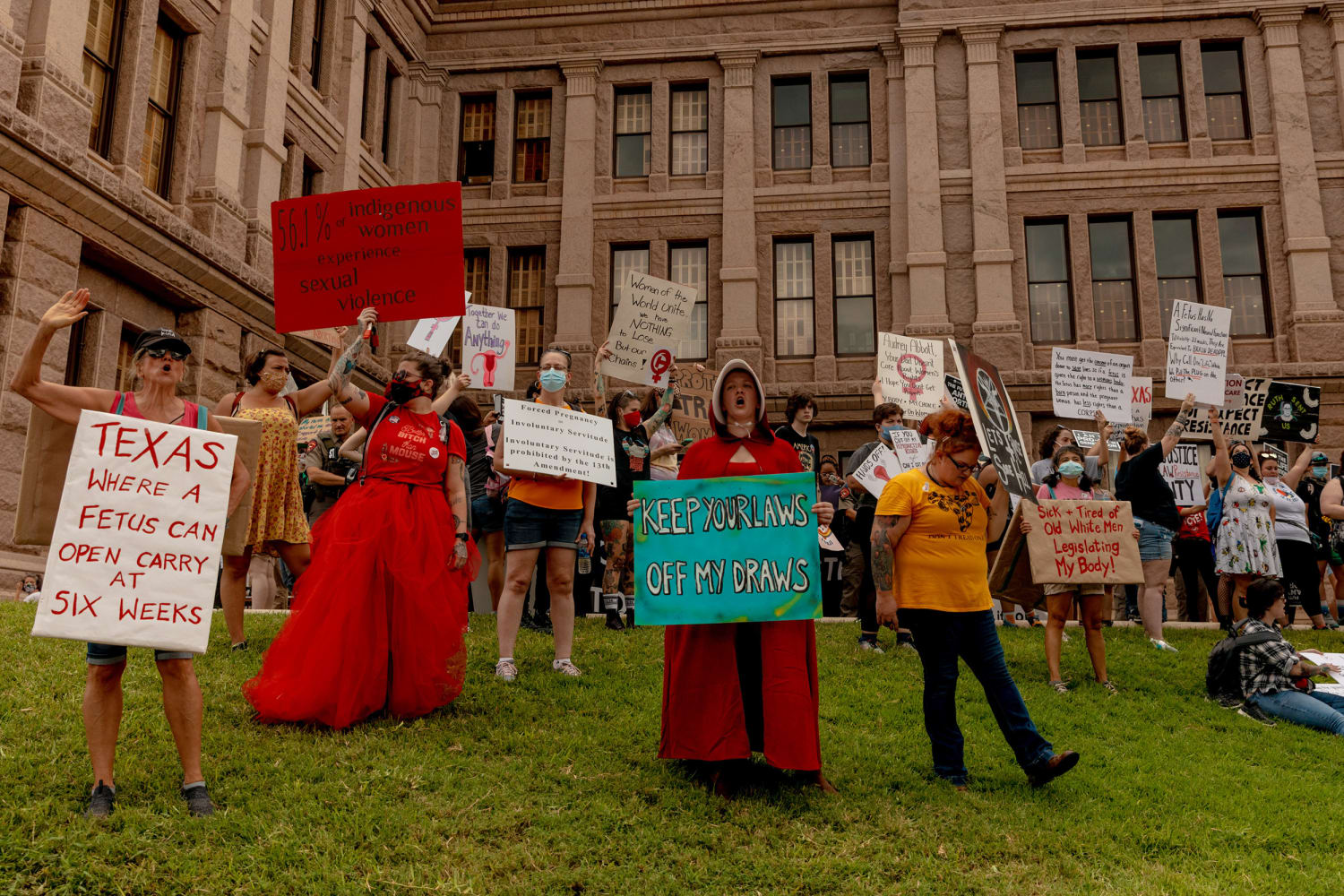
A hearing in a lawsuit challenging Texas’ abortion ban opened Wednesday with dramatic testimony from three women who experienced serious pregnancy complications but were denied abortions.
One of the plaintiffs in the lawsuit, Samantha Casiano, vomited on the witness stand while speaking about her baby’s fatal birth defect, which she said was also life-threatening.
Casiano said she learned at 20 weeks gestation that her baby had anencephaly, a serious condition that meant the baby was missing parts of the brain and skull. Casiano said his obstetrician told her the baby would not survive after birth and gave her information about funeral homes.
Casiano read aloud a doctor’s note diagnosing her pregnancy as high-risk, then began to sob and finally vomited, prompting the judge to call a recess.
After the hearing resumed, Casiano agreed with her lawyer’s assessment that she had had a physical reaction to the emotional trauma she experienced during the pregnancy.
Remembering certain events “just makes my body remember and just react,” Casiano said.
Casiano is part of a group of 13 women and two obstetricians and gynecologists who are suing the state of Texas. The lawsuit, filed in March by the Center for Reproductive Rights, asks the court to clarify the types of situations that constitute a medical emergency under Texas abortion laws.
The Supreme Court’s Dobbs decision in June 2022 prompted a ban in Texas that prohibited all abortions except to save the life of a pregnant woman. Before that, the state had banned abortions after detection of the so-called fetal heartbeat, around six weeks into the pregnancy. Doctors who violate Texas abortion laws can lose their medical licenses, face up to 99 years in prison or fines of at least $100,000, according to the Center for Reproductive Rights.
The two-day hearing that began Wednesday relates to a request by the plaintiffs that the judge issue a temporary injunction preventing Texas’ abortion bans from applying to high-risk pregnancies. The state has asked that the suit be dismissed.
Following testimony, Judge Jessica Mangrum will render decisions on both motions.
The case is the first in which women denied abortions have sued a state since the Supreme Court struck down Roe v. Wade.
The three women who testified wept during their statements as they recalled the trauma of carrying non-viable pregnancies. Amanda Zurawski, the lead plaintiff, said she nearly died of sepsis, a life-threatening infection, after she was denied an abortion when her bag ruptured at 18 weeks.
Dallas resident Ashley Brandt said she was pregnant with twins but learned one had a fatal condition called acrania. The more she carried him, the more she jeopardized the survival of her other twin.
Brandt traveled out of state and underwent an abortion in Colorado to terminate the non-viable fetus. She gave birth to a healthy baby boy at 38 weeks. In her testimony, she said that if she had not had the abortion, she would likely have given birth to twins prematurely, only one of whom would have survived.
“I would have had to give birth to an identical skullless, brainless version of my daughter and hold her until she died,” Brandt said.
Meanwhile, Casiano said she considered seeking an abortion in another state, but feared she would face penalties or lose her job.
“I felt like I was a prisoner in my own body,” she said.
She went into preterm labor in March, she said, and her baby, whom she named Halo, died four hours after birth.
“Now I have a psychiatrist,” Casiano said. “Now I vomit a lot more. I had never thrown up like this before, ever, before my pregnancy. My body has never reacted that way.”
Lawyers for the plaintiffs said Wednesday that confusion over when doctors can legally perform abortions in cases like Casiano’s results in tragedy for some Texans.
Attorneys for the state argued that the plaintiffs simply don’t like the way Texas abortion law is worded, and suggested they should direct their legal challenges at their medical providers.
The women who testified said they blamed Texas law, not their doctors, for their harrowing experiences. Dr. Damla Karsan, another plaintiff and a Houston-based OB/GYN, also testified that she was unsure how to interpret the exemption in Texas law that allows abortions in cases with “serious risk of death or disability.”
On Thursday, more testimony from plaintiffs and defense witnesses is expected, this time mainly doctors and experts.


