

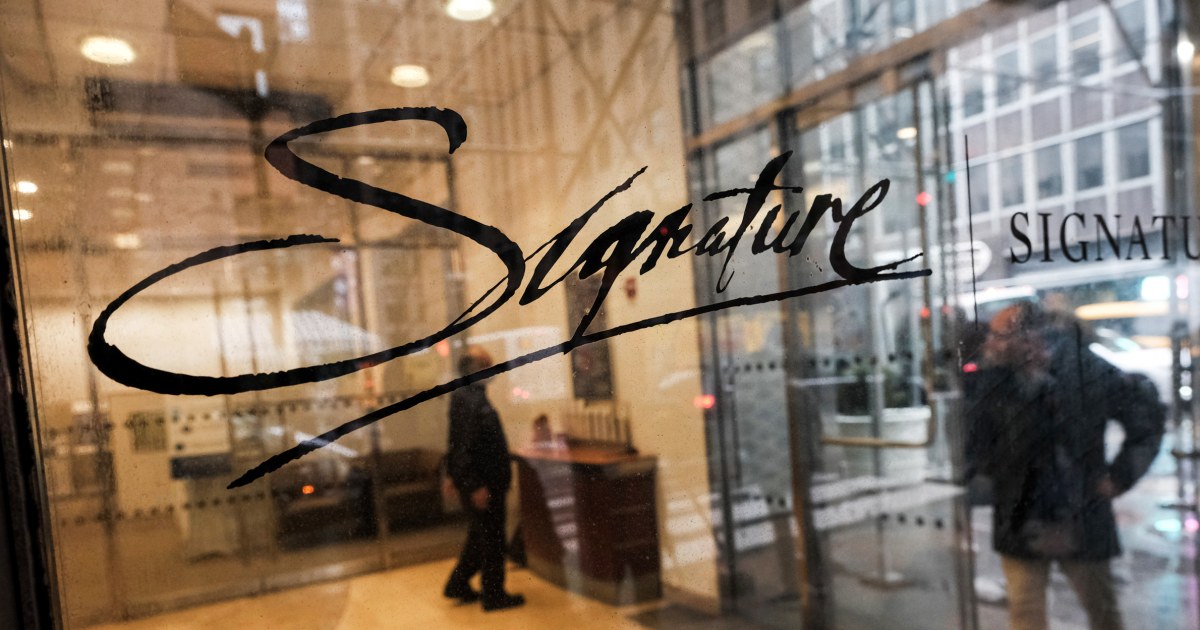

On Friday, signature bank scared customers sudden collapse Silicon Valley Bank withdrew more than $10 billion in deposits, a board member told CNBC.
That run on deposits quickly led to the third largest bank failure in US history Regulators Announced on Sunday night that Signature was being taken over to protect its depositors and the stability of the US financial system.
The sudden move shocked executives at Signature Bank, a New York-based institution with deep ties to the real estate and legal industries, said the board member and former US representative. barney frank. Signature had 40 branches, assets of $110.36 billion and deposits of $88.59 billion at the end of 2022, according to a regulatory filing.
“We had no indication of a problem until we received a deposit run on Friday night, which was purely contagion from SVB,” Frank told CNBC in a phone interview.
Problems of US banks with exposure to the more sparkling asset classes of the covid pandemic – crypto and tech startups – blew up last week in the wind of Silvergate Bank cryptocentric. While the demise of that company had been long expected, it helped spark panic over banks with high levels of uninsured deposits. Venture capital investors and founders exhausted his Silicon Valley Bank accounts on Thursday, leading to its seizure at noon on Friday.
worries spread
That led to lobbying Signature, First Republic and other names late last week over fears that uninsured deposits could be blocked or lose value, which could be fatal for startups.
Signature Bank was founded in 2001 as a more business-friendly alternative to the big banks. It expanded to the West Coast and then opened up to the cryptocurrency industry in 2018, helping accelerate deposit growth in recent years. The bank created a 24/7 payment network for crypto customers and had $16.5 billion in customer deposits related to digital assets.
But as waves of concern spread late last week, Signature clients transferred deposits to larger banks, including JPMorgan Chase and Citigroupfrank said.
According to Frank, Signature executives explored “every avenue” to shore up their situation, including seeking more capital and interest from potential buyers. The exodus of deposits had slowed on Sunday, he said, and executives believed they had stabilized the situation.
Instead, Signature’s top managers have been summarily removed and the bank it was closed on sunday. Regulators are now conducting a sale process for the bank, while ensuring that clients will have access to deposits and service will continue uninterrupted.
poster child
The move raised a few eyebrows among the observers. In the same announcement on Sunday that identified SVB and Signature Bank as risks to financial stability, regulators announced new facilities to shore up confidence in the country’s other banks.
Another bank that had come under pressure in recent days, First Republic declared which had more than $70 billion in untapped funds from the Federal Reserve and JPMorgan Chase.
For his part, Frank, who helped draft the landmark Dodd-Frank Act after the 2008 financial crisis, said there was “no real objective reason” why Signature had to be seized.
“I think part of what happened was that the regulators wanted to send a very strong message against cryptocurrencies,” Frank said. “We became the poster boy because there was no fundamentals-based insolvency.”


