

Contents
LOS ANGELES (AP) — Hollywood’s movie and television assembly line may soon come to a halt.
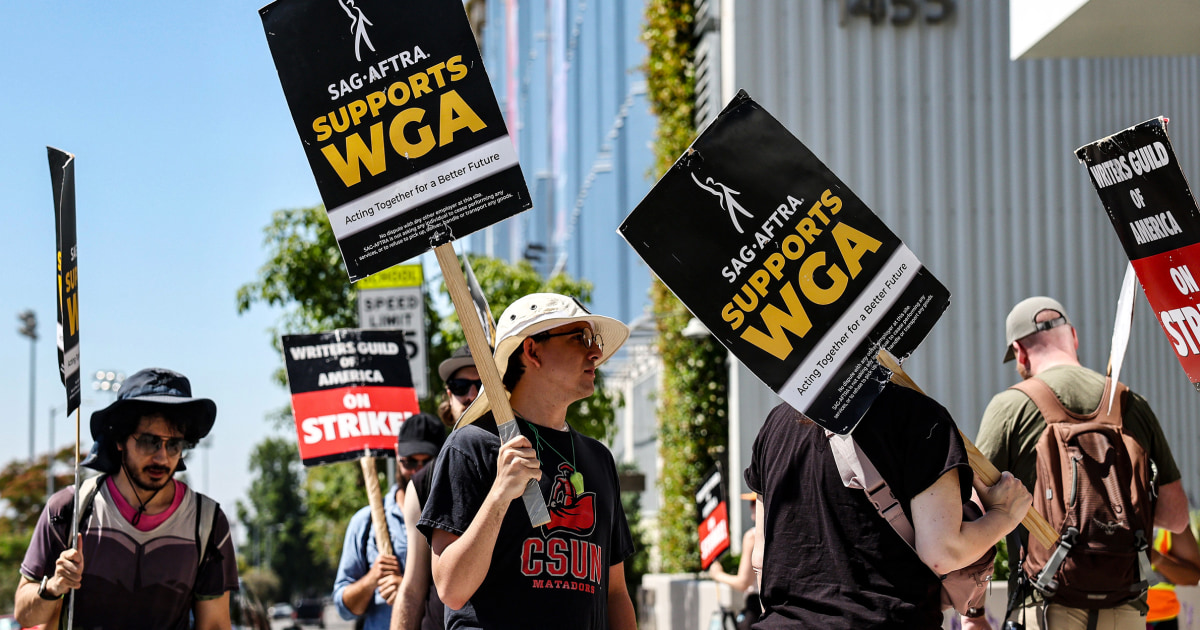
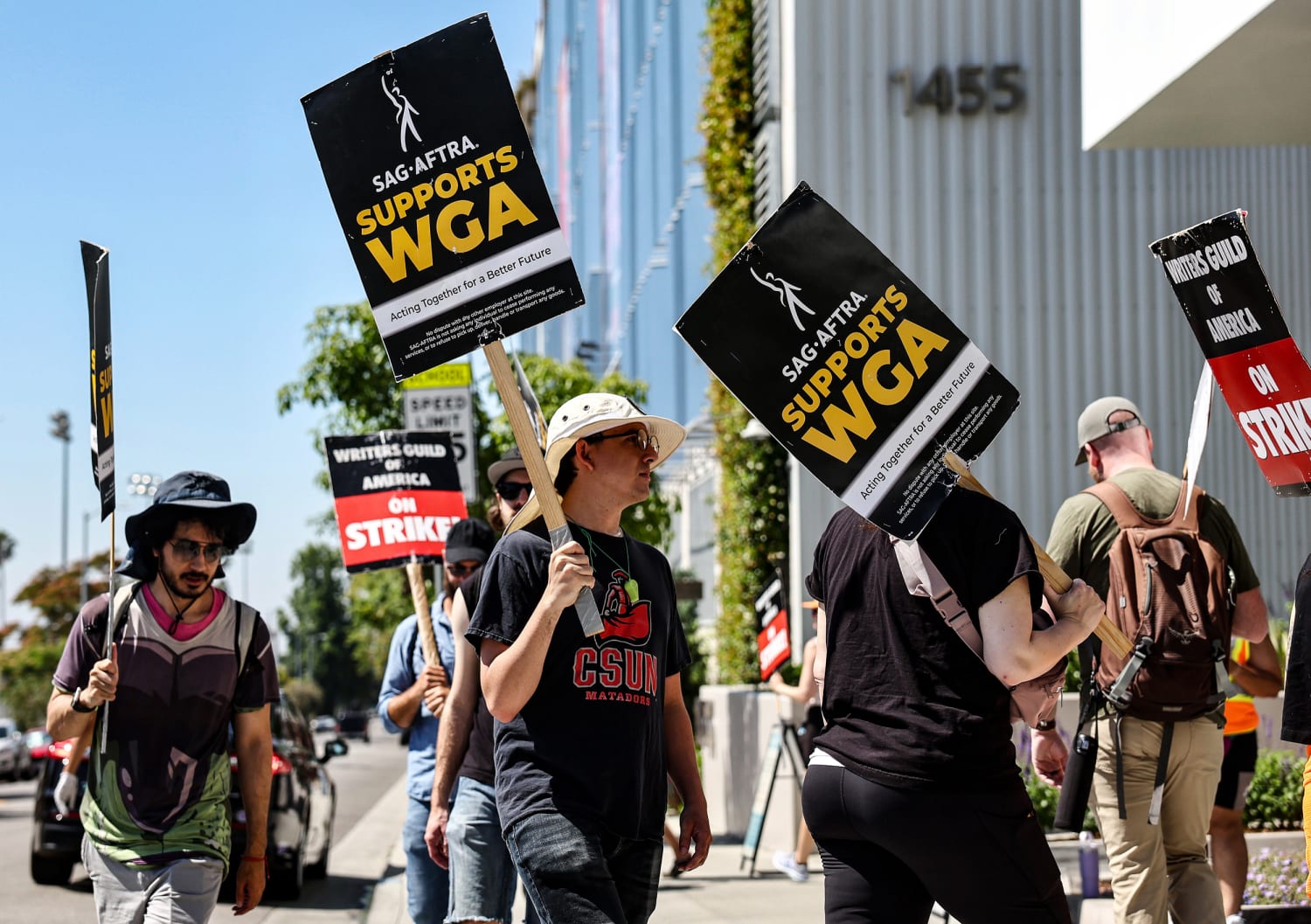
Thousands of screenwriters have been on strike for more than two months, and could soon join the pickets by thousands of actors represented by the Screen Actors Guild-American Federation of Television and Radio Artists, or SAG-AFTRA, a union whose members include some of the most famous faces in the entertainment industry.
The stage for a SAG-AFTRA strike was set Wednesday night when high-stakes negotiations broke down between the union and a trade association representing major studios in the film and television industry. The existing contract between the two parties expired at 11:59 p.m. PT, following a June 30 extension to allow for further talks.
The SAG-AFTRA national board planned to vote Thursday morning on whether to go on strike and the union will hold a news conference at 3 pm ET.
Hollywood actors and writers have not gone on strike simultaneously since 1960, when John F. Kennedy was running for president, “Gunsmoke” was the top-rated series on American television and stars like Elizabeth Taylor lit up movie theater marquees.
Here’s what you need to know about the issues at the center of the fight, and how you might shape what you see.
Who are the key players?
The dispute pits SAG-AFTRA against the Alliance of Motion Picture and Television Producers, or AMPTP, a trade association that represents giant entertainment corporations such as Disney, Netflix, Paramount and Warner Bros. Discovery. (The group represents NBCUniversal, the parent company of NBC News.)
SAG-AFTRA was formed in 2012 after the merger of the Screen Actors Guild (founded in 1933) and the American Federation of Television and Radio Artists. The combined guild represents approximately 160,000 artists, from Oscar-winning A-list stars like Tom Hanks and Meryl Streep to radio personalities and television hosts.
SAG-AFTRA’s president is Fran Drescher, best known for playing the title role on the CBS sitcom “The Nanny.” She was elected to lead the union in September 2021.
What do the actors want?
SAG-AFTRA members are seeking a new contract with AMPTP, an agreement they believe must take into account the economic realities of the streaming revolution and the risks posed by emerging digital technologies.
The union would like to increase the base compensation of performers, which union leaders say has fallen sharply as entertainment companies move away from paying residuals, a type of royalty that was more common when popular shows were released. they sold in syndication rather than being deposited exclusively on streaming services.
SAG-AFTRA members are also alarmed by the rise of artificial intelligence, such as tools that could create digital composites of popular stars. The union has called for stricter regulations and safeguards to help protect actors “against the unauthorized use of their voices, likenesses, and performances.”
Drescher addressed these concerns in a letter to SAG-AFTRA members overnight, writing in part that his team was fighting for the artists “on whom this industry is built.”
“As you know, over the past decade, your compensation has been severely eroded by the rise of the streaming ecosystem,” he wrote. “In addition, artificial intelligence represents an existential threat to the creative professions, and all actors and performers deserve contractual language that protects them from having their identity and talents exploited without consent and payment.”
The writers’ grievances are much like those of Hollywood screenwriters, who have been on strike since early May after talks between the Writers Guild of America, or WGA, and the AMPTP failed. Industry scriptwriters, for example, fear that generative AI programs like ChatGPT could one day be used as a substitute for their human labor.
What do the studies say?
When it became clear on Wednesday night that negotiations were going nowhere and a strike was more likely, the AMPTP said it was “deeply disappointed” and accused SAG-AFTRA of walking out on talks.
“This is the Union’s choice, not ours,” the group said in a statement. “In doing so, you have scrapped our offer of historic salary and residual increases, substantially higher limits on pension and health contributions, hearing protections, shorter serial option periods, an innovative AI proposal that protects digital images from the actors and more”.
“Instead of continuing to negotiate,” the group added, “SAG-AFTRA has set us on a course that will deepen the financial hardship of thousands of people who depend on the industry for their livelihood.”
In an interview with CNBC aired on Thursday, Disney CEO Bob Iger, one of the most powerful executives in American media, said both the actors and the writers were not being “realistic” in their expectations.
“It is very disturbing for me. We have talked about the disruptive forces in this business and all the challenges we are facing, the recovery from Covid, which is ongoing, has not fully returned,” she said in part. “This is the worst time in the world to increase that disruption.”
In recent days, entertainment industry workers on social media have expressed their dismay over a quote published by the trade publication Deadline that was attributed to an anonymous studio executive. “The end game,” the executive said, “is to let things drag on until union members start losing their apartments and houses.”
What does this mean for you?
The effects of the WGA strike can already be felt across the entertainment landscape. As writers went on the pickets, production on many small screen productions was shut down, and late-night talk shows (relying on topical monologues and segments written by full-time staff members) were sent to reruns.
The actors’ strike would deepen the impasse, altering the schedule of film and television releases. TV networks are expected to lean heavily on unscripted shows (like reality shows) that had built up before the writers’ strike, and the SAG-AFTRA strike could force the shutdown of movie sets from large budget until a new agreement is reached.
If a SAG-AFTRA strike is formally approved, everyday consumers of pop culture may also notice that well-known stars refrain from promoting their projects because that form of publicity would be prohibited. The looming strike raised questions about whether the cast of Christopher Nolan’s historical drama “Oppenheimer” would appear at the film’s London premiere on Thursday, for example.


