


image source, AFP
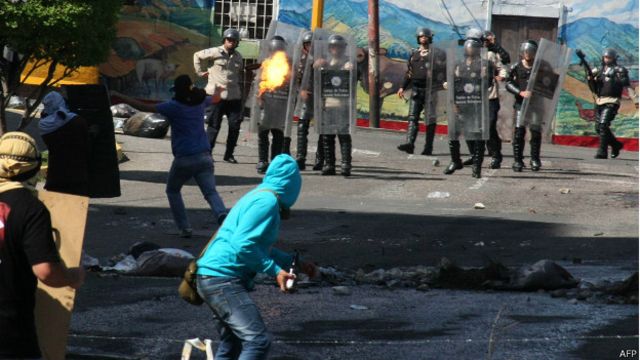
In Venezuela there are violent protests like the one in the photo, from last August.
A protest in Caracas was dispersed with tear gas seven months after the start of the protests against the government of Nicolás Maduro.
Local media reported 24 detainees in the clashes between the police and the protesters, mostly students, in the Bello Monte sector in the Venezuelan capital.
Protests and violence were also reported in the city of Barquisimeto, in the state of Lara.
On February 12, a protest in downtown Caracas left three dead, starting a wave of demonstrations that lasted four months with a balance of 42 deaths, 600 injuries, and more than 3,300 detainees.
The economic crisis, corruption and insecurity are some of the reasons why the demonstrators protest.
President Nicolás Maduro describes this year’s protests as a coup attempt to overthrow the government.
“The economic crisis in Venezuela is more visible today than it was in February, which is why many believe that now there are more reasons for the call to protest,” adds Daniel Pardo, BBC Mundo correspondent in Venezuela.
“However, many opponents, such as the governor of Miranda Henrique Capriles, consider that the protests are counterproductive and reinforce the government,” says our correspondent.
The president of the National Assembly, Diosdado Cabello, affirmed on Thursday that “the opposition groups want in the next few days, taking advantage of the start of classes (on Monday), activating the guarimbas,” referring to the protests that block the streets.


