

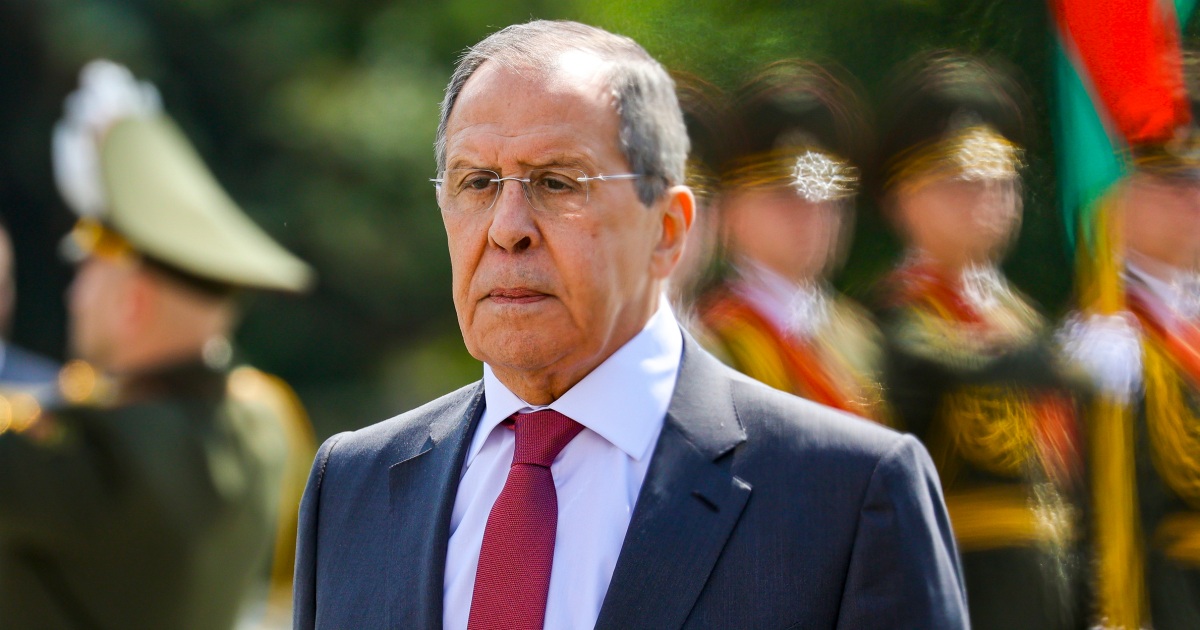
Ukraine expressed concern on Friday about the willingness of some former US government officials to meet with Moscow’s top diplomat and other Russian figures, asking whether such discussions had eroded Washington’s support for Kiev.
NBC News reported Thursday that former top US national security officials held secret talks with prominent Russians close to the Kremlin, including Russian Foreign Minister Sergey Lavrov. The report says the Biden administration was aware of, but not directing, the talks, which are aimed at paving the way for future diplomacy to end the Ukraine war.
A Ukrainian official who responded to the report said Kiev is “closely monitoring posts and comments about the secret meeting” as well as reports that “similar secret consultations took place between American and Russian citizens in other parts of the world.”
“Given the timing of the appearance of these materials in the media on the eve of the Vilnius summit, the question arises whether Washington’s tough position regarding Ukraine’s invitation to NATO it is somehow not related to these backroom inquiries,” the official said in a statement on behalf of the Ukrainian government.
Next week, President Joe Biden will travel to Vilnius, Lithuania, for a NATO summit. Despite Kiev’s hopes of joining the alliance, Biden has said Ukraine will not be able to circumvent NATO’s extensive admission requirements, and the NATO secretary general has said no invitation will be issued during the summit.
Meanwhile, one of the participants in Lavrov’s meeting, outgoing Council on Foreign Relations Chairman Richard Haass, defended his decision to meet with Lavrov in an opinion piece posted on online publishing platform Substack on Friday, calling such interactions as “valuable opportunities to maintain communication channels”. open communication at times when official interactions are non-existent or unproductive and the stakes are high.”

He wrote that participants in such conversations, known as Track Two diplomacy, “often feel more comfortable speaking candidly and trying out new ideas or proposals.” He added that “exchanges of this kind are more likely to be useful if they are kept confidential.”
“Critically, such meetings are conversations, not negotiations,” Haass wrote. “Those involved speak for themselves, not for any institution they may be affiliated with, and certainly not for the US government, although relevant government officials are kept informed about what is happening.”
After Lavrov’s meeting in April, the American participants briefed the White House on what was discussed, NBC News previously reported.
Russia’s foreign ministry confirmed on Friday that Lavrov had met members of the Council on Foreign Relations in April, but said no peace plan for Ukraine was on the agenda, saying they had discussed a broader range of issues. international.
“Reports about secret talks on Ukraine… with the American side do not correspond to reality. It’s fake,” ministry spokeswoman Maria Zakharova said on Telegram.
In the wake of the disclosure of the Lavrov meeting, several former US diplomats have publicly questioned whether such engagements with the Russians undermine Ukraine’s influence or contradict the Biden administration’s longstanding position that no secret deals with Moscow will be struck over the future of Ukraine.
“As we have repeatedly said, nothing about Ukraine without Ukraine,” White House National Security Council spokesman Adam Hodge said Friday. “We will continue to give Ukraine what it needs to succeed on the battlefield so that it can negotiate from a position of strength when it feels the time is right.”
The Ukrainian official who responded to Lavrov’s meeting also stressed that Lavrov and other Russian government leaders remain under US sanctions.
“There is room for a legal assessment of the legality of such a meeting with a sanctioned person,” the official said.
The US government and other nations imposed sanctions on Lavrov, President Vladimir Putin, and other Russian leaders in February 2022 on the second day of the war, citing “Russia’s unjustified, unprovoked, and premeditated invasion of Ukraine.” .
The US sanctions froze any assets the Russians held in the United States and barred US citizens from transacting business with them. The sanctions did not prohibit Americans from speaking or meeting with Russian officials.


