

A UK-based Farsi-language satellite TV channel says it is moving its operations to Washington after British authorities cited threats to station staff by Iranian regime operatives.
The move came after US and British authorities accused Iran of trying to target critics and dissidents abroad after a wave of anti-regime protests swept across the country starting in September.
International Iranian television said on Saturday that it had “reluctantly closed its studios in London” due to increasing threats against its journalists and on the advice of London’s Metropolitan Police.
“I can’t believe it’s come to this. A foreign state has caused such a significant threat to the British public on British soil that we have to move,” Mahmood Enayat, the station’s general manager, said in a statement from the broadcaster.
“We refuse to be silenced by these cowardly threats,” he said. “We will continue to broadcast. We are not intimidated.”

The channel said in November last year that police warned that its reporters were under significant threats from Iranian agents. The London police force deployed armed officers to protect the broadcaster’s offices in Chiswick Business Park, and tight security was introduced at the site’s entrance.
An Austrian man, Magomed-Husejn Dovtaev, 30, was arrested on February 11 in west London by anti-terror police officers and charged with collecting information that could be used to carry out a terrorist attack. Dovtaev is alleged to have filmed videos of the building where Iran International operates, as well as filmed the security arrangements at the site.
Dovtaev pleaded not guilty this week at Westminster Magistrates’ Court and will then appear at the Old Bailey, London’s central criminal court, on March 3.
Iranian journalists in the UK who have been critical of the Tehran regime have been targeted for kidnapping and murder by Iranian agents, according to the British government and intelligence services, and the number of plots detected has increased in recent weeks.

Iran conspired to kidnap or kill at least 10 British citizens or UK residents perceived to be enemies of the regime. in 2022, Ken McCallum, director general of Britain’s security service known as MI5, said in November.
Last month, US prosecutors charged three members of an Eastern European criminal group with ties to Iran for attempting to assassinate a prominent American journalist and activist critical of the Iranian regime. Shortly after the charges were announced, the writer and women’s rights activist masih alinejad revealed that she was the target of the assassination plot.
The assassination attempt came after the FBI and federal officials foiled an earlier attempt by an Iranian group to silence Alinejad on US soil, authorities said.
Iran’s intelligence minister has labeled Iran International a “terrorist organization.”
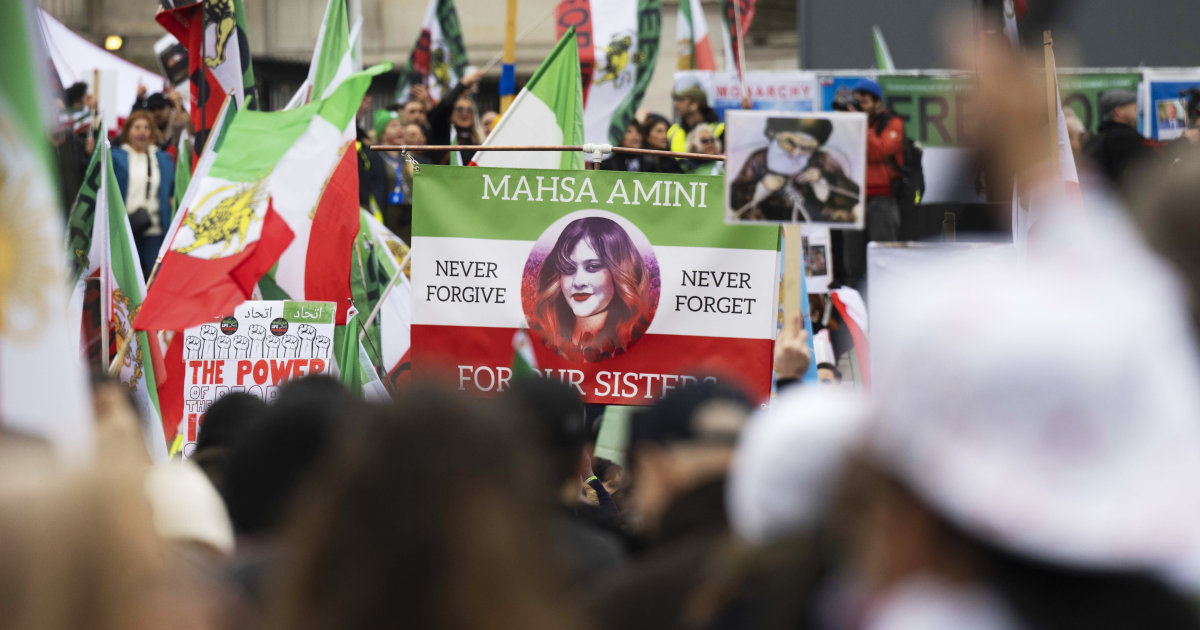
The station provided critical coverage of the government’s response to nationwide protests that erupted over the September death of an Iranian Kurdish woman, Mahsa Amini, after she was arrested by the country’s morality police.
Iran has portrayed the station as a tool of Saudi Arabia, and the commander of Iran’s Islamic Revolutionary Guard Corps warned Saudi Arabia against covering the channel in October.
“This is our last warning, because they are interfering in our internal affairs through these means,” Maj. Gen. Hossein Salami said.
Iran International describes itself as an independent media outlet. The company that owns the station Flying Mediait was once majority owned by a Saudi national.
Iran’s UN mission did not immediately respond to a request for comment.
Since the 1979 revolution that toppled Iran’s monarchy, Iran’s theocratic regime has had a history of attacking its enemies abroad. Western governments and human rights organizations have accused Iran of carrying out numerous assassinations and assassination attempts over the years.
In February 2021, a Belgian court convicted Assadollah Assadi, a Vienna-based Iranian diplomat, of organizing a plot in July 2018 to bomb an Iranian opposition group’s annual convention near Paris. According to German and Belgian authorities, Assadi was an Iranian intelligence officer operating under diplomatic cover.
Iran has denied the charges and denied accusations of persecuting opponents abroad.


