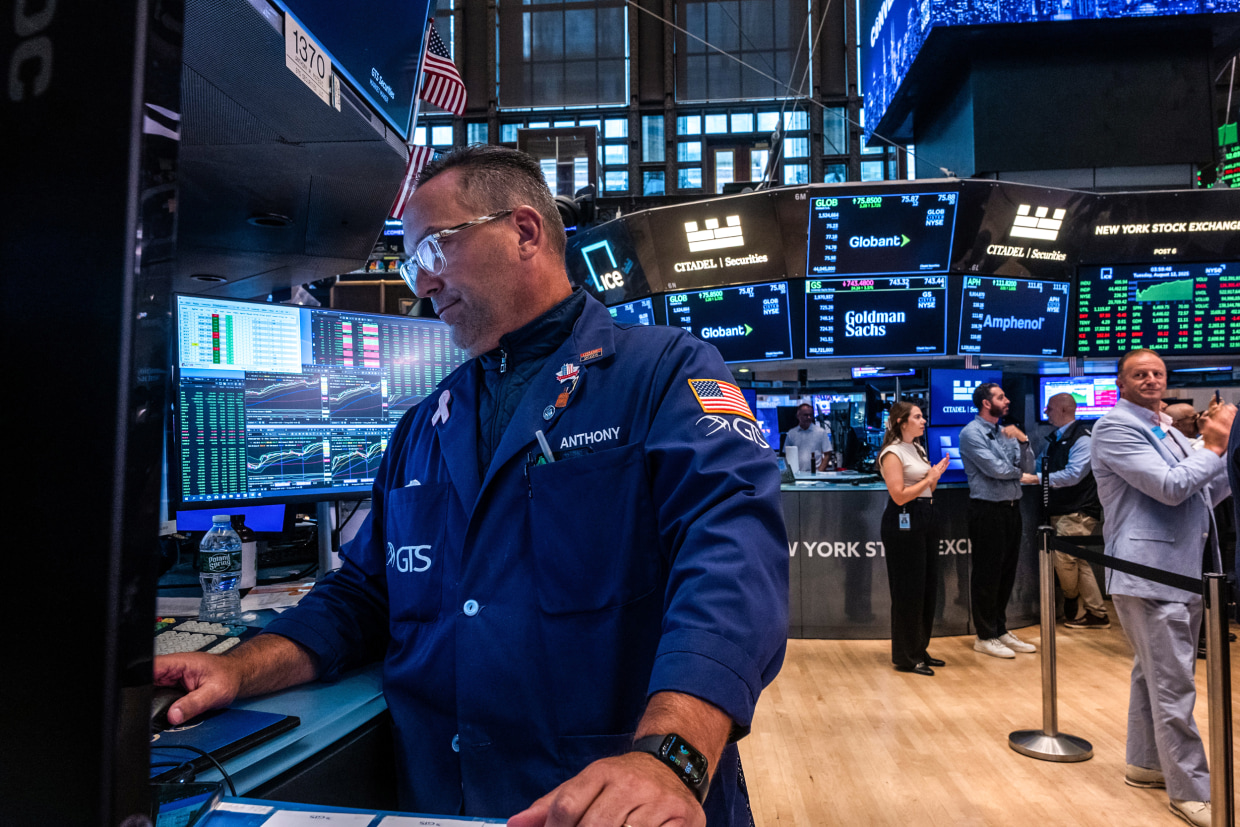
In an unexpected development, financial markets worldwide are showing remarkable tranquility despite new tariff announcements from the Trump administration. Although trade disputes have historically triggered volatility, the current situation suggests a more composed market reaction to the latest protectionist initiatives. This pattern indicates a substantial shift from previous responses and points towards a more intricate economic narrative, involving the interplay of monetary policy, corporate profits, and changing investor attitudes.
The initial shock of a trade war in previous years often sent global markets into a tailspin, as investors panicked over the potential for disrupted supply chains and a slowdown in economic growth. However, recent announcements have been met with a more measured, and at times even mixed, response. While some sectors and individual companies with heavy international exposure have shown weakness, the broader indexes have largely held their ground. This resilience points to a market that has either become desensitized to such policy shifts or has found new factors to focus on.
A major factor contributing to the market’s seeming lack of concern is the expected favorable monetary policy. The Federal Reserve, observing indications of economic challenges, is largely predicted to lower interest rates soon. This expectation of reduced borrowing expenses and a more supportive financial atmosphere provides a strong offset to the deflationary forces and economic confusion that tariffs might cause. It appears that investors are wagering that moves by the central bank will exert more influence on the short-term direction of the economy than trade policy.
Another important element is how well corporations are performing financially. Even with the challenges from tariffs, several major U.S. businesses have announced profits that exceeded expectations. This flood of favorable economic updates has contributed to easing concerns about a general downturn economically. It indicates that some firms have discovered methods to adjust to the new trade conditions, whether by changing their supply chain strategies, transferring costs to customers, or concentrating on local sales. The market appreciates businesses that can show they can succeed amid geopolitical challenges.
The market has gained a more detailed insight into the characteristics of these tariffs. Unlike past occurrences where such announcements were unexpected, the recent wave of tariffs was mostly communicated to the market ahead of time. This advance notice provided investors and companies with the opportunity to prepare and adapt, lessening the surprise factor that typically drives market turbulence. Although the policy is still a cause for ongoing worry, its predictability has lessened its ability to provoke an instant market crash.
The ongoing trade policies have also revealed a distinct divide in the market’s performance. While the major indexes have shown resilience, a closer look reveals that some sectors are being hit much harder than others. Export-oriented industries and companies that rely heavily on complex international supply chains have borne the brunt of the negative impact. In contrast, domestically focused companies and those with less exposure to global trade have performed relatively well, demonstrating that not all parts of the economy are equally vulnerable to the effects of protectionism.
The market’s reaction also reflects a change in the perception of tariffs themselves. Initially viewed as a temporary negotiating tactic, a growing number of investors now see them as a more permanent feature of U.S. trade policy. This shift has forced businesses to move beyond short-term contingency planning and to make long-term strategic adjustments, such as diversifying their supply chains or even moving production back to the United States. While this may be costly, the market appears to be recognizing that these changes, however painful, are a new and lasting reality.
Moreover, the durability of the stock market mirrors its substantial liquidity and its capacity to assimilate massive data without alarm. With trillions of dollars involved, the market functions as a complex ecosystem where various forces are perpetually in conflict. Although the concern over a trade war exerts a strong negative influence, it is counterbalanced by other positive elements, including vigorous technological progress, the likelihood of interest rate reductions, and a widespread confidence in the long-term vitality of the American economy. This equilibrium has resulted in a market that is steadier, even amidst considerable political uncertainty.
The reaction from global markets has been unexpectedly calm. Although certain nations directly affected by the new tariffs have experienced a downturn in particular sectors, the major global stock indices have not indicated any significant panic. In reality, some overseas markets have witnessed increases, supported by robust local economic conditions and a rising sentiment that the effects of U.S. tariffs will be limited. This indicates that the world economy might be more robust and less intertwined than previously assumed, especially in terms of handling these policy disruptions.
The stock market’s seemingly nonchalant reaction to the latest round of trade tariffs is a complex phenomenon with multiple contributing factors. It is a story of a market that has adapted to a new political reality, where a supportive monetary policy, strong corporate earnings, and a shift in investor expectations have all worked to counterbalance the negative effects of protectionism. This resilience, while reassuring for many investors, also masks a deeper story of sectoral divisions and long-term strategic shifts that will continue to shape the global economic landscape for years to come.