

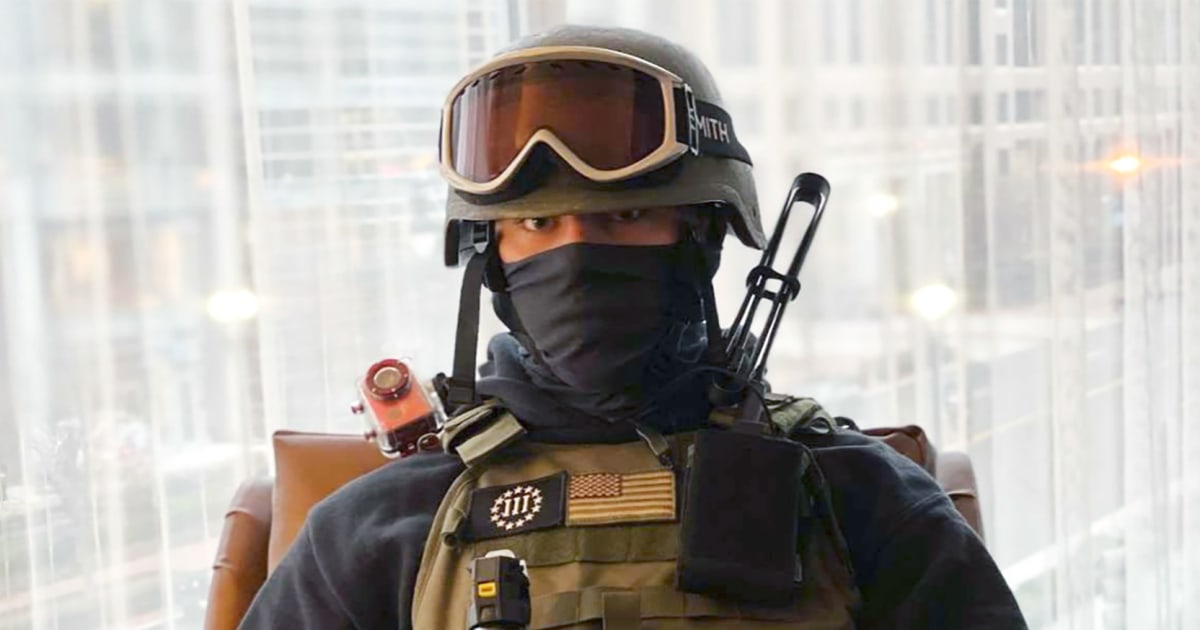
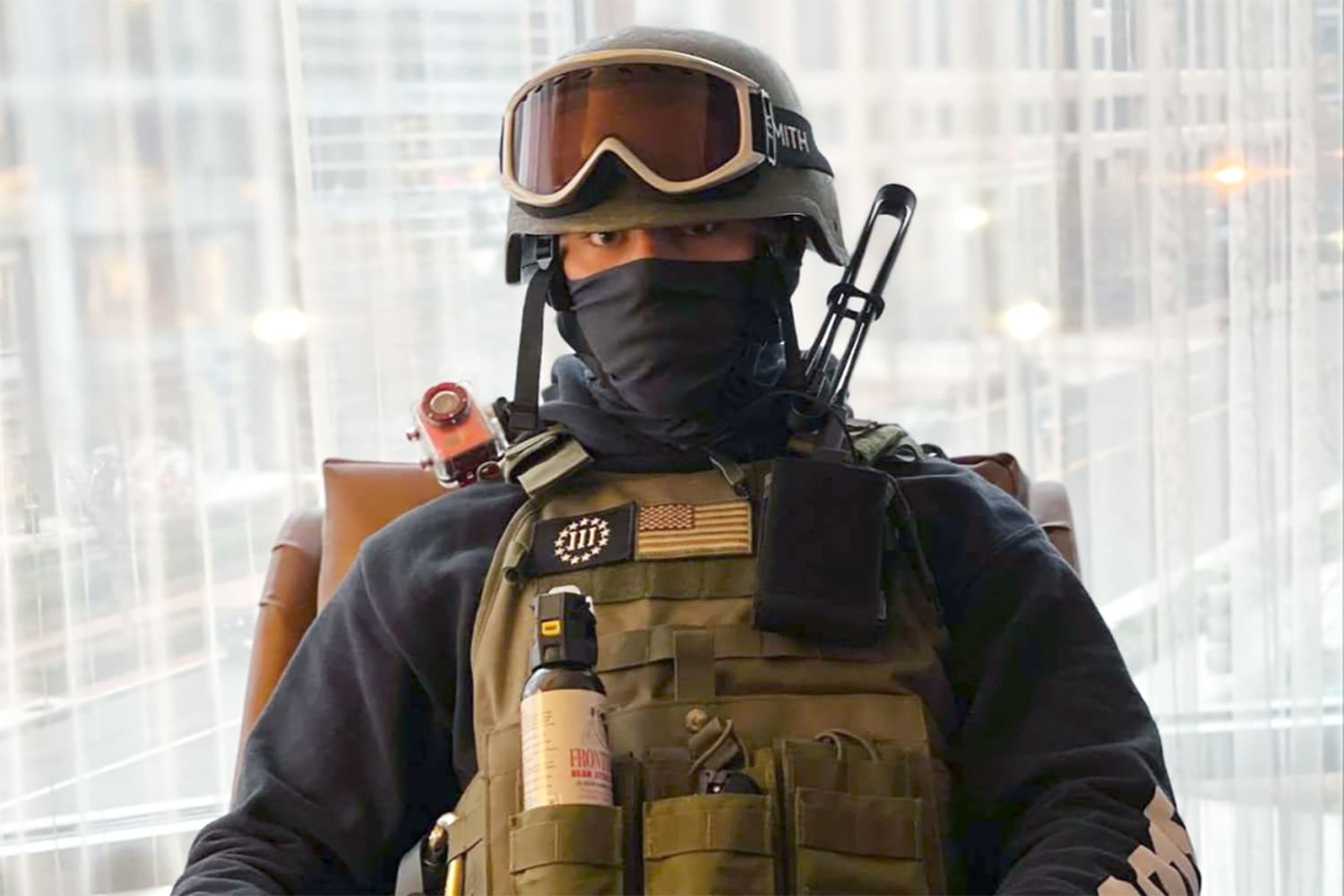
WASHINGTON — A federal judge appointed by former President Donald Trump gave a man who used bear spray during the Jan. 6 attack on the Capitol a “break” Friday, saying he did not deserve the prison term sought by prosecutors.
US District Judge Trevor McFadden sentenced Tyler Bensch, who pleaded guilty to two riot-related misdemeanors, to two years probation and 60 days of home confinement. Prosecutors had requested nine months in federal prison.
“You participated in a national embarrassment,” McFadden said before imposing the sentence. “You came ready for trouble.”
But, he added, Bensch’s turnout was “quite minor” compared to others, while noting that his age was a mitigating factor. Bensch was 19 years old on January 6, 2021.
“I’m giving him this break because of his age” at the time and lack of a criminal record, McFadden said. “This need not define you or your life.”
Bensch was arrested in August along with members of “B Squad” who were associated with the far-right movement Three Percent and “Guardians of Freedom,” as well as Jeremy Liggett, a far-right extremist who ran unsuccessfully for a seat in the House of Congress. last year.
Bensch pleaded guilty. to disorderly and disruptive conduct on restricted grounds along with theft of government property, admitting he helped carry a police shield stolen from Capitol grounds. In an interview with the FBI after his arrest, Bensch said the B-Squad members participated in firearms training and hand-to-hand combat training before the attack.
In his sentencing memorandum, federal prosecutors said Bensch “helped push others toward violence” and was carrying an irritant chemical spray, which prosecutors said in court was bear spray. Bensch deployed the spray “against another rioter” that day.
A tearful Bensch did not speak during Friday’s sentencing hearing, but his court-appointed attorney, Peter Cooper, said the Florida man was deeply sorry for his actions. Bensch, Cooper said, “didn’t have the maturity to understand what he was getting himself into” and “has great remorse for what he did that day.”
Cooper went on to say that Bensch hopes to start a career in law enforcement, adding that it is “not out of the realm of possibility” that he could do so even with his misdemeanors. Bensch currently works for a pool cleaning company, and the terms of his sentence will allow him to leave his home to work during his 60 days of home detention.
The Bensch case was the impetus for the departure of a self-proclaimed FBI whistleblower to take his complaints to Republican members of Congress. Steve Friend, a former FBI special agent who was based in Florida at the time of Bensch’s arrest, was scheduled to transport Bensch, but declined to do so.
Friend, according to a book he wrote, told other FBI employees that he did not believe the rioters who assaulted officers on Jan. 6 should be charged. He later testified before the Republican Party-led House Select Subcommittee on Federal Government Weapons, a new panel focusing on allegations that the government is unfairly targeting conservatives.
Friend said he believed federal authorities were going to take the January 6 defendants “to the gallows” because their cases were being tried in Washington, D.C. “They don’t stand a chance if they go to court,” Friend said.
The rioters have been acquitted of many charges by both juries and judges, and McFadden acquitted Jan. 6 defendant Matthew Martin a few months before Friend was supposed to help transport Bensch.
McFadden also sentenced Bensch’s accomplice, Jonathan Rockholt, to five months in federal prison on Friday. The prosecutors had sought 13 months in prison.
The Senate McFadden confirmed in 2017 in a vote of 84-10, with all opposition coming from Democrats.
In a separate case on Friday, January 6, Barry Ramey was sentenced to five years in federal prison. Prosecutors had initially required nine years in prison for the Proud Boy member who hit two officers with pepper spray, but U.S. District Judge Dabney Friedrich said that would create an unwarranted sentencing disparity.
More than 1,000 people have been charged in connection with the January 6 attack and more than 300 have been sentenced to terms of imprisonment. The longest sentence, 18 years, went to Oath Keepers founder Stewart Rhodes, who was convicted of seditious conspiracy.


