


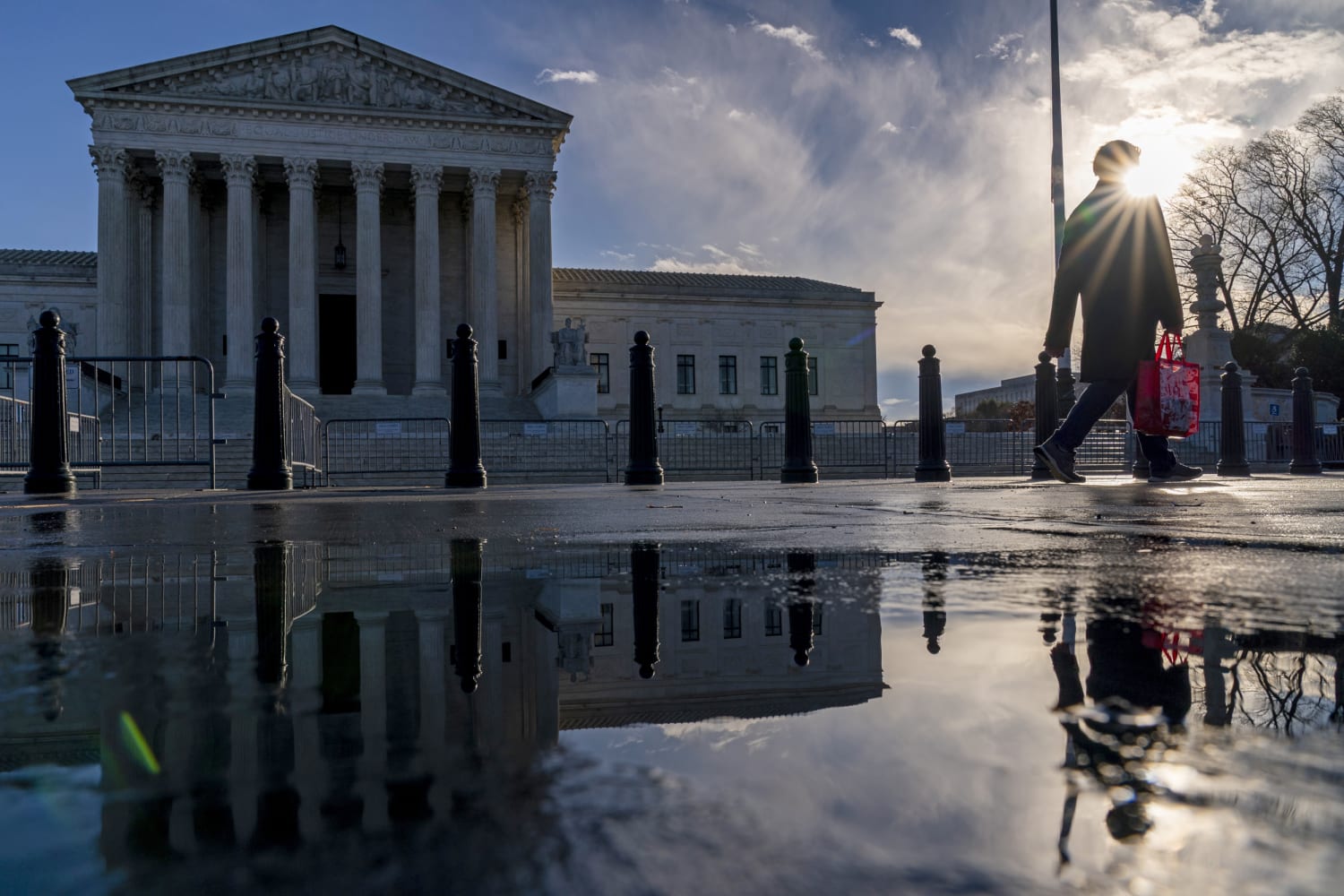
WASHINGTON — The Supreme Court agreed Monday to resolve a legal challenge brought by business groups that threatens the federal agency tasked with protecting consumers from illegal financial services practices.
The justices will hear an appeal from the Biden administration challenging a lower court ruling last year that said the mechanism that allows the Consumer Financial Protection Bureau to be funded directly by the Federal Reserve is unconstitutional.
The challengers, two trade groups representing the lenders, argue that the agency should be funded with appropriations approved by Congress.
Although the Biden administration had asked the court to expedite the case, it will be decided in the court’s next term, which begins in October and ends in June 2024.
The office, which enforces consumer protection laws on issues like mortgages, credit cards and student loans, was created as part of the Dodd-Frank Wall Street Reform and Consumer Protection Act of 2010. The funding structure it was designed to protect it from political influence, and its creation was strongly opposed by Republicans.
Republicans and business interests have tried to undermine the office since it was created. It has faced several legal challenges, with the Supreme Court ruling in 2020 that a separate provision protecting the agency’s sole director from removal by the president at any time during the five-year term was unconstitutional.
Ironically, that ruling meant that President Joe Biden was free to appoint his own director, Rohit Chopra, when he took office in 2021.
In the most recent case, the Community Financial Services Association of America and the Texas Consumer Services Alliance filed a lawsuit in 2018 seeking to strike down a regulation that restricts payday lending.
A federal judge ruled in favor of the office after it watered down the original regulation. As it currently stands, the rule, which is no longer in effect, prohibits lenders from repeatedly seeking to withdraw loan repayments from a consumer’s bank account if there are insufficient funds.
But the New Orleans-based US Court of Appeals for the Fifth Circuit ruled in favor of the challengers in October 2022. In throwing out the regulation, it concluded that the funding mechanism was an unlawful abdication of congressional responsibility for appropriate funds based on the Constitution’s division of government powers.
Attorney General Elizabeth Prelogar, representing the office, said in court documents that the appeals court decision “threatens to inflict immense legal and practical damage” on the agency, consumers and the financial industry as a whole. That’s partly because it “challenges virtually every action the CFPB has taken,” she said.
The lenders urged the court not to take the case, saying there were “multiple legal flaws” with the payday rule and that, because the rule is no longer in effect, the impact of the appeals court decision is limited.
New York and 20 other Democratic-leaning states filed a report endorsing the office, while Republican-led West Virginia filed a report, along with 15 other states, supporting the challenge.


