

A diet rich in seafood, fruits, vegetables, nuts and olive oil may reduce the risk of dementia, a new study suggests.
An analysis of data from more than 60,000 older people revealed that choosing to follow a Mediterranean diet cuts a person’s chance of developing dementia by nearly a quarter, even among those with genes that put it at higher risk, according to The report published Monday in the medical journal BMC Medicine.
“The main take-home message from this study is that, even for people with increased genetic risk, eating a more Mediterranean diet may reduce the likelihood of developing dementia,” said study lead author Oliver Shannon, a professor of human medicine. nutrition and aging at the University of Newcastle.
Among people whose food choices were least like a Mediterranean diet, “about 17 out of 1,000 people developed dementia during the study’s follow-up period of about nine years,” Shannon said in an email.
In contrast, among people whose food choices were more like a Mediterranean diet, “only about 12 out of 1,000 people developed dementia,” he added.
What is a Mediterranean diet?
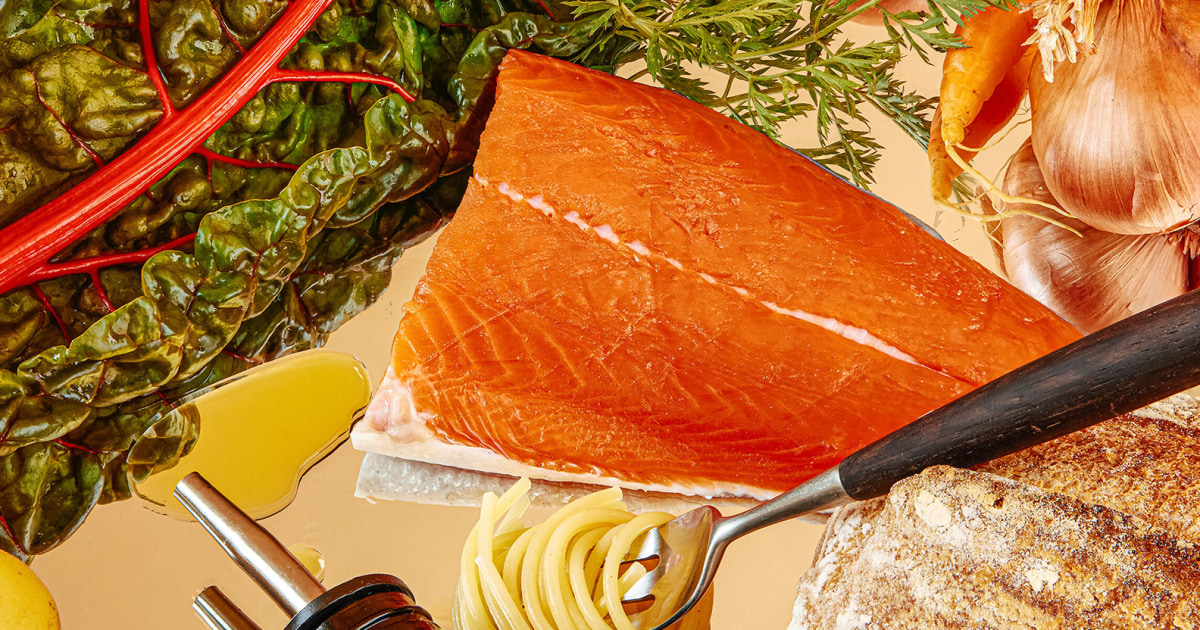
TO The Mediterranean diet is full of healthy plant-based foods such as vegetables, nuts and legumes. It is rich in whole grains, fruits and olive oil and fish.
People in the study also ate less red or processed meat, sweets and pastries, and drank fewer sugar-sweetened beverages, Shannon said.
Previous studies have been mixed on whether a Mediterranean diet can help stave off dementia. In fact, a study published in October 2022 that analyzed the medical records of 28,025 Swedes found that the diet did not protect against dementia. Unlike, another study published in May of that same year, which included almost 2,000 older adults, found that diets rich in foods associated with inflammation, in contrast to the Mediterranean diet, which appears to be anti-inflammatory, were associated with faster brain aging observed in MRIs and an increased risk for the development of dementia.

To take a closer look at the impact of a Mediterranean diet on dementia risk, Shannon and her colleagues turned to the UK Biobank, which from 2006 to 2010 recruited men and women aged 4 to 69 from England, Scotland and Welsh. The prospective study currently has more than half a million participants.
Recruits completed a touch screen questionnaire, participated in a verbal interview, and provided biological samples and measures of physical function. Later, the recruits received scans, were tested for multiple health outcomes and provided information about their diets, some at multiple times during the study. The Biobank was able to track the health of the participants through linked electronic medical records.
An additional dimension of the new study was the inclusion of genetic information in the form of an Alzheimer’s risk score that was devised in previous research.
“The risk score was constructed using about 250,000 individual genetic variants that have been associated with Alzheimer’s disease, which is the most common form of dementia,” Shannon explained.
For the new study, the researchers focused on 60,298 participants who were 60 years old at the time of enrollment. During an average follow-up of nine years, 882 people developed dementia.
When the researchers analyzed their data, they found that people whose food intake most closely mirrored the Mediterranean diet were 23% less likely to develop dementia during the years covered by the study.
The new research adds to growing evidence that diet can affect dementia risk even in people who are at increased risk because of their genes, said Dr. Thomas Wisniewski, professor of neurology, pathology and psychiatry and director of the Alzheimer disease. Research Center and the NYU Langone Center for Cognitive Neurology.
“This study with really good numbers and a pretty substantial effect size shows that it is, in fact, protective for the brain to eat a Mediterranean diet,” Wisniewski said. “This is positive news and certainly something that everyone can do with relative ease. So that’s good news.”
Reduce the risk of dementia
Diet “is one of the aspects of lifestyle that I talk about with all of my patients,” Wisniewski said. “The other thing that we typically discuss with patients is the importance of staying physically and mentally active.”
Other important ways to reduce your risk of dementia include:
Those are all interventions that everyone can take to keep their brain healthy and reduce their risk of developing dementia,” Shannon said.
The new study found a nearly one-quarter reduction in dementia risk, Wisniewski said. “That’s a pretty big risk reduction, doing something that’s not as challenging,” he added.
While it’s not known exactly how the Mediterranean diet might reduce dementia risk, it likely has multiple effects, ranging from reducing antioxidants, helping to reduce inflammation and improving the state of the microbiome, Wisniewski said.
Without a good drug to treat dementia, experts have focused on lifestyle factors that may have something to do with risk, said Dr. Emily Rogalski, a cognitive neuroscientist and professor of psychiatry and behavioral sciences in the College of Dementia. Feinberg School of Medicine at Northwestern University.
At the moment, it is not clear if there comes a time when it is too late to protect yourself against dementia.
“But giving up and saying it’s too late is probably not the right attitude,” he said.
“We used to think that we were born with all the brain cells we were going to have and that the brain was not that plastic, malleable or strong,” Rogalski said. “We have learned in the last two decades that there is room for adaptation and change.”


