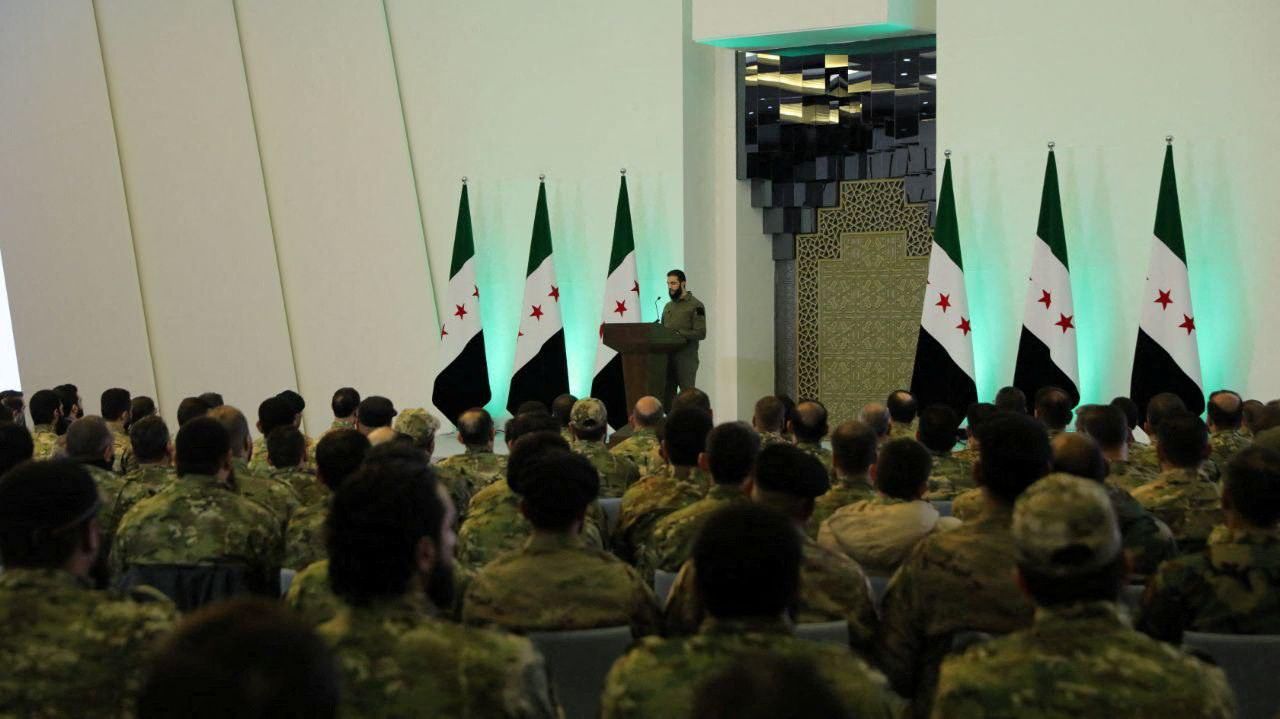
Months following the rapid rebel offensive led by Islamists that toppled Bashar al-Assad’s regime, Syria continues to be a nation in crisis. The recently formed transitional administration, under the leadership of Ahmad al-Sharaa, is facing increasing security issues, with violent opposition from remaining Assad supporters. Although the breakdown of Assad’s repressive government was a significant milestone in Syria’s 13-year civil war, achieving lasting peace and stability is turning out to be extremely complex.
The transitional administration, mainly made up of individuals who gained recognition from opposition hubs such as Idlib in the northwest, has taken over a fragmented nation ravaged by prolonged conflict. The dismantling of Assad-era institutions, including the military and the Baath Party, has resulted in the displacement of hundreds of thousands of former regime officials and allies. A significant number of these individuals have declined to make peace with the new administration, sparking unrest that jeopardizes the stability of the delicate government.
A persistent danger from Assad supporters
Following Assad’s exit, his supporters have become a formidable insurgent group. These remains of the old regime, with deep roots in Syria’s military, intelligence, and political frameworks, have used their established networks to mount armed opposition. This rebellion is especially pronounced in the coastal regions of Latakia and Tartous, traditional bastions of the Assad lineage and the heartland of Syria’s Alawite community.
The Syrian Observatory for Human Rights has lately documented a lethal ambush in Latakia province, where armed individuals assaulted government troops trying to capture a former Assad official. The assault resulted in the deaths of no less than 13 security members and triggered a surge of violence in the area. By the next day, conflicts had intensified, causing more than 120 fatalities—highlighting the formidable obstacles confronting the interim administration.
The Institute for the Study of War, a research entity, has cautioned that Assad loyalists are poised to create some of the most efficient insurgent units in Syria. Their knowledge of military strategies and capacity to use pre-existing networks provide them a strategic edge in orchestrating assaults against the new administration. For interim President Sharaa, this escalating rebellion constitutes the most formidable barrier to solidifying power and maintaining national security.
Increasing strife in Alawite areas
The rebel activities in Latakia and Tartous have exacerbated tensions between Syria’s Sunni-led transitional administration and the Alawite minority, a Shia branch that was the foundation of Assad’s regime. The Alawites, who had privileges and influence under Assad’s rule, have suffered considerable setbacks since its downfall. Many now feel sidelined and targeted, despite Sharaa’s promises that his government will honor Syria’s varied religious groups.
The insurgent activity in Latakia and Tartous has further strained relations between Syria’s Sunni-led transitional government and the Alawite minority, a Shia offshoot that formed the backbone of Assad’s regime. The Alawites, who enjoyed privileges and power under the Assad government, have faced significant losses in the aftermath of its collapse. Many now feel marginalized and targeted, despite Sharaa’s assurances that his administration will respect Syria’s diverse religious communities.
The scenario in Syria’s southern region continues to be unstable. Despite an agreement struck with Druze forces earlier this week to reduce hostilities, the government still encounters opposition from multiple factions nationwide. Given that various areas are governed by rival groups supported by external powers, the interim government’s influence is both restricted and divided.
Future Economic and Diplomatic Hurdles
In addition to the pressing security challenges, Syria’s interim government is facing a severe economic crisis. Years of conflict have resulted in nine out of ten Syrians living in poverty, and the nation continues to suffer under the heavy international sanctions placed during Assad’s tenure. Sharaa’s government has prioritized the removal of these sanctions, seeing it as vital for economic recovery and establishing legitimacy worldwide.
Beyond the immediate security threats, Syria’s transitional government is contending with a dire economic situation. Years of war have left nine out of ten Syrians living in poverty, and the country remains under crippling international sanctions imposed during Assad’s rule. Sharaa’s administration has made lifting these sanctions a priority, viewing it as essential to rebuilding the economy and gaining legitimacy on the global stage.
However, Western nations remain wary of Sharaa’s intentions, with some questioning whether the new government can truly break from the oppressive practices of the Assad era. This skepticism has slowed efforts to secure international support, leaving Syria’s economy in a precarious position. The interim government’s ability to revitalize the country will depend on its success in addressing both internal security concerns and external diplomatic challenges.
A country divided
Despite the fall of Assad, Syria remains a patchwork of competing factions and external influences. The transitional government’s control is far from absolute, with various groups holding sway over different parts of the country. These factions, often backed by foreign powers with competing interests, add another layer of complexity to Syria’s fragile political landscape.
The path forward
The overthrow of Bashar al-Assad represented a crucial shift in Syria’s history, yet the nation’s journey toward peace and stability is still laden with challenges. From the insurgent dangers posed by Assad supporters to the profound rifts among Syria’s religious and ethnic groups, the journey forward is unpredictable. The interim administration must tackle these hurdles while attending to the urgent needs of a populace ravaged by over ten years of conflict.
Simultaneously, Syria’s leaders are under increasing international examination as they strive to remove sanctions and obtain the necessary support for reconstruction. For the transitional government, success will rely on effectively tackling the roots of unrest, promoting inclusivity, and showing a true dedication to moving away from the authoritarian practices of the past.
At the same time, Syria’s leaders face mounting international scrutiny as they seek to lift sanctions and secure the support needed to rebuild the country. For the transitional government, success will depend on its ability to address the root causes of unrest, foster inclusivity, and demonstrate a genuine commitment to breaking from the authoritarian practices of the past.
As clashes continue and tensions rise, Syria’s future hangs in the balance. The coming months will be critical for Sharaa’s government as it works to consolidate power, restore security, and lay the foundation for a more stable and prosperous nation.