

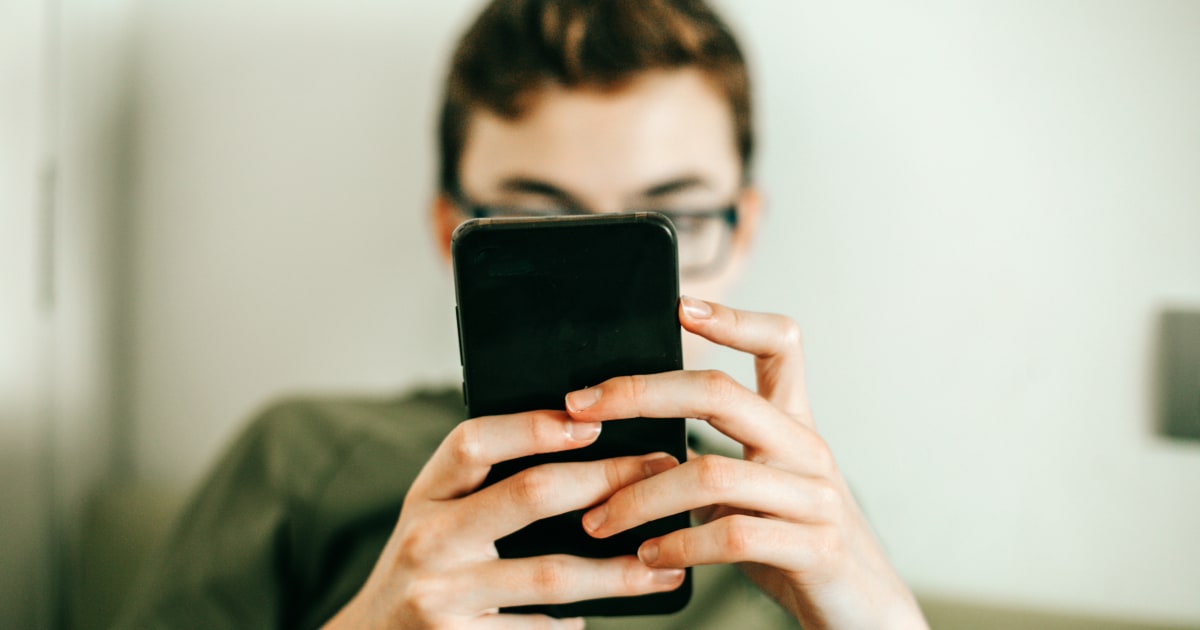
Surgeon General Vivek Murthy, long an advocate for mental health awareness, has issued a warning that social media use is a leading contributor to depression, anxiety and other problems in the nation’s teens. .
He report, published on Tuesday, draws attention to growing concerns about the effects of social media use on the mental health of children and adolescents. The advisory urges lawmakers and the companies that make social media platforms to share the burden of managing children’s and teens’ use of social media with parents.
Murthy calls youth mental health “the defining public health issue of our time,” urging lawmakers to help ensure strong safety standards to help protect teens from exposure to harmful content and excessive use. .
According to the report, up to 95% of teens ages 13-17 say they use a social media platform. About a third say they scroll, post or interact with social media “almost constantly.”
“At this point, we don’t have enough evidence to confidently say that social media is safe enough for our kids,” Murthy said in an interview. “Now we have to take steps to make sure that we are protecting our children.”
The report brings together research linking social media use and poor mental health in adolescents, as a study 2019 which found that adolescents who spent more than three hours a day on social media “faced twice the risk of experiencing poor mental health outcomes, including symptoms of depression and anxiety.”
As of last year, students in grades 8 and 10 who were surveyed they said they spent even more time each day on these platforms: three hours and 30 minutes, on average.
Jim Steyer, founder of Common Sense Media, an organization that advocates for laws and policies to make media more kid-friendly, said the ad was “absolutely on point” and “should be a wake-up call for all parents.” of this country, all legislators, that we need to put focus and resources on this effort”.
The most popular social media platforms among teens are TikTok, Snapchat, and Instagram, according to the Pew Research Center.
The surgeon general’s warning about social media comes as rates of teen depression, sadness and hopelessness have skyrocketed over the past decade, especially among girls.
“Teen depression started to rise around 2012, a time that coincides with the popularity of smartphones,” said Jean Twenge, a professor of psychology at San Diego State University and author of “Generations: The Real Differences Between Gen Z , Millennials, Gen X, Boomers and Silents, and what they mean for America’s future”.
It was also a time, Twenge said, when “likes on posts became commonplace, and algorithms started to get more sophisticated to keep people on social media longer. That’s clearly not a coincidence”.

The surgeon general’s report also blamed social media for perpetuating disordered eating, body dysmorphia, and low self-esteem. Some evidence also suggests a possible link between excessive use of social media and attention deficit/hyperactivity disorder in adolescents.
Twenge said that social media can affect mental health in a number of ways. Both sleep and face-to-face social interaction are beneficial for mental health, she said, but if kids are online when they should be in bed or spending time with friends, that’s a problem.
Feeling left out and comparing yourself to others can also be harmful.
“Even if you know on an intellectual level that it may have taken 200 selfies to get the right one,” Twenge said, “on an emotional level, that’s not really processed.”
What can be done?
The surgeon general’s report outlines recommendations for both technology companies and lawmakers.
“Policymakers need to step up and help ensure that we have strong safety standards, to help protect our children from exposure to harmful content and also to protect them from excessive use,” Murthy said. This includes enforcing age minimums.
Companies are advised to build better tools to protect teens and relax on features that entice kids to stay online longer.
It is parents who are now on the front lines trying to help teens navigate the online world. The report encourages caregivers to create “tech-free” zones in the home and to talk with children about how using social media makes them feel.
“It’s really not fair to put the responsibility only on parents. Why isn’t the industry responsible for creating the platforms and making the features so much more addictive?” said Steyer of Common Sense Media. “There has to be a big national discussion.”
How old should children be before using social media?
Most tech companies require users to be at least 13 years old. But nearly 40% of kids ages 8 to 12 use social media, according to the report.
Murthy said she thinks even 13 is too young to be on social media, but said there wasn’t enough data to suggest what age would be appropriate.
Twenge suggested that the minimum age should be set at 16 years.
“We’re going to implement some regulations now to help kids who aren’t on social media yet,” Twenge said. “Maybe we can save the next generation.”


