

An intense marine heat wave that has fueled record sea surface temperatures in the world’s oceans in recent months could persist well into the fall, according to an experimental forecast produced by scientists at the National Oceanic and Atmospheric Administration.
Researchers at the agency’s Physical Sciences Laboratory said the unusually warm conditions in the North Atlantic are almost certain to last through the summer, with up to a 90% chance that the marine heat wave will persist through November.
Members of the research team will host a public discussion later this week to reveal the new forecast and discuss its implications.
Dillon Amaya, research scientist at NOAA Physical Science LaboratoryHe called the situation in the North Atlantic “unprecedented”, adding that researchers have been trying to understand what is driving the current warm period and its possible consequences.
“There are only a few things that can cause the ocean to get so hot in such a short time,” he said. “The main driver of ocean temperature changes like these are changes in atmospheric circulation, and if you look at what the atmosphere has been doing over the North Atlantic over the last three months, you’ll see that the circulation has actually been quite slow. in that part of the world.”

There is usually a subtropical high pressure system that sits over the North Atlantic and governs the surface winds in that region of the planet. When those winds are weaker than normal, ocean temperatures tend to warm up, Amaya said.
But what is causing the weakening has been less clear, he added.
The consequences of such a prolonged heat wave worry many scientists.
In addition to driving extreme weather, warmer-than-usual ocean temperatures can accelerate polar ice loss, which in turn can exacerbate sea level rise.
“This is a really alarming global situation because the additional surface warming that we see right now will eventually mix with the ocean water column,” said Craig Donlon, head of the Earth’s Surfaces and Interiors Section at the European Space Agency. . said in a statement. “Some of this excess heat will reach the Arctic Ocean via ocean currents through the Fram Strait and the Norwegian Sea, further exacerbating the disappearance of Arctic sea ice.”

Marine heat waves can also affect food availability for marine creatures, disrupt migration patterns, and devastate marine ecosystems, including coral reefs and fisheries.
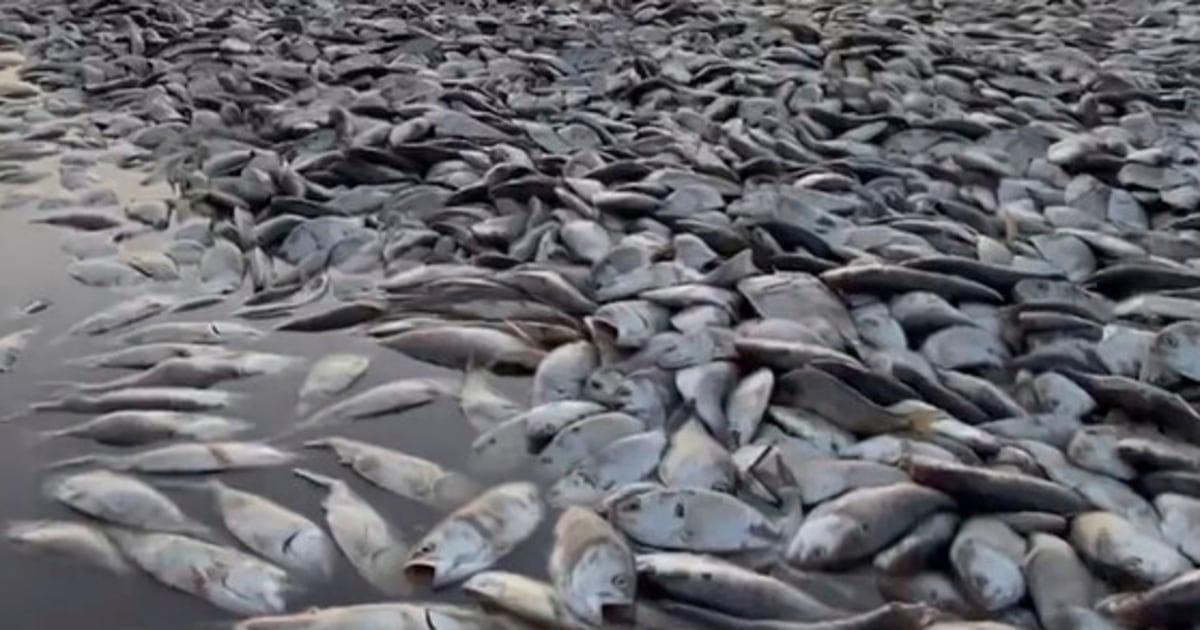
Earlier this month, thousands of dead fish washed up on a Gulf Coast beach in a “fish kill” that authorities linked to rising ocean temperatures that caused oxygen levels to drop.
Scientists closely monitor changes in atmospheric circulation and ocean temperatures because both can influence local climates and extreme weather conditions.
in a June 16 blog postThe UK’s Met Office, the country’s national weather service, said the record global sea surface temperatures were the result of “the classic combination of the basis of human-caused climate change with a layer of natural variation within of the climate system above.”
He The European Space Agency said on Tuesday That the waters off the UK and Irish coast have been particularly warm, with parts of the North Sea nearly 10 degrees Fahrenheit (5 degrees Celsius) higher than normal for this time of year. Conditions in the Baltic Sea have been even more extreme, the agency said, with sea surface temperatures more than 14 degrees F (8 degrees C) warmer than average.
Oceans naturally absorb and store heat, which can make them important indicators of global warming. Studies have found that the oceans have absorbed more than 90% of the heat trapped on Earth by greenhouse gas emissions since 1970.
Amaya said it’s too soon to tease out the specific fingerprints of climate change in this marine heat wave.
The return of El Niño, a naturally occurring weather pattern, also adds to concerns that the world’s oceans will remain exceptionally warm for months to come.
El Niño occurs when changes in the strength or direction of the trade winds cause the waters of the central and eastern tropical Pacific Ocean to become warmer than normal. These changes have a strong influence on global temperatures and extreme weather, including rainfall, hurricanes, and other severe storms.
Amaya said he hopes the new forecast will be a valuable tool in helping the public better understand marine heat waves. She also said that it is a unique opportunity for scientists to study the consequences of such a pronounced anomaly.
“I’m certainly not excited about the impacts,” he said, “but I’m excited and curious to learn more about what’s going on from an intellectual and scientific perspective.”


