

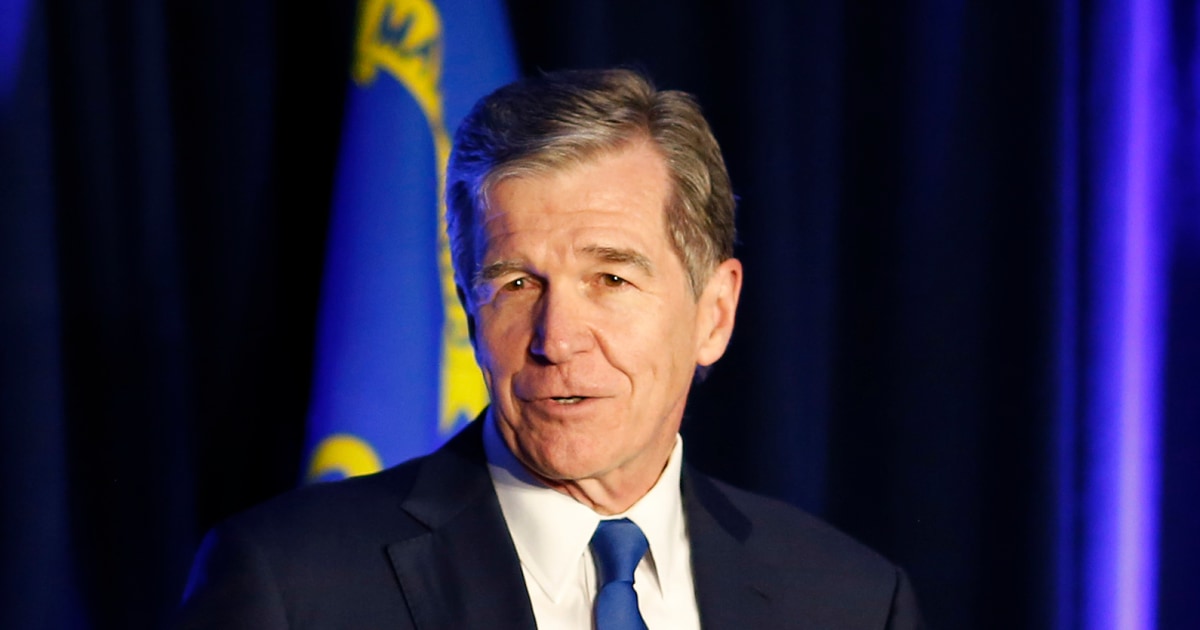

RALEIGH, NC — North Carolina Democratic Gov. Roy Cooper vetoed Wednesday a trio of bills targeting LGBTQ youth that would ban gender-affirming health care for minors, restrict transgender participation in school sports and limit classroom instruction on gender identity and sexuality.
While LGBTQ rights advocates say Cooper’s attempt to block the bills demonstrates their support amid what they see as relentless attacks from the General Assembly, his veto stamp carries little weight now that Republicans hold majorities. narrow veto-proof in both chambers. His vetoes are not expected to survive attempts to override them.
Cooper denounced the measures as “a triple threat of political culture wars” that he said would interfere with the ability of doctors and parents to care for vulnerable children whose lives have been thrust into the political spotlight and upended by legislation in dozens of Republican-led countries. state
Prior to this year, North Carolina had largely refrained from passing LGBTQ regulations after its 2016 “bathroom bill,” which restricted transgender people’s access to public restrooms and barred cities from enacting new anti-discrimination ordinances, cost the state millions in lost business before it was passed. reversed in 2017 and settled in federal court in 2019. These policies, Cooper warned, could damage the state’s reputation and economy in similar ways.
One of the three vetoed bills would prohibit North Carolina medical professionals from providing hormone therapy, puberty-blocking drugs and gender transition surgical procedures to children under 18, with limited medical exceptions. Young people who start treatment before August 1, when the law would go into effect, could continue receiving treatment if their doctors deem it medically necessary and their parents consent.
While some local LGBTQ advocates are hoping they can convince moderate Republicans to uphold Cooper’s veto, others are bracing for a rapid loss of access to treatments many trans people credit with saving lives.
The Campaign for Equality in the South announced Wednesday that families of trans youth in North Carolina are now eligible to apply for support from the Southern Trans Youth Emergency Projectwhich helps connect patients with gender-affirming care providers in other states and provides emergency grants for immediate needs.
“While we will tirelessly advocate for the NCGA to do the right thing by upholding Governor Cooper’s veto, we are clear that families must take steps to prepare if anti-LGBTQ+ legislation is enacted,” said Jasmine Beach-Ferrara, a former Democratic candidate for Congress and executive director of the campaign.
If the bill becomes law, opponents have already vowed to challenge it in court. At least 20 states have now enacted laws restricting or banning gender-affirming healthcare for trans minors, with most facing lawsuits.
a federal judge overturned the Arkansas ban ruled unconstitutional last month, and federal judges have temporarily blocked bans on AlabamaIndiana, Kentucky, and Tennessee. Oklahoma has agreed not to enforce its ban while opponents seek a temporary injunction blocking it, and a federal judge florida locked down to enforce his ban on three children who defied the law.
Another bill that North Carolina Republicans could enact despite Cooper’s opposition would require public school teachers to alert parents before calling a student by a different name or pronoun. Trans and non-binary youth who testified throughout the legislative process said they were terrified of their close friends who might be forcibly exposed to unaccepting parents. An exception would withhold the parent’s school records if there is reason to believe it would lead to abuse or neglect.
Promoted by Republicans as giving parents greater authority over their children’s education and health care, the proposal also prohibits instruction on gender identity and sexuality in K-4 classrooms, with the exception of student-initiated questions. Supporters argue that these issues should be left up to parents to address with their young children.
A spokesman for Senate Republican leader Phil Berger did not respond to emails seeking comment on the vetoed bills on Wednesday. House Speaker Tim Moore’s office declined to comment and did not indicate when the override votes would take place.
“Parents are the most essential educators for their children and their involvement should be encouraged, but this bill will scare teachers into silence by injecting fear and uncertainty into classrooms,” Cooper said. He added that it would hamper the sometimes lifesaving role of educators as confidantes when students have nowhere else to turn. Some teachers are already planning to protest the requirements.
Third bill would ban transgender girls play in middle school, high school, and college sports teams designated for girls. Sen. Vickie Sawyer, an Iredell County Republican and lead sponsor, described it as “not just pro-women, but pro-safety and pro-equity.”
But trans girls, who could no longer participate in sports that align with their gender identity, say it is exclusionary and targets a small number of boys.
Initial vote counts in the House and Senate indicated the veto is likely to be overridden.


