


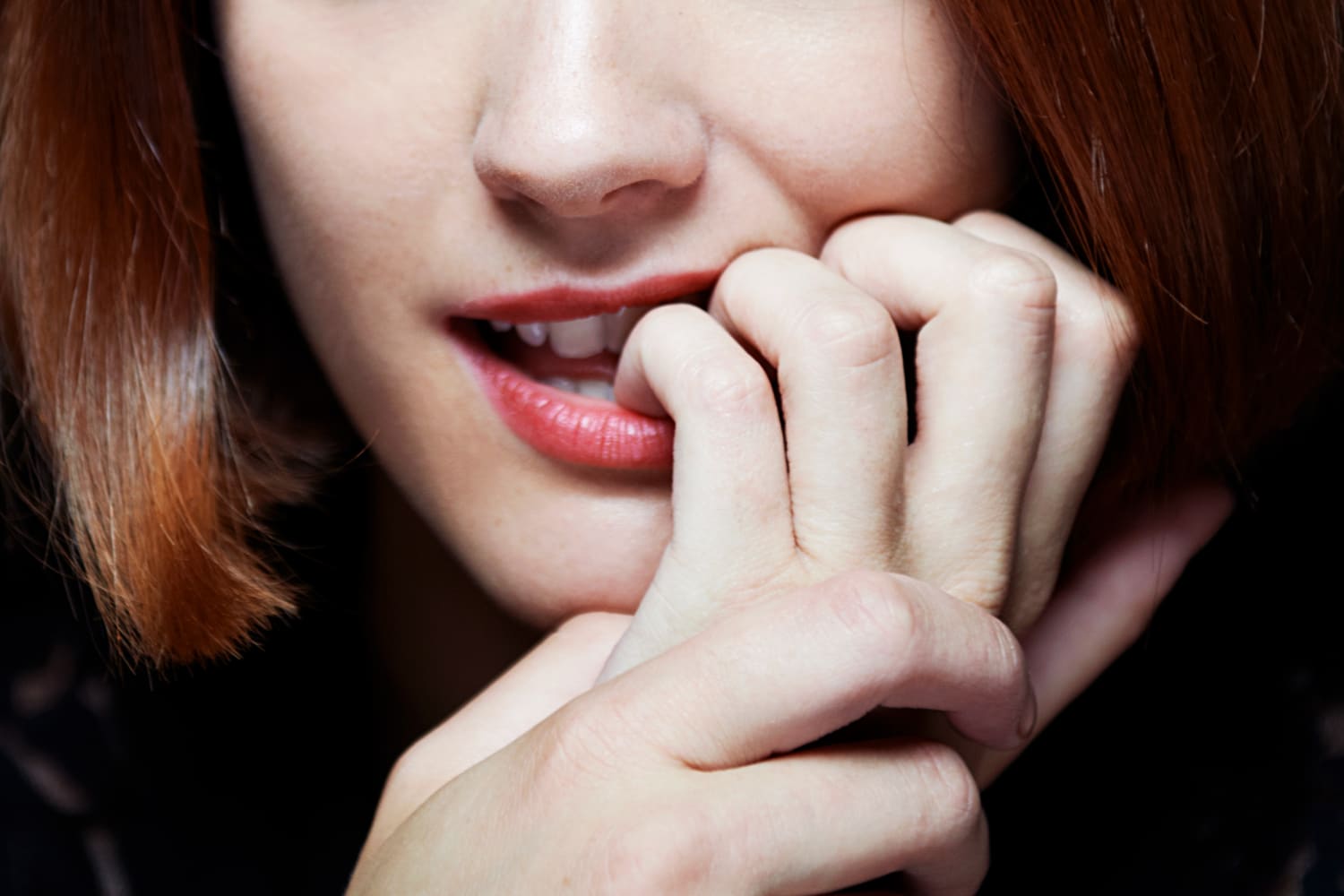
For people who can’t stop biting their nails or picking at their skin, a new study suggests that a simple technique could help.
Repetitive body-focused behaviors—compulsively pulling or picking at hair or skin, unable to stop even if the behavior causes scabs, scars, and bald spots—affects about 5 percent of people worldwide, according to the TLC Foundation for Body-Centered Repetitive Behaviors, an advocacy group for people with the conditions. (A common repetitive behavior is nail biting.)
The research, published Wednesday in JAMA Dermatologyfound that an approach called habit replacement can help reduce these behaviors.
While the new technique, which involves gently rubbing your fingertips, palm, or the back of your arm at least twice a day, didn’t help everyone, about 53% of people in the study said they experienced at least some improvement compared to about 20% of people in a control group. (A video here shows some of the variations people can try..)
“The rule is just lightly touching your body,” said study lead author Steffen Moritz, head of the clinical neuropsychology working group at the University Medical Center Hamburg-Eppendorf in Hamburg, Germany. “If you’re under stress, you can move faster, but not with more self-applied pressure.”
The study was considered “proof of concept” research, preliminary research that needs further confirmation. Still, experts said the results were encouraging.
In the six-week study, Moritz and his colleagues looked at 268 people who either had trichotillomania (a condition in which people pull out their hair in response to stress or to calm themselves) or repeatedly bit their nails or the inside of their nails. from the cheek
The researchers randomly assigned the volunteers into two groups. One group was given a manual and video who showed them how to form the new, less harmful habit by gently rubbing their fingertips, palms, or arms together whenever they felt the urge to bite their nails or engage in harmful behavior. They were also instructed to practice the new habit when they did not feel the need to pull, poke, or bite.
People in the control group were told they were put on a waiting list for treatment, and only received the habit replacement training after the study concluded.
Overall, almost 80% of people in the treatment group said they were satisfied with the training and 86% said they would recommend it to a friend. People who bit their nails seemed to benefit the most from the habit replacement technique.
How can you rub your arm to prevent nail biting?
The new approach is a variation on other behavioral techniques for body-focused repetitive behaviors, including habit reversal training and something called uncoupling. While some drugs, including antidepressants, are prescribed off-label for people with repetitive, body-focused behavior, there are no FDA-approved drugs specifically for this condition. Cognitive behavioral therapy is believed to be the most effective approach.
In habit reversal training, people are taught “competing responses,” said Natasha Bailen, a clinical psychologist with the Center for OCD and Related Disorders at Massachusetts General Hospital and Harvard Medical School.
“Thus, they could involve, for example, clenching your fists very tightly when you feel like pulling your hair or choose your skin. It could be sitting on your hands,” she said. The goal is to use a muscle group so that you can’t physically perform the harmful behavior.
In uncoupling, a the habit is not learned performing a similar move but changing it at the last minute. For example, if you bite your nails, you could put your hand up to your face but touch your earlobe instead of your mouth.
Mortiz said the study’s habit replacement training differs in that its goal is to replace the sometimes pleasurable sensation of touching and tugging with something that also feels good but won’t be harmful: a gentle touch. In fact, the study’s training manual recommends that people avoid roughly touching their bodies or applying too much pressure, such as scrubbing their skin in the shower or brushing their teeth too forcefully.
“I would say that one-third to one-half of patients with BFRB [body-focused repetitive behavior] they benefit from decoupling, but the rest don’t,” Moritz said. “So the idea was to find another technique that might be more suitable for these non-responders.”
The training also recommends that people indulge in things like a massage, a warm bath or the application of lotion “both mindfully and, ideally, lovingly.”
more research is needed
John Piacentini, chair of the board of directors of the TLC Foundation for Body-Focused Repetitive Behaviors, said, “It’s great that this study raises awareness about BFRBs because they are so poorly understood, often misdiagnosed or missed entirely.”
“There are reasonably good treatments out there that most doctors don’t know about or don’t practice,” he said.
However, he did note some of the limitations of the study, including that the control group did not undergo any type of alternative treatment, the study was relatively short, only six weeks, and it was not clear whether the intervention was affected by other conditions. such as anxiety or depression or helped reduce impairment.
“In this population, we’re really looking for treatments that really impact or really reduce the severity of these specific symptoms,” he said.
The study authors also listed several limitations, including that the participants were recruited from social media, lacked diversity (the majority were white women in their 30s), and did not have confirmed diagnoses.
“I was very excited that more work is being done in this area of self-help,” Bailen said, adding that habit replacement techniques could be useful for those awaiting treatment, or in combination with other therapies.
“Getting access to mental health services can be a real challenge these days and the waiting lists can be incredibly long,” she said. “But I think the more research we can do, and the more we can develop these self-help materials, we can help narrow the treatment gap. And that’s definitely important.”


