


florida health officials reported two additional cases of malaria on Thursday.
Both were identified last week and neither was linked to travel outside the country. That brings the total number of locally acquired malaria infections in the US to seven since May. All but one of the cases have been in Sarasota County, Florida. The other case, unrelated to the Florida cases, involved a Texas man who he worked for the National Guard along the Rio Grande.
The cases are the first in 20 years to be acquired in the US.
The Centers for Disease Control and Prevention issued a health alert on June 26 by calling on hospitals to be on the lookout for patients with malaria symptoms and to prepare to diagnose them quickly and start administering antimalarial drugs within 24 hours.
Dr. Manuel Gordillo, an infectious disease specialist at Sarasota Memorial Hospital, said his hospital has treated four of Florida’s malaria cases this year, including the first patient with the infection and the two most recent cases.
All were diagnosed shortly after being admitted to the hospital, Gordillo said, unlike the Texas patient, who said he was initially misdiagnosed with a viral infection. A couple of the patients were homeless, Gordillo said, and came in with a fever and dehydration.
“Some of the cases neglected the symptoms and presented very late with other complications,” he said.
To his knowledge, Gordillo said, public health officials are not actively looking for new cases unless they show up at a clinic or hospital. The Florida Department of Health did not respond to a request for information about how it is monitoring new cases.
Dyann Wirth, a professor of infectious diseases at the Harvard TH Chan School of Public Health, said the new cases are somewhat surprising but not unheard of.
“This isn’t something to panic about, but it’s also not something where we should say, ‘Well, it’s so unusual, we shouldn’t be worrying about it.’ It’s a warning to stay vigilant,” Wirth said.
Malaria is a serious, sometimes fatal disease, usually transmitted by mosquitoes, which transmit a parasite to humans through bites.
Typical symptoms include fever, chills, headache, muscle aches, and fatigue. Some patients also experience nausea, vomiting and diarrhea, according to the CDC. Symptoms usually appear 10 days to four weeks after being bitten by a mosquito.
Before the covid pandemic, the US saw about 2,000 cases of malaria each year, although almost all of them were people who had traveled to other countries.
How do doctors treat malaria patients?
The recent cases in the US were caused by a parasite called P. vivax, which is the dominant malaria parasite outside of Africa. P. vivax is not as deadly as some other malaria-causing parasites, but it can lie dormant in the liver and cause chronic infections months or years after an initial illness.
Gordillo said doctors typically prescribe two treatments for P. vivax: one to kill the parasite in the blood and one to kill the parasite in the liver.
The antimalarial drugs chloroquine or hydroxychloroquine are usually the first line of treatment, he said. But Gordillo said his hospital has faced supply problems with those drugs, so he is prescribing Coartem, a drug that is more effective but costs more and is not available in pharmacies.
Gordillo said that Coartem is a three-day treatment. After that, he said, patients receive a two-week course of a drug called primaquine, which can be taken at home. However, some patients have required longer hospital stays, he said.
“They are the dehydrated, some of them. They have low blood counts, especially platelets, which puts them at risk of bleeding. Some of them have had kidney failure, which is one of the complications of malaria,” Gordillo said.
Why are locally acquired cases showing up now?
Malaria was considered eliminated from the US in 1951. The most likely explanation for the new cases in Florida, Wirth said, is that a person with malaria traveled to the US, then was bitten by a local mosquito, who then passed the disease on to other people. No travel history.
“Everything has to be right for transmission to happen,” Wirth said. “An infected person has to have the transmissible form in their bloodstream. The right kind of mosquito has to bite, and then that mosquito has to live long enough to bite someone else.”
The average female Anopheles mosquito, the most common malaria transmitter, lives for two to three weeks, and it takes seven to 10 days for a parasite to develop in the mosquito, Wirth said. Insects travel about 1.2 miles maximum, According to the Centers for Disease Control and Prevention.
Gordillo said the six Florida cases are from a region of northern Sarasota County, which has wooded areas and has recently experienced rain. Mosquito populations tend to be largest in the summer, and Florida’s humidity is ideal for mosquitoes to breed.
Both Gordillo and Wirth said there may be more cases that have not been diagnosed.
“We don’t know how long this is going to last because of the nature of this particular strain. It can hide in people’s bodies, the incubation period can be long, so it can take a while,” Gordillo said.
Wirth said malaria “can be explosive” because one mosquito can infect many people, so it’s important to detect new infections through routine blood samples, he said.
In some past outbreaks in other countries, Wirth said, screening programs stopped too soon after the number of cases dropped.
“Whoever was in charge thought, ‘Well, we’ve got this problem mostly solved. It’s expensive to keep up with all this surveillance,’ and there were massive bounces,” he said.
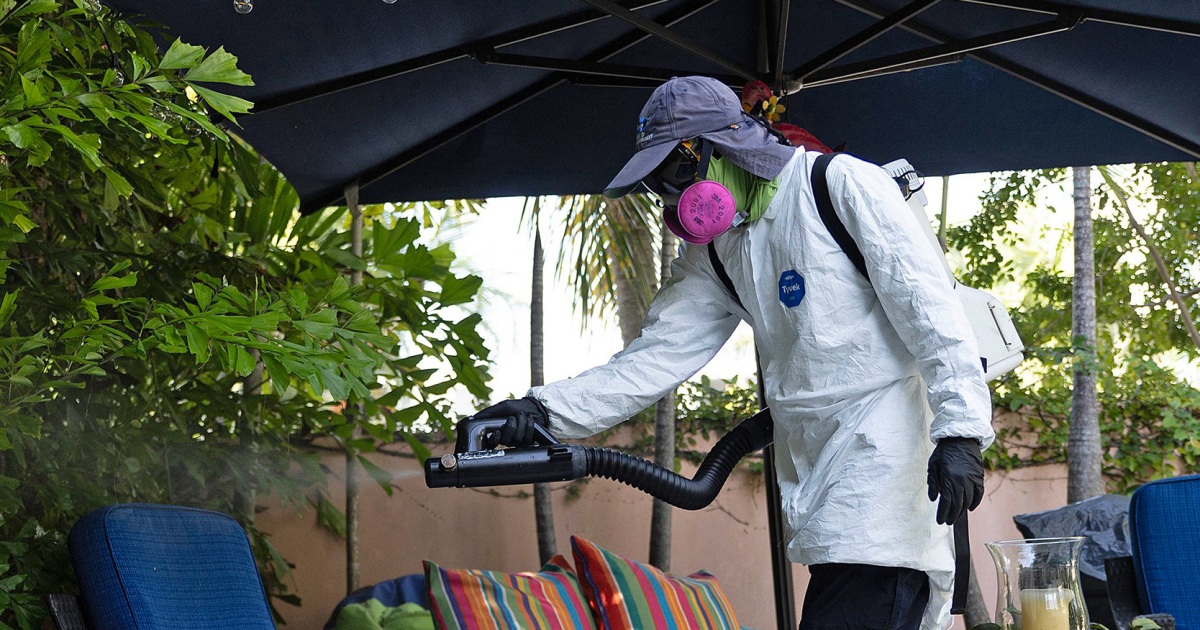
The Florida Department of Health said last month which is spraying insecticides to kill mosquitoes and advised residents to use insect repellent, wear long sleeves and pants and drain standing water.


