


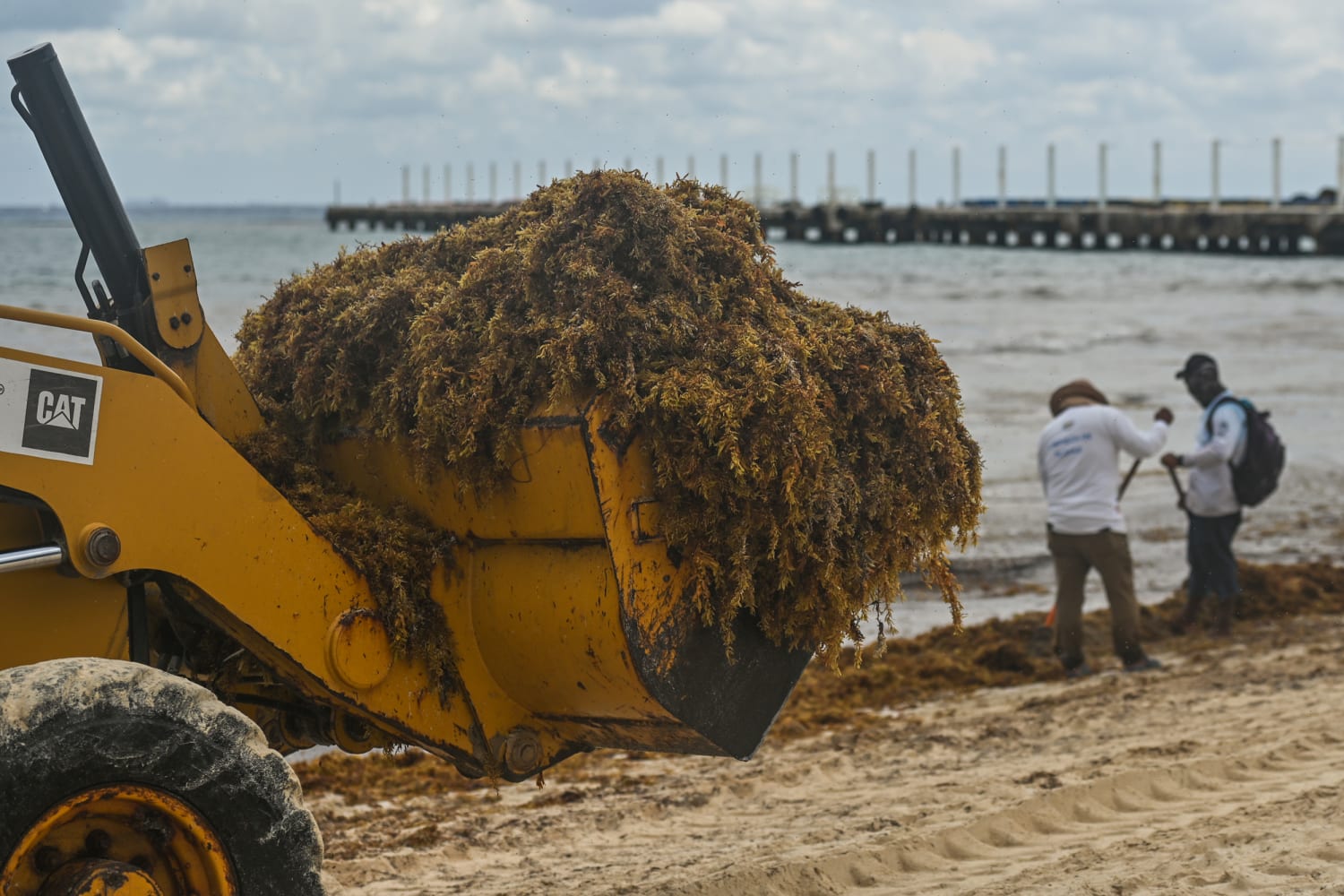
A raft of brown algae in the Atlantic Ocean is so big it can be seen from space.
Spanning approximately 5,000 miles, about twice the width of the United States, the thick layer of sargassum floats between the Gulf of Mexico and the West African coasts.
In open water, these giant mats of algae are mostly harmless and even have some benefits, including serving as habitat for certain fish and crustaceans and absorbing carbon dioxide. But ocean currents are pushing sargassum westward, causing hundreds of tons of seaweed to wash up on beaches in the Caribbean and the Gulf of Mexico.
There, it can suffocate corals, wreak havoc on coastal ecosystems, and lower water and air quality as it rots.
Scientists say this bloom is one of the largest on record, stoking fears that algae invasions on beaches in the coming weeks and months could be particularly severe.
“It’s amazing,” said Brian LaPointe, a research professor at Florida Atlantic University’s Harbor Branch Oceanographic Institute. “What we’re seeing on the satellite images doesn’t bode well for a clean beach year.”
Sargassum growth varies from season to season. LaPointe, who has studied it for four decades, said the huge piles usually wash up on the South Florida coast in May, but Key West beaches are already flooding with algae. Parts of the Yucatan Peninsula in Mexico, including Cancun, Playa del Carmen and Tulum, are preparation for up to 3 feet of sargassum buildup in the days to come.
Giant sargassum mounds are more than just a nuisance and an eyesore, said Brian Barnes, a research assistant professor in the University of South Florida College of Marine Sciences.
“Even if it’s only in coastal waters, it can block inlet valves for things like power plants or desalination plants, marinas can be completely flooded and ships can’t navigate,” he said. “It can really threaten critical infrastructure.”
Last summer, the US Virgin Islands declared a state of emergency after unusually high amounts of sargassum caused water shortages on St. Croix.
Other impacts on human health are being highlighted. As the algae rots, it releases hydrogen sulfide, which can cause respiratory problems for tourists and surrounding residents, LaPointe said.
“After the big blooms of 2018, doctors in Martinique and Guadeloupe reported thousands of people going to clinics with respiratory complications from the air coming out of these rotting sargassum mounds,” he said.
Then there are the financial concerns. Sargassum invasions can stifle tourism, and removing hundreds of tons of seaweed from beaches is costly.


