


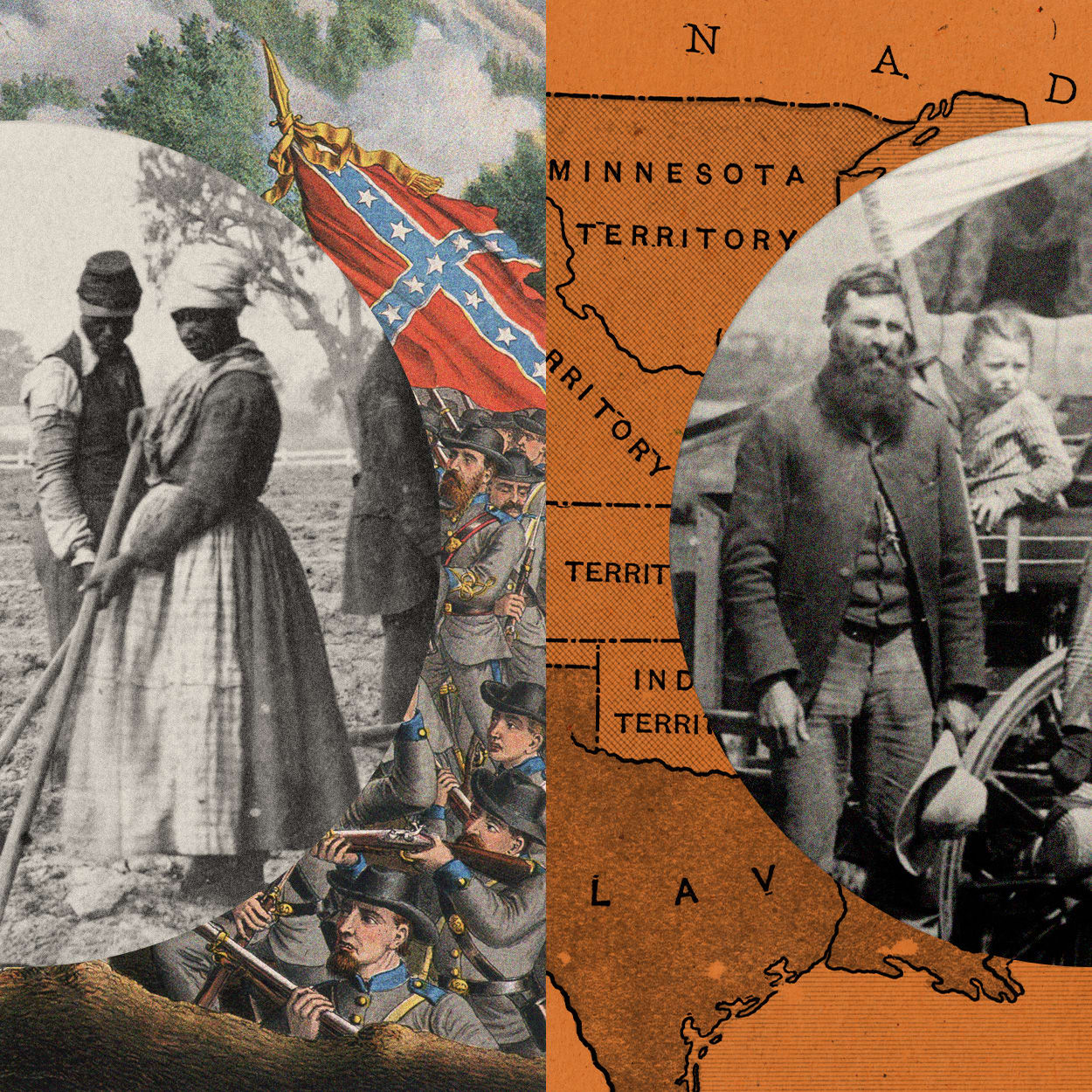
A new study describes how the migration of whites during and after the Civil War from the Confederate South to the West reinforced white supremacy and institutional racism in nonslave states, helping to create the vast racial disparities that Today they exist all over the country.
Five researchers from different universities collaborated on the study, called “Confederate Diaspora,” to collect and study census data that tracked the westward migration of white Americans, including 60,000 former plantation owners. Old-time Southerners assumed local positions of authority, such as police officers, clergy, and politicians, giving them influence in creating a post-Civil War culture that continued to oppress blacks even after slavery ended.
This results in structural and systemic racism in nearly every area of life today — education, housing, employment, health care, and wealth, among other areas — that continues to hinder progress for blacks, according to a working paper by the National Bureau of Economic Research this month.
Former Confederates “continued to pass down norms to their children and non-Southern neighbors,” the researchers wrote, “shaping racial inequities in work, housing, and policing.”
Researcher Patrick Testa, an assistant professor of economics at Tulane University in New Orleans, said the impact of the Confederates on other parts of the country was deep and long-lasting.
In the three decades after the Civil War, white Southerners were more likely than other white people to take government jobs, he said, and former slaveholders were even more likely to take those positions, he said.
“What we ultimately show is that these migrants,” Testa said, “through these government channels and public authority channels, helped lay the groundwork for these kinds of racial symbols and norms and a grassroots Confederate nostalgia. wide really take off. at the national level at the beginning of the 20th century.
One of those “norms” was the institution of the Ku Klux Klan and the racial terror it inflicted on many parts of the country. In the report, the researchers identify an “overrepresentation of earlyand second-generation immigrants into the KKK,” adding that the second-generation KKK established in 1915 helped “rejuvenate and incorporate Confederate culture.”
Those born in the South were 11% more likely to belong to the KKK in the Denver metropolitan area, for example, a major center of Klan activity in the 1920s beyond the South, according to the report.
“The damaging legacies of slavery persist beyond those who experience being a slave, but across generations and places,” Testa said.
Along with census data, the researchers analyzed KKK membership records of second-generation Confederate immigrants who were born outside the South but maintained slave-era norms. “This suggests,” Testa said, that the transmission of racial animosity from generation to generation may have been “an important vehicle for maintaining diaspora influence long after the initial Confederate immigrants had passed.”
As the California Reparations Task Force is set to deliver its recommendations to the state Legislature next week, this new study crystallizes how states that did not legally allow slavery, like California, still contributed mightily to oppressing Black people.
Some detractors of reparations they have argued that California was not a slave state and therefore should not offer reparations. But in the latter part of the 19th century it became home to numerous former Southerners and was populated by so many Confederate-aligned citizens that it supported John C. Breckinridge in the 1860 presidential election. Breckinridge advocated the expansion of slavery and supported the Fugitive Slave Act of 1850, which required the return of an enslaved person to a plantation even if they were in a “free state.”
“It’s important to look beyond the South, even to places like California,” Testa said, “and look for ways like reparations… to heal these divisions, to heal socioeconomic gaps.”
Because many parts of California favored Breckinridge, it became a popular destination for southerners at the time. “Outside of the South, California is perhaps the most intense in terms of a cultural index of how accepting of racism is,” Testa said.
Studying the spread of ex-Confederates was important, Testa said, because it provides hard data on how the evils of slavery and Confederate ideology spread throughout the United States.
“In order to understand the multiple roots of the racial divide in American society, which continues to persist long after, is important,” Testa said.


