


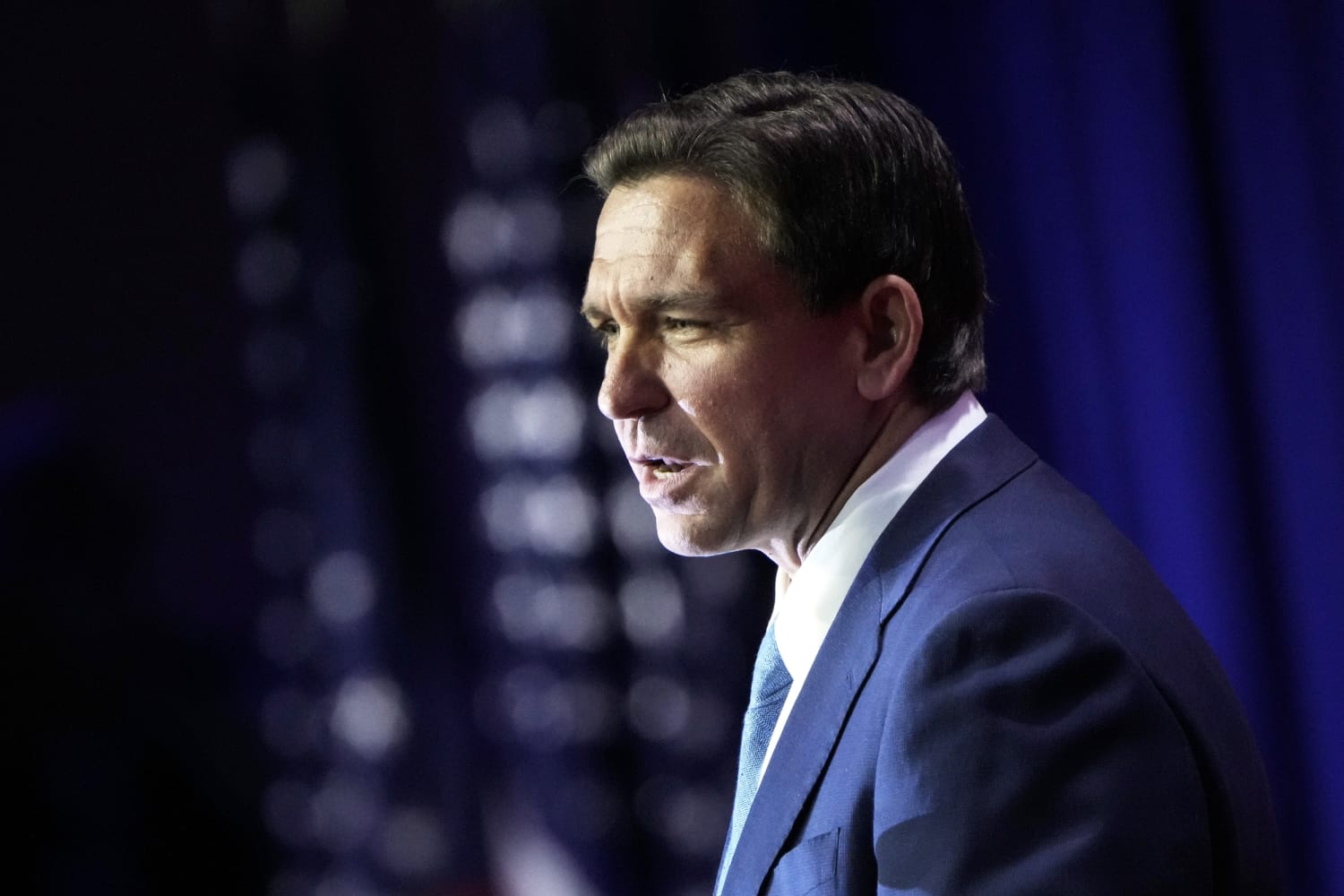
DeSantis did not mention Trump by name, but he did offer a veiled criticism of the losses Republicans have suffered in the past three election cycles as Trump helped lead the GOP efforts.
“None of this matters if we don’t win,” DeSantis said. “There is no substitute for victory. We cannot continue with the culture of losing where we lose winnable races.”
Never Back Down, a pro-DeSantis super PAC, also framed his comments as anti-Trump, even when DeSantis did not directly mention him by name.
After his speech, the group tweeted that the crowd booed “Trump for siding with Disney woke up!” The crowd booed when DeSantis spoke about Disney, but he didn’t mention Trump once.
After his speech, DeSantis held a separate meeting with a small group of pastors. In the meeting, which qualified as a roundtable, DeSantis briefly reemphasized many of the points he made in his speech.
During a private dinner Thursday night to discuss conservative-based criminal justice reforms, there were people in the room who were openly upset that DeSantis did not support the First Step Act, the Trump-era legislation that focused in reducing re-incarceration rates. Last month, DeSantis made waves when he told conservative pundit Ben Shapiro that he would repeal Trump’s signature criminal justice reform, saying it “allowed dangerous people to reoffend and really hurt a lot of people.”
The private dinner was co-hosted by Rep. Doug Collins, a former Georgia Republican who sponsored the First Step Act while in Congress and now works on criminal justice reform issues.
“No one who spoke mentioned DeSantis by name, but clearly there was disappointment in the room,” one person at the dinner told NBC News. “And you were talking about those headlines.”
It’s a reference to the series of stories that were written after DeSantis told Shapiro that he would repeal the proposal.
On Saturday, a public safety panel featuring Ja’ron Smith, a former Trump administration official, focused heavily on the First Step Act, a sign that it has not lost the support of conservative criminal justice reformers. .
“We were able to pass legislation called the First Step Act,” he told the crowd, “that was focused on reducing recidivism in our federal prisons.”
Trump himself no longer openly promotes the legislation. Other candidates, including former Vice President Mike Pence, have said it is time to “rethink” the law. As the legislation has become a talking point in the Republican primary, Trump has not weighed in, not even responding to a request for comment from NBC News.
Collins told NBC News that DeSantis “sat next to me” on the House Judiciary Committee and voted yes. DeSantis voted in favor of a version of the bill in May 2018. The final version passed in December of that year, after DeSantis had already been elected governor.
Collins said that the candidates, including DeSantis, who began to challenge the bill have not contacted him. The bill passed the House in 2018 with a 360-59 bipartisan vote, including support from DeSantis.
“If any of them want to talk to me about it, I’m happy to talk to them,” Collins said Saturday night of presidential candidates who might have concerns.
The DeSantis campaign did not respond to a request for comment on why it no longer supports the proposal after voting for it.
Most of the other presidential candidates speaking at the conference this week focused on their backgrounds and plans if elected, generally not mentioning Trump or any other candidate in the field.
Common themes were parental rights in education, making sure the federal criminal justice system isn’t “weaponized” (a term Republicans have used consistently after Trump was accused of allegedly keeping classified documents from his time in the White House) and abortion. which has long been one of the biggest political struggles for the Faith and Freedom Coalition.
“We are creating a culture of life in America,” South Carolina Senator Tim Scott said. “And that’s a really good thing.”
Former Trump administration ambassador to the United Nations, Nikki Haley, said she was the “most pro-life governor in the country” when she was governor of South Carolina.
Even candidates who want the party to move away from Trump tried to raise the issue tactfully. Larry Elder, a conservative radio host who ran for governor as part of the 2021 effort to oust Democratic California Gov. Gavin Newsom, says he still likes Trump but doesn’t think he’s eligible.
“Have you lost friends because of Donald Trump?” she asked. “Are you walking on eggshells at work because of Donald Trump? Do you have strained relationships because of Donald Trump?
Elder was arguing that swing voters will never go anywhere near Trump, and that Republican voters “have to realize that they need to unite around a candidate who is not Trump, but who has the same America First policies.”
But there was an overwhelming feeling that such legal issues not only did not concern Trump’s most ardent supporters, but that those who challenged him would be jeered and jeered.
“Chris Christie couldn’t be here, I apologize,” joked David Brodie, a commentator for the Christian Broadcasting Network, opening a panel on media bias.
After about 15 minutes, he returned to the same laugh line to close out the panel.
“Chris Christie says hello,” he said, concluding the event.


