

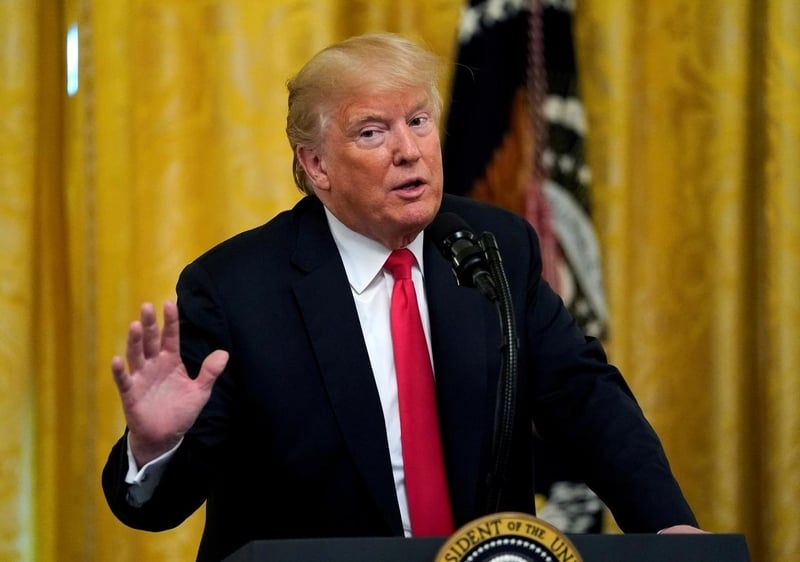
As the trade conflict intensifies between the United States and China, China has declared a new series of retaliatory duties on US products, scheduled to begin on Monday. These actions are a reaction to the most recent US tariffs and indicate the ongoing tension between the globe’s two biggest economies. President Donald Trump, on the other hand, has proposed broadening tariffs to additional nations, further altering global trade relations.
China’s recent action was announced soon after the US imposed a 10% charge on all imports from China earlier this month. Beijing’s response features a 15% duty on American coal and liquefied natural gas, along with a 10% tax on US crude oil, farm equipment, and vehicles with large engines. This declaration highlights China’s resolve to reciprocate in response to Washington’s extensive trade measures.
An escalating trade conflict
A growing trade standoff
Although Trump did not identify which nations might be affected next, his comments imply a comprehensive strategy to reevaluate trade deals. He also reiterated his displeasure with the European Union’s steeper tariffs on American-manufactured cars compared to US duties on European automobiles. While Trump alluded to possible tariffs on products from the EU, he showed hope for achieving a trade agreement with the United Kingdom.
While Trump did not specify which countries might be targeted next, his remarks suggest a broad approach to revisiting trade agreements. He also reiterated his dissatisfaction with the European Union’s higher tariffs on American-made cars compared to US levies on European vehicles. Although Trump hinted at potential tariffs on EU goods, he expressed optimism about reaching a trade deal with the United Kingdom.
China’s reaction to US tariffs goes further than import duties. Beijing has initiated an anti-monopoly probe into Google and placed PVH, the parent company of Calvin Klein and Tommy Hilfiger, on its “unreliable entity” list. These moves act as a caution to significant American firms conducting business in China, emphasizing the wider consequences of the trade dispute.
In a larger step, China has enacted export restrictions on 25 rare metals vital for producing electronic gadgets and military gear. This choice might have extensive impacts on international supply chains, especially in sectors dependent on these crucial materials.
In a more significant move, China has imposed export controls on 25 rare metals that are essential for manufacturing electronic devices and military equipment. This decision could have far-reaching consequences for global supply chains, particularly in industries reliant on these critical materials.
Trade war impacts and global implications
The latest round of tariffs and countermeasures has drawn criticism from both governments and international observers. Beijing has accused Washington of making baseless claims about its involvement in the trade of synthetic opioids, such as fentanyl, as a justification for the US tariffs. In a formal complaint to the World Trade Organization (WTO), China argued that the US measures were discriminatory and violated global trade rules. However, experts warn that the WTO’s dispute resolution mechanism is currently unable to function effectively, leaving little room for recourse.
Trump también ha establecido aranceles sobre productos de México y Canadá, pero ha suspendido temporalmente su aplicación para permitir la continuación de las negociaciones. Estas políticas cambiantes reflejan la naturaleza flexible de la estrategia comercial de la administración, caracterizada por una combinación de acciones agresivas y ajustes de último momento.
China’s Economic Counterattack
China’s recent tariffs are a component of a wider strategy to safeguard its interests while signaling to the US about the repercussions of the trade conflict. By focusing on significant American exports such as energy and agriculture, Beijing seeks to apply pressure on sectors crucial to the US economy. The addition of rare metals in its export restrictions further emphasizes China’s strategic mindset, given that these materials are essential for cutting-edge technologies and defense systems.
Analysts point out that the repercussions of the trade war reach well beyond the two nations involved. The ramifications are impacting global markets, as businesses and consumers encounter elevated costs and greater uncertainty. The persistent conflict has also put a strain on supply chains, interrupted international trade routes, and posed difficulties for industries dependent on cross-border cooperation.
Possible Shift Ahead?
A potential turning point?
A pesar de las dificultades, hay espacio para el optimismo en cuanto a que ambas naciones podrían eventualmente llegar a un acuerdo que aborde sus preocupaciones respectivas. Sin embargo, el camino hacia una resolución probablemente será complejo y lleno de obstáculos políticos y económicos.
The path forward
Mientras la guerra comercial sigue desarrollándose, las apuestas tanto para EE.UU. como para China permanecen altas. Para Trump, la imposición de aranceles se alinea con su objetivo más amplio de reestructurar las relaciones comerciales globales de Estados Unidos y cumplir con las promesas de campaña. Para China, el desafío radica en equilibrar su respuesta a las acciones estadounidenses mientras protege sus intereses económicos.
The upcoming weeks will be crucial in shaping the course of this trade dispute. As new tariffs are poised to be implemented and more actions possibly looming, the global community will be closely monitoring how these two major powers manage this increasingly intricate and contentious relationship.
The coming weeks will be critical in determining the trajectory of this trade conflict. With new tariffs set to take effect and additional measures potentially on the horizon, the world will be watching closely to see how the two superpowers navigate this increasingly complex and contentious relationship.
In the meantime, businesses, consumers, and policymakers will need to adapt to the evolving trade landscape. Whether through negotiation, compromise, or continued escalation, the resolution of this trade war will have far-reaching implications for the global economy.



.jpg "How to set up an offshore company in Panama in five business days")
.jpg "Understanding the Panama pensionado visa process for retirees from the US and Canada")