

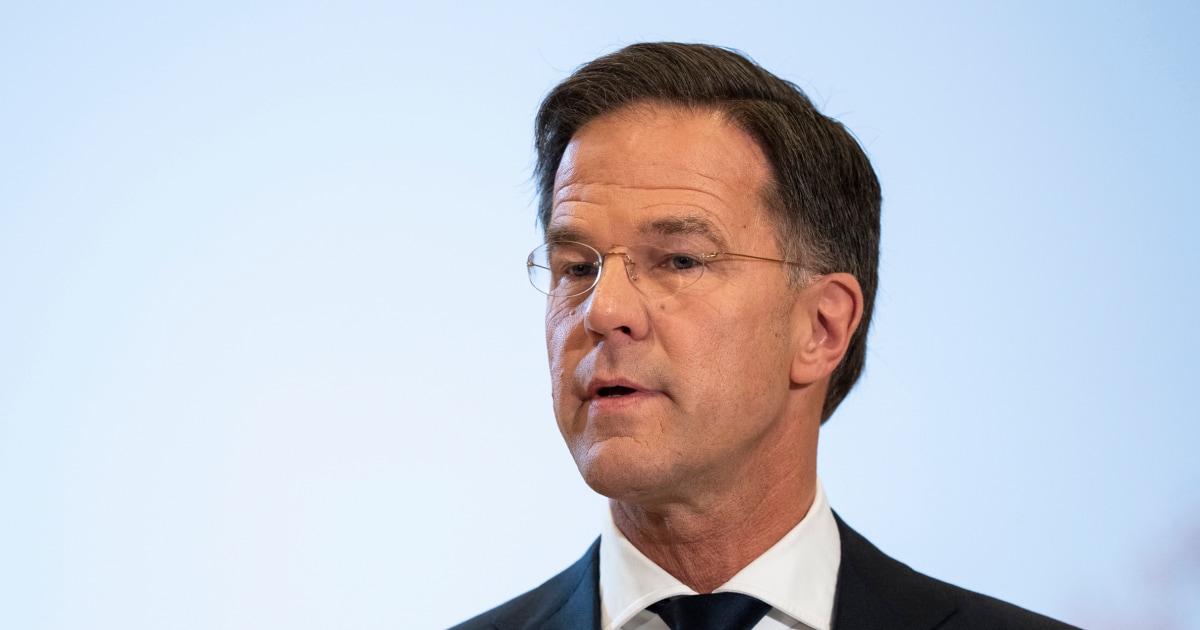

AMSTERDAM — The Dutch government collapsed Friday after failing to reach an agreement on immigration restrictions, which will trigger new elections in the fall.
The crisis was triggered by a push by Prime Minister Mark Rutte’s conservative VVD party to limit the flow of asylum seekers to the Netherlands, which two of his four-party governing coalition refused to support.
“It’s no secret that coalition partners have differing views on immigration policy. Unfortunately, today we have to conclude that those differences have become insurmountable. Therefore, I will submit the resignation of the entire cabinet to the king,” Rutte said at a televised news conference.
Tensions came to a head this week when Rutte demanded support for a proposal to limit entry to the children of war refugees already in the Netherlands and make families wait at least two years before they can be reunited. .
This latest proposal went too far for the small Christian Union and the liberal D66, causing a deadlock.
Rutte’s coalition will remain as an interim government until a new administration is formed after fresh elections, a process that in the Netherlands’ fractured political landscape often takes months.
The ANP news agency, citing the national electoral committee, said the elections would not take place before mid-November.
An interim government cannot decide on new policies, but Rutte said that would not affect the country’s support for Ukraine.
The Netherlands already has one of the toughest immigration policies in Europe, but under pressure from right-wing parties, Rutte had been trying for months to find ways to further reduce the influx of asylum seekers.
Asylum applications in the Netherlands increased by a third last year to more than 46,000, and the government has projected they could rise to more than 70,000 this year, surpassing the previous high of 2015.
This will put further pressure on the country’s asylum facilities, where for months last year hundreds of refugees were forced to sleep rough with little or no access to clean water, sanitation facilities or medical care.
Rutte last year said he felt “ashamed” after the humanitarian group Doctors Without Borders sent a team to the Netherlands for the first time to help with the medical needs of migrants at the asylum processing center.
He promised to improve conditions at the facility, mainly by reducing the number of refugees arriving in the Netherlands. But he failed to win the support of coalition partners who felt his policies went too far.
Rutte, 56, is the longest-serving government leader in Dutch history and the oldest in the EU after Hungary’s Viktor Orban. He is expected to lead his VVD party again in the upcoming elections.
Rutte’s current coalition, which came to power in January 2022, was his fourth consecutive administration since he became prime minister in October 2010.


