

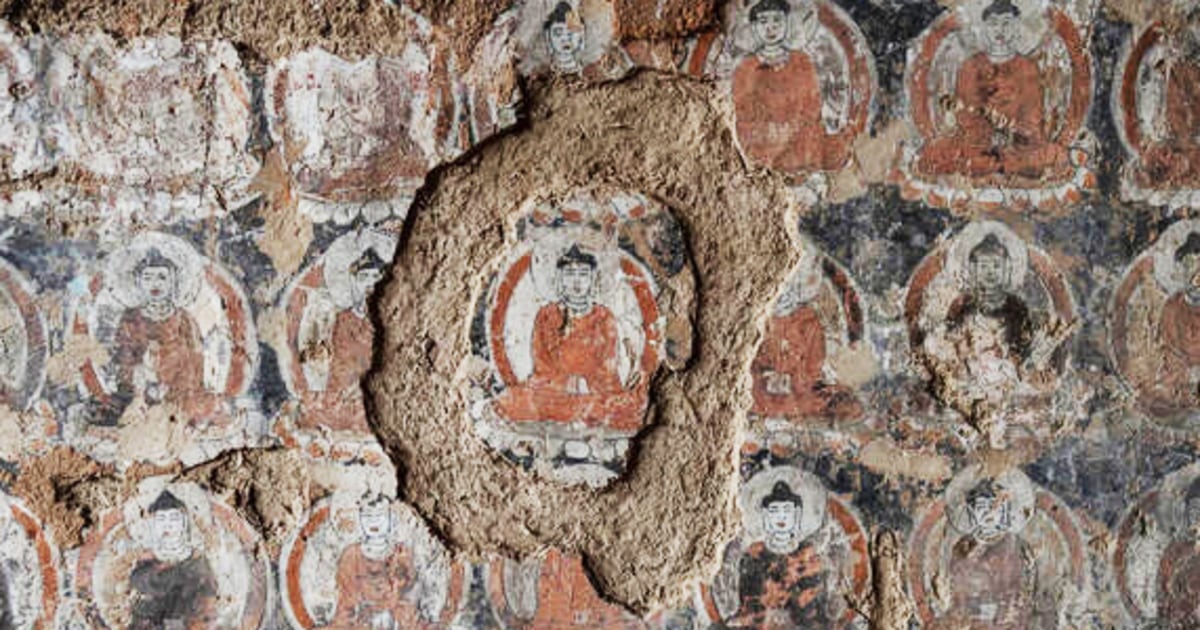
Ancient Buddhist murals in northwestern China are under “direct threat” as a result of record rainfall levels brought on by climate change, researchers said this week.
Extreme rains in Dunhuang and Zhangye in China’s Gansu province have put UNESCO world heritage sites at risk, with cave monasteries dating back to the fourth century already damaged, environmental group Greenpeace said on Monday.
Rainwater leaks and rising humidity have damaged ancient rock paintings, including those in the famous Mogao Grottoes, he said, with some caves even collapsing.
“Moisture spikes, flash floods and landslides are already happening,” said Li Zhao, a senior researcher at Greenpeace East Asia’s Beijing office.
Greenpeace said that while total rainfall has increased in Gansu since 2000, the number of rainy days has actually decreased, meaning individual rainy episodes have become more intense. Temperatures in the province have also risen faster than the global average.
China is conducting a nationwide cultural heritage survey, but Li warned that some of the country’s treasures could already be gone by the time it is completed.

“The sites we analyzed include some of the best-funded and best-staffed cultural heritage sites in China,” Li said. “There are hundreds of under-funded and under-studied sites across China that face these same risks.”
Gansu is not the only region at risk.
Higher levels of rain in the normally arid northern province of Shanxi have also affected old buildings, some of which are more than 1,000 years old, Friends of Nature, a Beijing environmental group, said last month.
The Jinci Temple and the Tianlongshan Grottoes, both national heritage sites in Shanxi, collapsed, and the province’s ancient towers and walls were damaged by unusually heavy rains, it said.


