


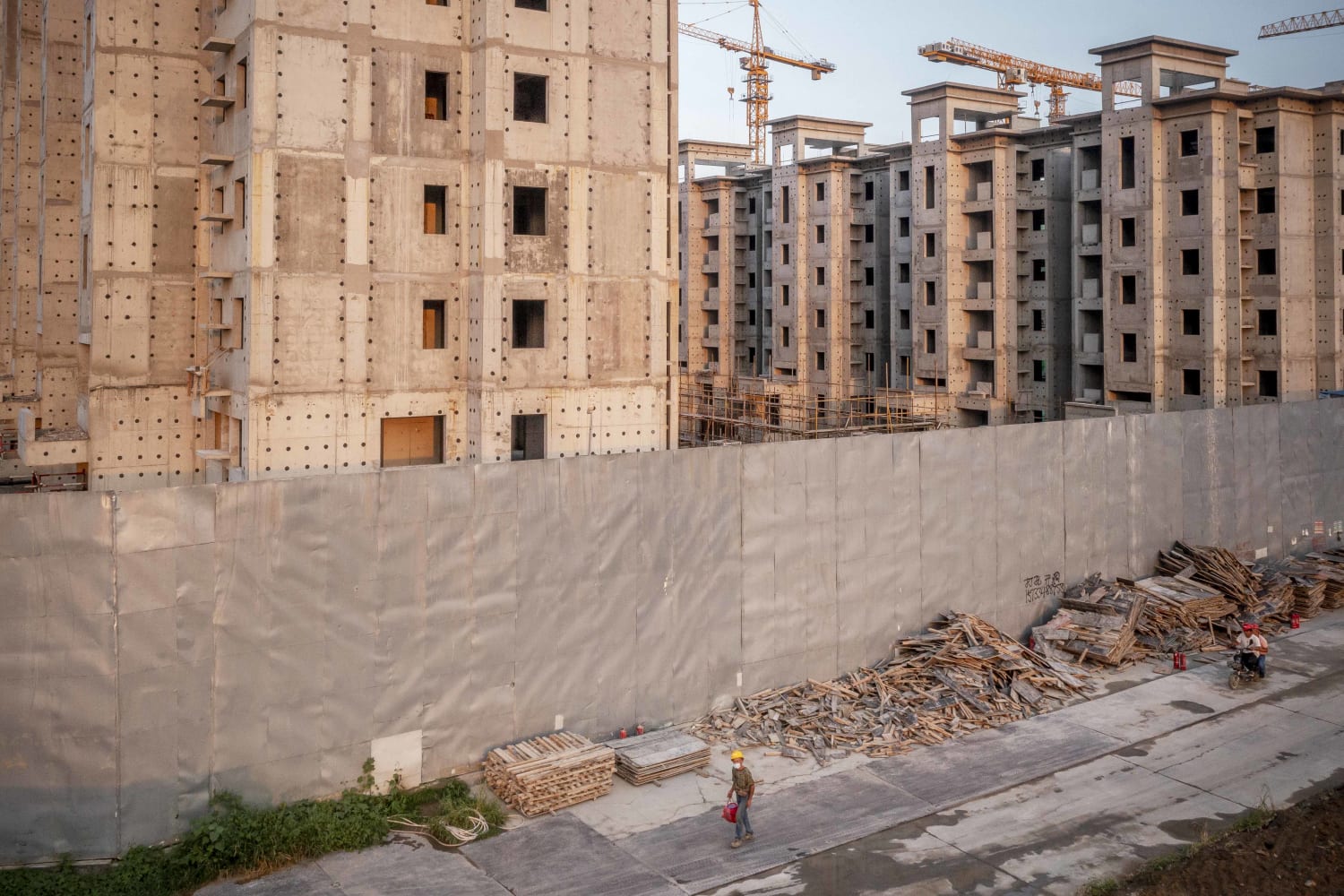
China Evergrande Group posted a combined loss of $81 billion in its long-overdue earnings report on Monday night.
The world’s most indebted real estate developer defaulted in 2021 and announced an offshore debt restructuring program in March, after struggling to complete projects and pay suppliers and lenders.
Evergrande’s net losses for 2021 and 2022 were 476 billion yuan (66.36 billion U.S. dollars) and 105.9 billion yuan (14.76 billion U.S. dollars), respectively, as a result of property write-offs, return of land, losses in financial assets and financial costs, the company said.
In its last normal year of operation, 2020, Evergrande posted a net profit of 8.1 billion yuan.
Evergrande’s colossal debt pile in recent years has become the source of serious concern about China’s real estate sector, one of the foundations of the Chinese economy, with defaults and abandoned real estate projects throughout the country. The company’s restructuring proposal will be presented to the High Court on July 24.
JPMorgan estimates that around 50 property developers have defaulted on $100 billion in offshore bonds in the past two years, while dozens have been suspended from listing on the Hong Kong stock exchange.
Sandra Chow, co-head of Asia-Pacific research at CreditSights, told CNBC’s “Squawk Box Asia” on Tuesday that there will be consolidation in China’s real estate market, which is becoming an “increasingly bifurcated sector.”
CreditSights tracks the monthly contract sales figures of more than 30 developers, and Chow said only eight reported increases in their sales numbers.
“Unsurprisingly, all of them are state-bound or the strongest developers, so we’re seeing this growing bifurcation where the strong developers are state-bound, the big players and the smaller ones are left languishing, and it will be an increasingly consolidated sector”, explained Chow.
“It’s understandable that if you’re a home buyer, you won’t buy a home from a weak player as well because there’s a risk that the developer won’t be able to complete your home on time and then you’ll be left with that responsibility, so it’s pretty hard to see how smaller developers will win back the trust of homebuyers and then get the cash to turn their businesses around.”


