

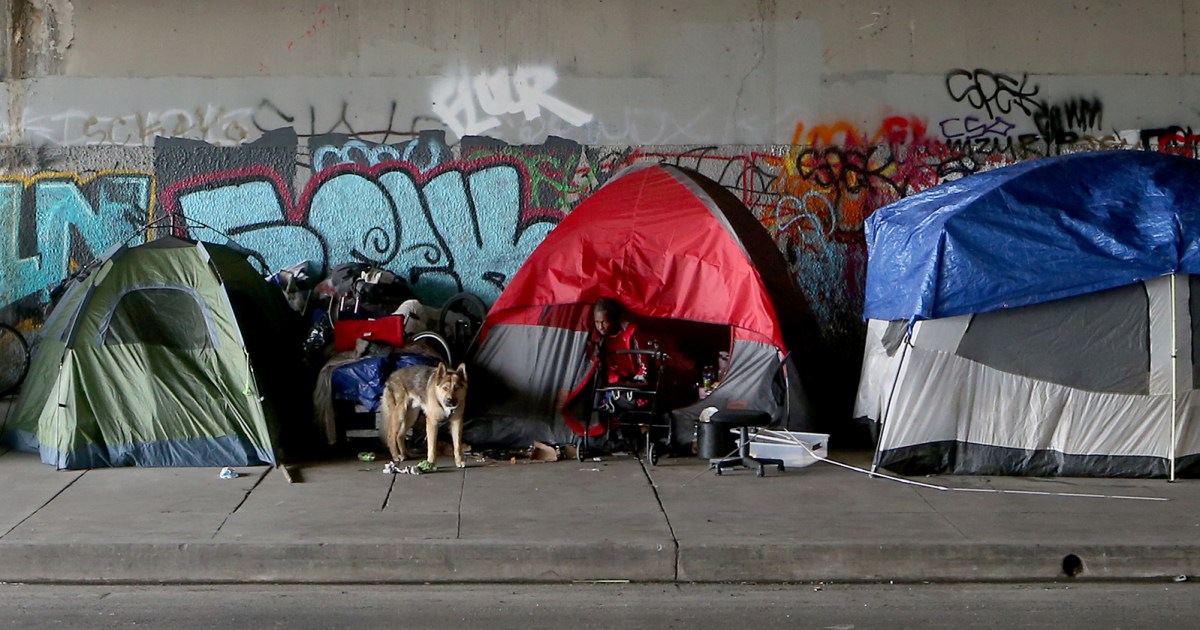

Nearby, Walter Lindsey was clearing the rubble of his camp under a busy highway overpass. He moved to Culver City from downtown Los Angeles two weeks ago and said he prefers the “laid-back” atmosphere of the area to the “depressing” scenes of the slums.
He now lives behind a makeshift wall of plastic sheeting and cardboard boxes near Bradley’s camp. The two have taken it upon themselves to sweep the sidewalk every day to allow foot traffic and discourage police from complaining about their belongings.
Like Bradley, Lindsey was unaware of the new ordinance and has no backup plan in case she is required to move.
“I guess I have to get them ready,” she said of her homeless neighbors.
“As long as the weather is good, I’d rather be outside than locked up in a shelter,” he said. “It’s too depressing.”
During a heated city council meeting Monday night, officials said the ban would not apply until the city meets key goals, including opening a designated campsite where homeless residents can set up their tents and the conversion of 73 hotel and motel units into permanent units and interim housing.
Combined, the two programs would add approximately 100 homeless beds. According to the 2022 homeless count, about 350 people live on the streets of Culver City.
“Continuing to criminalize people for being in poverty, for fighting back, has never lifted anyone out of poverty and never will,” said Bryan “Bubba” Fish, a member of the city’s homeless advisory committee. “And yet we continue on the same path.”
There is no clear timeline for when the housing units will be available, according to the city, and officials have not determined who will be tasked with clearing the encampments and what enforcement measures, such as fines and arrests, will be used if people refuse to move. .
“We’re putting the cart before the horse,” said Culver City Council member Freddy Puza, who voted against the ordinance. “I’m not trying to be intentionally vague, I just don’t know what the next steps are.”
In neighboring Los Angeles, Mayor Karen Bass has spent much of her first two months in office issuing emergency orders aimed at quelling the ongoing homelessness crisis.
Bass told NBC’s “Meet the Press” in December that his plan to move the homeless into rooms immediately won’t “address everyone, but it will target, hopefully, a significant number.” She said people would not be forced to move, but sanitation crews would be ready to clean up areas after people have left.
Bass declared a state of emergency due to homelessness on her first day as mayor and said she intends to move more than 17,000 homeless people into temporary and permanent housing during her first year in office.
Since then, he has issued emergency directives to release surplus and unused property for housing, clear encampments under the city’s Inside Safe program and push for a $50 million emergency fund that would pay for homeless initiatives.
According to the 2022 homeless count, more than 69,000 people were homeless on a given night in Los Angeles County, an increase of 4.1% over 2020. About 42,000 were within the city of Los Angeles, where public frustration grew as tents proliferated on sidewalks, in parks and under freeway overpasses during the pandemic.
Bass’s emergency declarations appear to have created a ripple effect in neighboring cities, including Santa Monica and Culver City, which have begun issuing their own proclamations in recent weeks.
But the push to clean up the most obvious signs of homelessness has failed to address what many experts say is the root cause of the crisis: the shortage of affordable housing.
“No one should have any illusions that all of a sudden the camps will collapse,” said John Maceri, chief executive of The People Concern, a service provider. “It’s going to take a minute. This takes 50 years.”


