

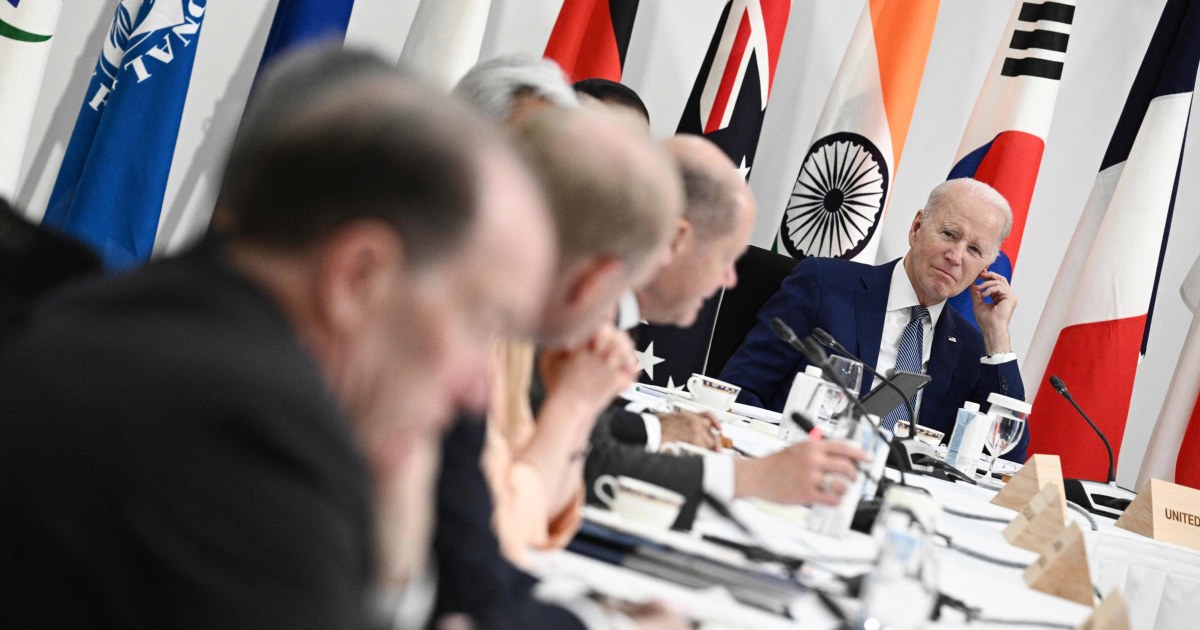
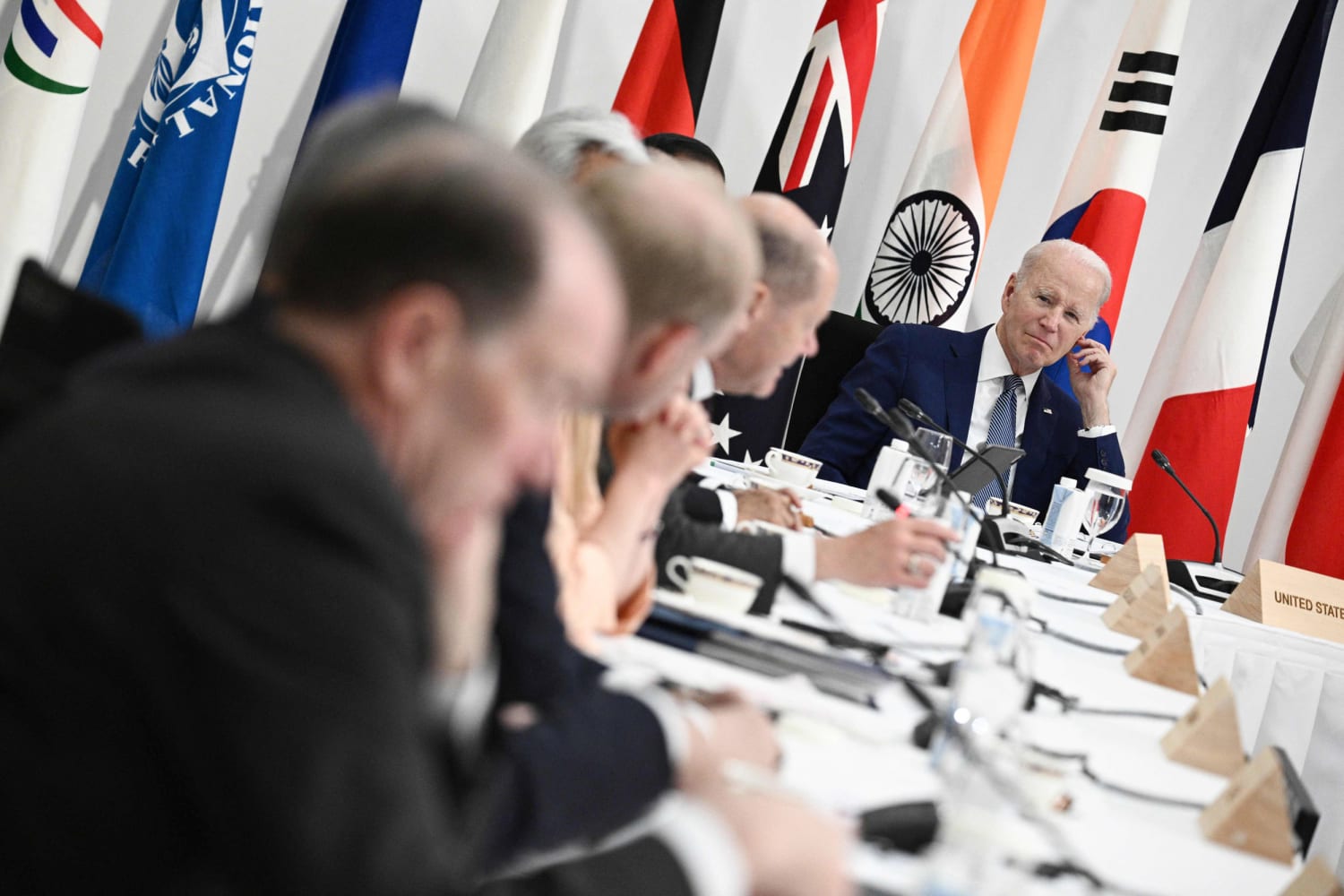
Chinese state-backed spokesman Global Times called the Group of Seven summit an “anti-China workshop” on Monday, after Beijing summoned Japan’s envoy and rebuked Britain in a fiery response to statements issued the weekend in Hiroshima.
A joint statement issued on Saturday singled out China on issues ranging from Taiwan and maritime claims to economic coercion and human rights, underscoring tensions between Beijing and a group of wealthy countries that includes the United States.
“The United States is pushing hard to spin an anti-China web in the Western world,” the Global Times said in an editorial on Monday headlined “G7 has descended on an anti-China workshop.”
“This is not only a matter of brutal interference in China’s internal affairs and slander of China, but also an undisguised push for confrontation between the camps.”
Beijing’s foreign ministry said it strongly opposed the G-7 statement and on Sunday night said it had summoned Japan’s ambassador to China as part of its protest to the summit host.
Russia, a close ally of China that was also called out in the G7 statement for its invasion of Ukraine, said the summit was an “incubator” for anti-Russian and anti-Chinese hysteria.
Separately, China’s embassy in Britain urged London to stop slandering China on Sunday, after British Prime Minister Rishi Sunak said Beijing represents the world’s biggest challenge to security and prosperity.
Despite Beijing’s scathing reaction, President Joe Biden said he expected a thaw in icy relations with China “very soon.” The Group of Seven (G7) also includes Canada, France, Germany and Italy.
Chinese Vice Foreign Minister Sun Weidong has summoned the Japanese ambassador to register protests over the “hype around China-related issues,” a ministry statement said late Sunday.
Sun said that Japan collaborated with the other countries at the G7 summit “in joint activities and statements… to smear and attack China, seriously interfering in China’s internal affairs, violating the basic principles of international law and the spirit of the four political documents between China and Japan”, referring to the China-Japan Joint Declaration of 1972.
He said Japan’s actions were detrimental to China’s sovereignty, security and development interests, and China is “strongly dissatisfied with and firmly opposed” to them.
“Japan should correct its understanding of China, seize strategic autonomy, adhere to the principles of the four China-Japan policy documents, and truly promote the stable development of bilateral relations with a constructive attitude,” Sun said.
Hideo Tarumi, Japan’s ambassador to China, refuted that it is “natural” for the G-7 to address issues of common interest as it has done in the past and will continue to do so in the future as long as China does not change. their behavior, according to a reading.
“China should first take positive steps to address those issues of concern if China demands not to refer to them,” Tarumi told Sun, according to the reading.
Japan’s Chief Cabinet Secretary Hirokazu Matsuno said during a Monday morning briefing that the country’s policy toward China has been consistent that it will press the issues that are necessary and urge responsible behavior while taking action. to address concerns and cooperate on common issues.


