

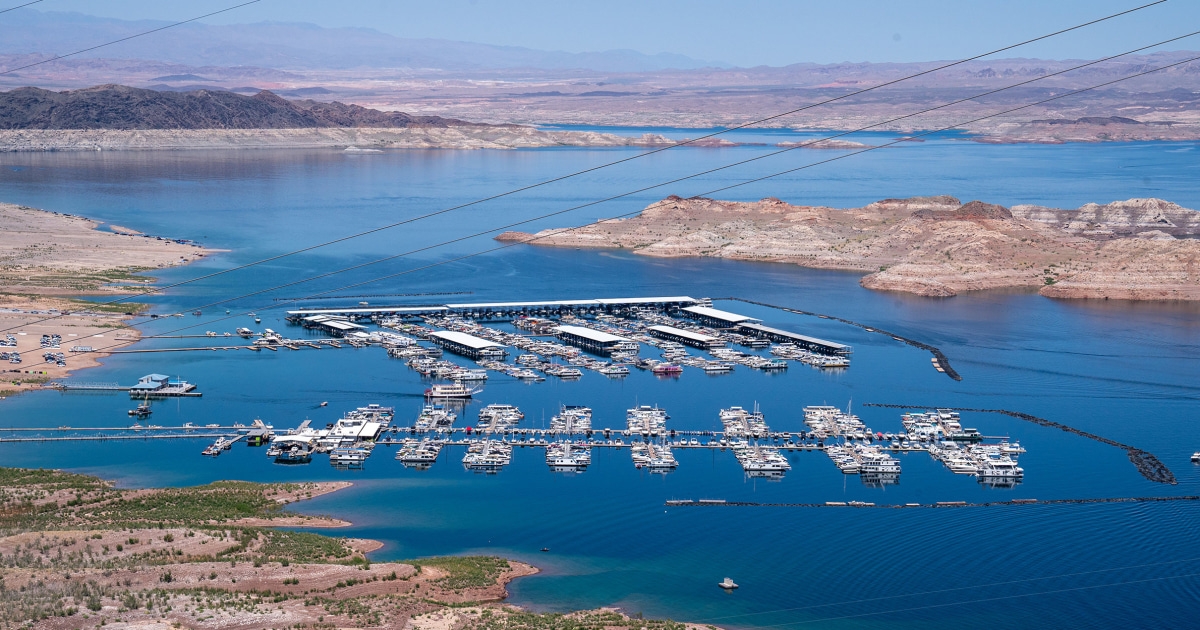

The seven states that depend on the Colorado River for power and drinking water have reached an agreement on cutbacks to keep the drought-stricken river flowing.
Three states — Arizona, California and Nevada — have agreed to a plan to conserve at least 3 million acre-feet of water by 2026, roughly the equivalent of the amount of water it would take to fill 6 million Olympic-sized swimming pools.
The Biden administration, which brokered the deal, announced the consensus deal. Monday in a press release.
The seven states that depend on the Colorado River were on the brink of crisis after decades of overuse. Ahead of a banner winter of snowfall, officials became concerned as the dams on Lake Mead and Lake Powell approached “dead pool” status, when flow would be cut off to the lower regions of the river as levels rise. of the water fell too low to pass through the dams.
About 40 million people depend on the Colorado River for drinking water. Utility companies depend on it to generate electricity at the Lake Mead and Lake Powell dams and keep power flowing in several states.
The deal could avert crisis in the short term and put states on a more sustainable trajectory for water use, but it requires less conservation than some scientists say is required to stabilize the river after a drought of more than two years. decades. The agreement avoids a difficult political situation for the Biden administration, which would have been forced to apply cuts unilaterally if the states could not negotiate a deal among themselves.
Interior Secretary Deb Haaland said the announcement was “a testament to the Biden-Harris administration’s commitment to working with states, tribes and communities across the West to find consensus solutions to climate change and the sustained drought”.
Once officially reviewed and approved by the Office of Reclamation, which operates the dams at Lake Mead and Lake Powell, the new agreement would be in effect until 2026.
As part of the agreement, the administration will use Inflation Reduction Act funds to compensate some farmers and other water users who temporarily agree to the cuts. While considering the new deal, the Biden administration has agreed to temporarily withdraw plans he drew up for dramatic cuts should state negotiations fail.
The governors of California, Arizona and Nevada, the lower basin states that accepted the cuts, applauded the agreement.
“California has worked to make significant cuts in water use, and now this historic partnership between California and other Lower Basin states will help maintain critical water supplies for millions of Americans as we work together to ensure long-term sustainability. run of the Colorado River. system for decades to come,” said California Gov. Gavin Newsom.
Negotiators from the four Upper Basin states — Colorado, New Mexico, Utah and Wyoming — have said they support the decision to submit the new plan for federal consideration and avoid federally imposed emergency measures.
In a letter to the Office of Recovery, the governors of California, Arizona and Nevada said they hoped the new agreement would allow negotiations to focus on “pivoting toward discussions on post-2026 operations that will address the impacts of climate change on the system.” of water supply”. availability and the existing over-allocation of water”.
The Office of Reclamation will open that process in the coming weeks, according to a news release from the Department of the Interior.
The Colorado River has been overallocated, meaning that farmers and other water users are collectively entitled to more water than normally flows each year, since its use was divided up in the Colorado River Compact of 1922. The effects of change climate, which is heating up and drying out the western states, are further reducing water supplies.
As water levels dropped this year, a winter of heavy snowfall prevented the most dire impacts. Many states in the Western West received more than double the snowfall than the annual averages. The snowpack, now rapidly melting and flowing into key deposits, gave state negotiators months of extra time to reach an agreement on the cuts.
This is a developing story. Please check for updates.


