

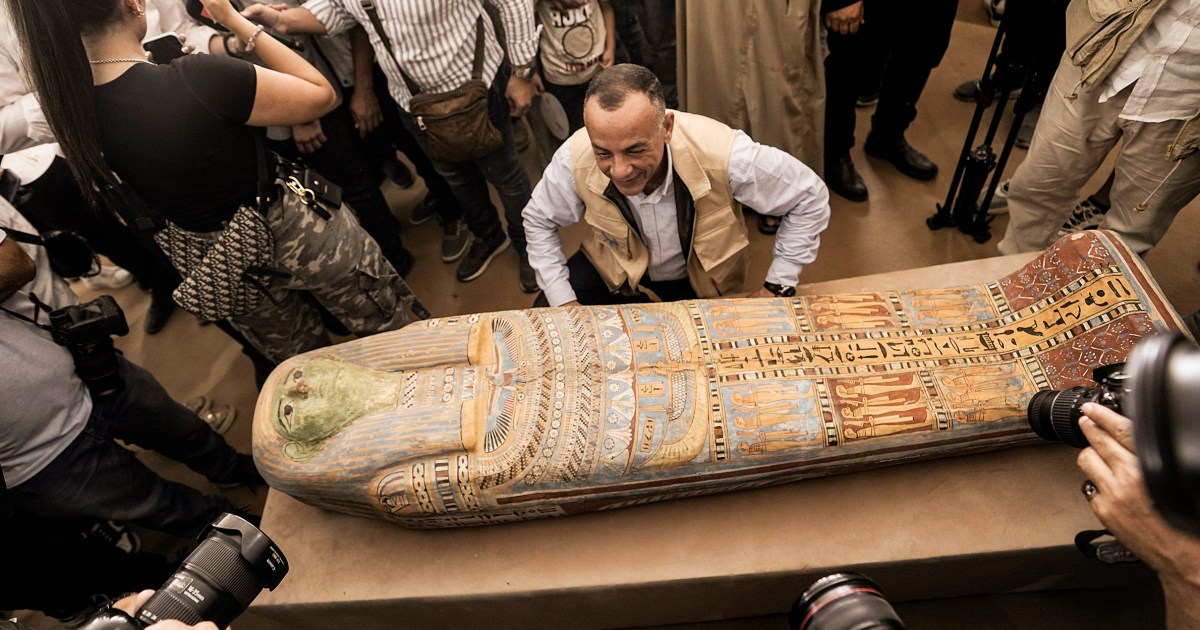
The workshops and tombs date back to the Pharaonic Dynasty 30 (380 BC to 343 BC) and the Ptolemaic period (305 BC to 30 BC), he said.
The animal embalming workshop was made up of mud and stone floors, and was discovered alongside bronze tools that would have been used in the mummification process. Inside the room were found five beds made of stone that were still standing, which would have been used to mummify the most sacred animals.
One of the tombs belonged to “Ne Hesut Ba” who was the chief scribe and priest of Horus and Maat during the fifth dynasty around 2400 BC. C., Sabri Farag, head of the Saqqara archaeological site, said in a separate news story. release.

The second tomb belonged to a Qadish priest named “Men Kheber” from the 18th dynasty (circa 1400 BC), he said.
Old Kingdom tombs for humans painted with the names of the dead and their wives were discovered.
Inside the New Kingdom tombs, dating from 1500 B.C. C., alabaster statues of the tomb owners were discovered still intact inside, with hieroglyphic text in blue.
In February, the discovery of an unusual set of ceramic vessels in the Saqqara necropolis shed light on how ancient Egyptians mummified bodies.


