

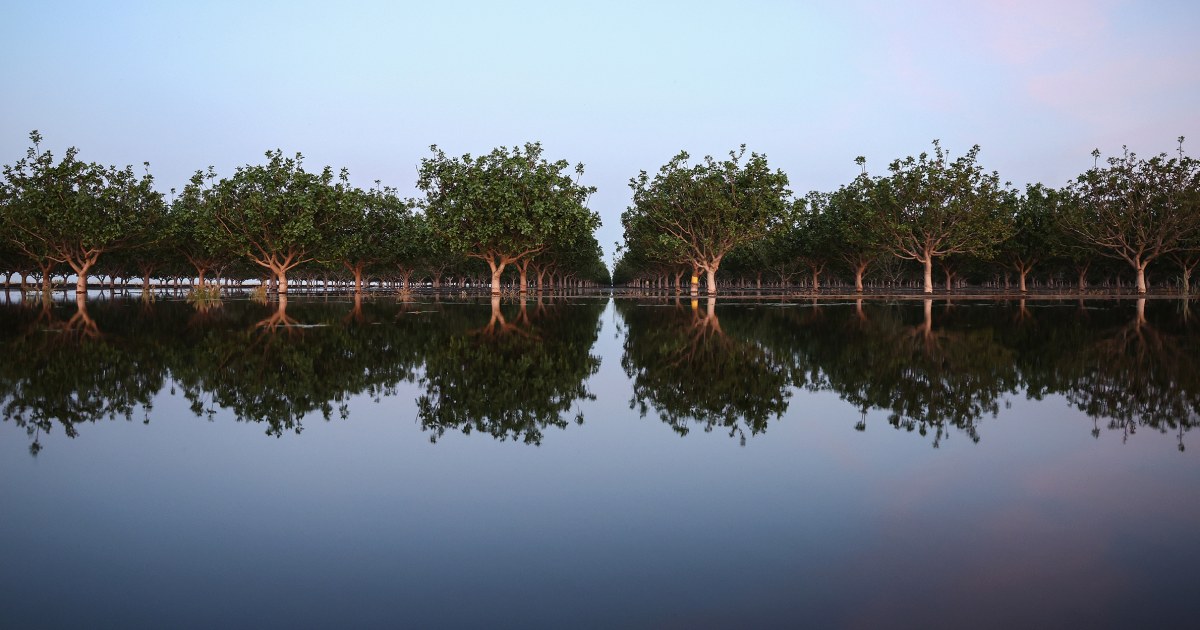
The once-dormant California lake was resurrected in this year’s extreme sequence of storms, and it’s not going away anytime soon.
Tulare Lake, which refilled for the first time in 40 years after atmospheric river storms battered California with snow and rain, is now receding but will take at least a year to fully evaporate, experts said.
“We’ll still have a Tulare Lake next year,” said Jeffrey Mount, senior fellow at the California Public Policy Institute’s Center for Water Policy.
The sudden reappearance of the lake, which was drained by farmland in the late 19th century, has caused hundreds of millions of dollars in agricultural losses and will require a substantial cleanup effort once the water is gone, as buildings have been inundated. farms, vehicles, houses and electrical installations. infrastructure still lurks within its waters.
Pacific Gas and Electric this spring used divers and helicopters to remove critical electrical infrastructure from the lake bed. And the sheriff’s office recently purchased a new airboat so it could travel across the surface of the water without snagging a propeller among debris floating in the lake or lurking below the surface.
California’s climate shifts violently from wet to dry, a pattern experts expect to become more pronounced as the atmosphere warms with climate change. Tulare Lake has become a symbol of the consequences of extreme rainfall in California, where decades-old planning and engineering are facing new tests.
Tulare Lake grew to cover nearly 114,000 acres, according to satellite measurements from the California Department of Water Resources. The agency said the lake’s levels have dropped since early June and now stretches over about 111,000 acres, according to agency spokesman Jason Ince.

Experts say that the water will eventually evaporate completely. The longevity of the lake is highly dependent on the seasonal trend of rainfall this winter.
“It all depends on what happens next winter,” Mount said.
The lake is now cloudy and contaminated with agricultural fertilizers, fuel and other contaminants, said Sgt. Nate Ferrier of the Kings County Sheriff’s Office, who recently visited the lake.
“It’s expansive: mile after mile of water,” Ferrier said, likening the experience to floating through “a ghost town on the water.”
The lake, which stretched about 10 miles this year, according to satellite imagery, remains a shadow of its historic extent. It was once the largest body of fresh water west of the Mississippi.
Some of the wildlife has returned. Ferrier said the birdsong echoed across the water during her visit. From the shore, she saw a fish jump up from the surface.
Some environmental advocates and the Tachi Yokut tribe have advocated that California seek to keep the water in the lake and allow the return of wetlands that were once home to abundant wildlifeaccording to the Los Angeles Times.
The revival of the lake has been a blow to some farmers.
During the spring floods, “we had approximately 60,000 cows that had to be relocated because of the flooding,” said Matt Watkins, president of the Tulare County Farm Bureau.
Jimmy Hook, the Kings County agricultural commissioner, estimated in April that the county’s agricultural damage would exceed $300 million, with tomato, cotton and pistachio crops among those flooded.
Those losses stung, but the region narrowly avoided a more devastating outcome when cold weather this spring slowed the melting of snow from a historic snowpack that had threatened the region with more flooding.
“We were lucky,” Mount said, adding that the net losses could be minimal because growers in areas not affected by the flooding were able to irrigate their fields generously.
Although the early response to flooding in the Tulare Basin was marked by tension and infighting, Mount said state, local and federal officials eventually came up with projects, such as pumping, water diversions and temporary changes in water use. , which minimized the damage.
“It started out in chaos,” Mount said. “They really got their act together.”
For Ferrier and other residents near the lake, it has been a difficult but fascinating episode, offering insight into what the landscape was like before irrigators drained the lake more than a century ago.
“It’s sad to see some of these things flooded and sad to see the houses damaged and sad to see the agriculture industry take a hit, but it’s also a great event. This lake was always here, and it’s supposed to be here, if you think about it,” Ferrier said. “We all pray for rain. We all pray a little too loud.”


