

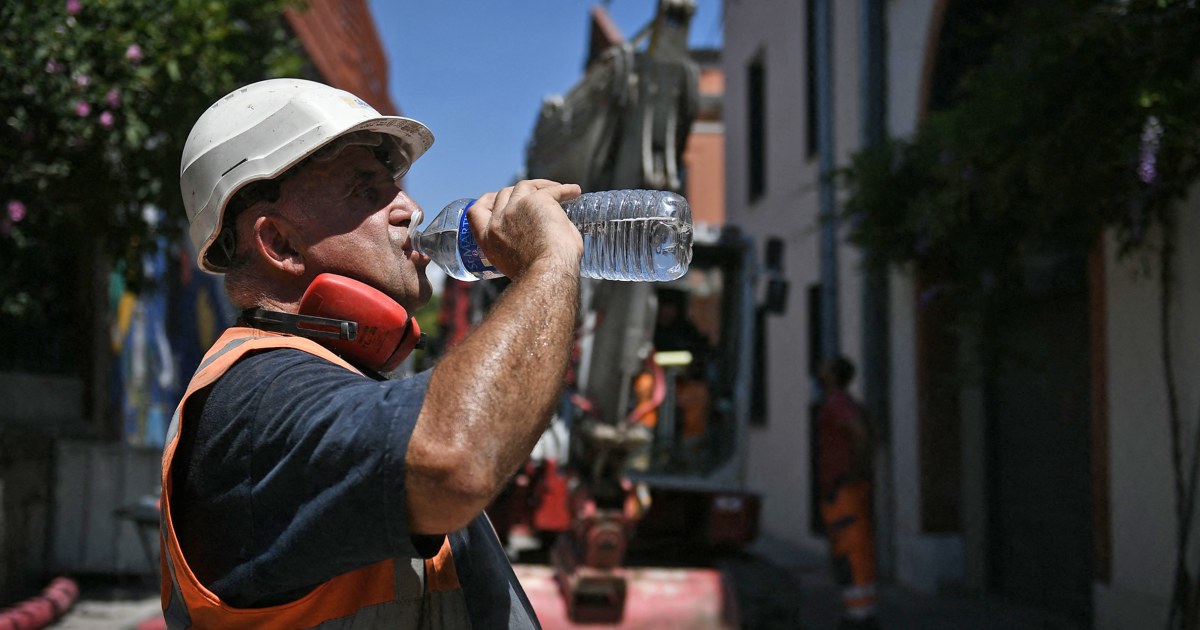
Up to 61,000 people may have died in Europe’s sweltering heatwaves last summer, according to new research, suggesting that countries’ heat-preparedness efforts are falling fatally short.
The study by researchers from European Institutes of Health estimated that more than 61,600 people died from heat-related causes in 35 European countries from late May to early September 2022, during the crisis in Europe. the hottest summer on file.
He studypublished Monday in the journal Nature Medicine, found that Mediterranean countries (Greece, Italy, Portugal and Spain) had the highest death rate based on population size.
“The Mediterranean is affected by desertification, heat waves are amplified during the summer due to these drier conditions,” said study co-author Joan Ballester, a professor at the Barcelona Institute for Global Health.

In a summer that saw European countries affected by intense forest fires and droughts, Portugal registered a maximum temperature of 47C in July – just shy of the country’s highest recorded temperature of 47.3C in 2003.
In absolute numbers, Italy, Spain and Germany saw the most lives lost due to heat, at 18,010; 11,324; and 8,173 deaths respectively.

As human-caused climate change increases temperatures, heat waves become more frequent and severe. Extreme heat can be fatal by causing heat stroke or aggravating cardiovascular and respiratory diseases, and older people are among the most vulnerable.
The researchers used epidemiological models to analyze how many deaths could be directly related to heat, of all the excess deaths that European countries recorded last summer, an excess death rate that was unusually high.
Countries like France introduced national plans to deal with the intense temperatures that followed deadly heatwaves in Europe in 2003, with early warning systems and more cooling green spaces in cities in between.
But the researchers said the high death toll last year suggests these strategies are falling short and urgently need to be strengthened.

“It is an indication to those countries that they need to review their plans and see what is not working,” said Chloe Brimicombe, a climate scientist at the University of Graz in Austria.
Germany’s Ministry of Health launched a campaign last month to guide local authorities in drawing up action plans against heat, such as greater protection for the homeless or measures such as providing more drinking water in public spaces.
“The number of deaths is increasing every year… It’s relatively easy to save them if we have a plan,” German health minister Karl Lauterbach said.


