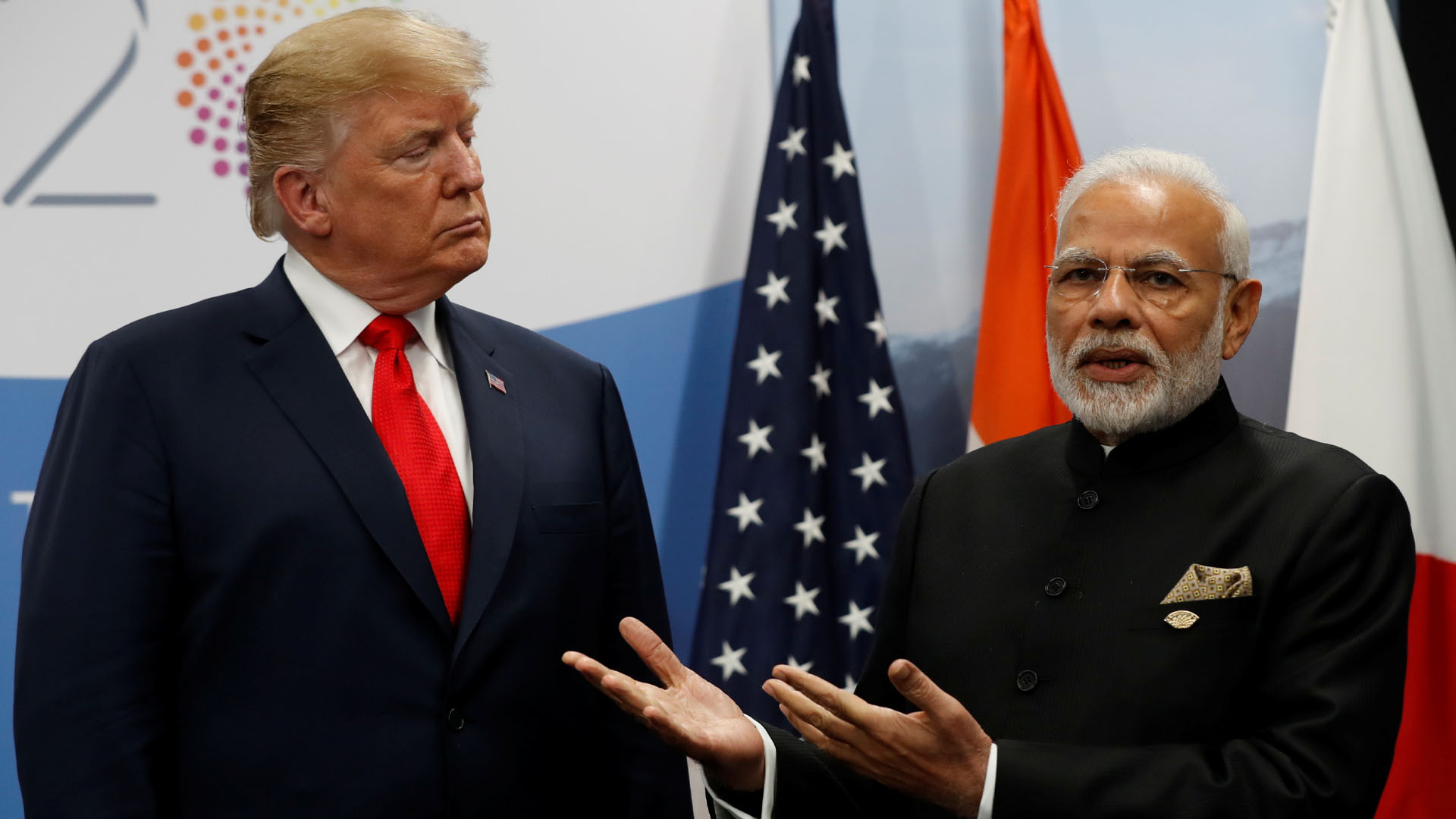
Trump’s remarks arise amidst continuous debates about the future of international commerce and the use of tariffs as a tool for securing improved conditions for U.S. companies. Despite the relatively robust diplomatic and strategic connections between India and the U.S. in recent years, economic tensions persist, particularly concerning market access, tariffs on U.S. products, and technology policies.
During his time in office and afterward, Trump consistently employed tariffs as a means to advocate for modifications in trade practices that he considers disadvantageous to the United States. His approach toward India aligns with this habitual strategy, demonstrating that even traditional partners are not immune from examination or possible economic sanctions if he perceives that U.S. interests are not being properly safeguarded.
In his recent statements, Trump reiterated his appreciation for India’s leadership and its relationship with the United States but stressed that being an ally does not grant immunity from economic accountability. According to him, trade must be “fair and reciprocal,” and any disparity—particularly if it disadvantages American industries—will be subject to correction through tariffs or other mechanisms.
The possible increase in tariffs by as much as 25% could mark a major intensification in trade disputes between the two nations. This decision might impact a broad spectrum of Indian exports to the United States, including textiles, medicines, machinery, and car parts. India, known as one of the globe’s rapidly expanding economies, has emerged as an essential trading ally for the U.S., with yearly two-way trade worth hundreds of billions of dollars.
Critics contend that raising tariffs may interfere not only with the economic connections between the two countries but also with the wider geopolitical alliance that has been deepening over the last ten years. India is pivotal in U.S. foreign policy, particularly in the Indo-Pacific area, where it is viewed as a counterbalance to China’s expanding power.
Although these issues exist, Trump’s stance demonstrates a comprehensive approach that emphasizes national economic benefits over collaborative efforts with multiple nations. His government, and possibly a future one led by him, perceives trade deficits and uneven agreements as detrimental to American production and workforce. In Trump’s view, tariffs extend beyond mere economic measures; they serve as political instruments that showcase firmness on trade and address voters’ worries regarding employment and industrial downturns.
During his presidency, the U.S. withdrew India from the Generalized System of Preferences (GSP), a program that allowed certain Indian goods to enter the U.S. duty-free. That decision was justified on the grounds that India had not provided sufficient access to its markets for American companies. In response, India imposed retaliatory tariffs on U.S. products, including agricultural goods.
This back-and-forth set the stage for a more contentious trade relationship, even as both nations continued to deepen their military and strategic collaborations. While there have been efforts on both sides to resolve trade disputes through dialogue, the underlying tensions persist.
If duties were elevated to the 25% threshold referenced by Trump, the consequences could be considerable for Indian exporters. Industries that are heavily dependent on the U.S. market might face decreased competitiveness, potentially resulting in job cuts and disturbances in the supply chain. Small and medium enterprises, which constitute a significant segment of India’s export economy, would be especially at risk.
For American consumers and businesses, the impact could also be felt through higher prices on imported goods and reduced availability of certain products. This would come at a time when inflationary pressures are already affecting the cost of living in the U.S., making any additional price hikes politically sensitive.
However, supporters of Trump’s approach argue that temporary pain is a necessary cost for long-term reform. They believe that tough trade measures are essential to reset relationships that have historically been lopsided and to compel trading partners to open their markets more fairly.
Indian officials have not issued an official response to Trump’s recent remarks, but past statements suggest that New Delhi remains committed to resolving trade issues through negotiation rather than confrontation. India has also taken steps in recent years to ease foreign investment rules, simplify regulations, and expand opportunities for international companies to operate within its borders—all in an effort to attract global partners and reduce friction.
The potential return of Trump to the presidency introduces an additional element of unpredictability to the international trade environment. Companies along the Atlantic and Indian Ocean are attentively observing political events, aware that shifts in leadership can swiftly modify the course of economic policy.
Looking ahead, the challenge for both the U.S. and India will be to balance national economic interests with the long-term benefits of a cooperative relationship. Trade is only one dimension of a multifaceted partnership that includes defense, technology, climate cooperation, and people-to-people ties.
Although Trump’s words indicate a possible change in tone, the fundamental pillars of U.S.-India ties continue to be robust. Regardless of whether tariffs are eventually enforced, the continued discussions between these countries will be pivotal in determining the economic landscape in the future.
In the meantime, industries, policymakers, and consumers will continue navigating a landscape where international trade remains subject to political calculations as much as economic logic. The suggestion of steep tariffs may be intended as a negotiating tactic, but it serves as a reminder that in today’s global economy, no relationship is immune to pressure—and no ally is beyond the reach of economic recalibration.