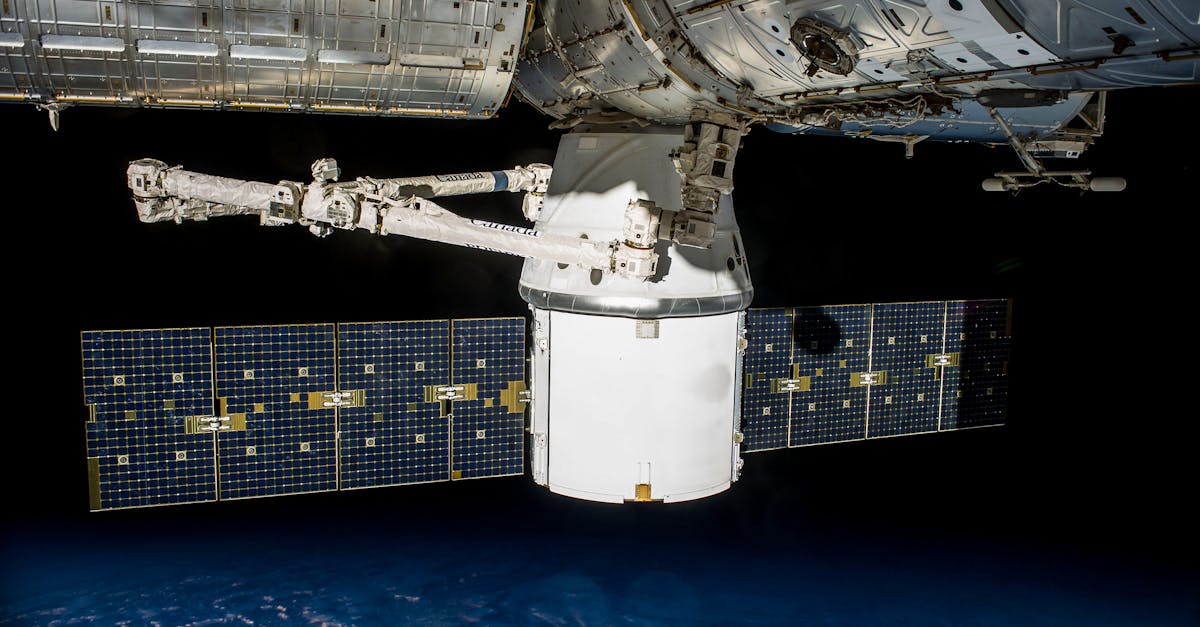
In-orbit servicing describes the capability to examine, fix, refuel, enhance, or relocate spacecraft once they have been deployed, and although it was once viewed as experimental, it is increasingly recognized as a strategic asset with broad economic, security, and environmental consequences; as orbital space grows more crowded and competitive, the capacity to sustain and modify existing satellites is transforming how governments and private entities design and manage long-term space activities.
The Economic Logic: Extending the Value of Expensive Assets
Contemporary satellites, particularly those positioned in geostationary orbit, can demand hundreds of millions of dollars for design, launch, and insurance, and their service lives are often shortened not by payload malfunctions but by depleted propellant or the slow deterioration of minor subsystems.
In-orbit servicing changes this equation. A single refueling or life-extension mission can add five to ten years of operational life to a satellite, delaying replacement and preserving revenue streams. Northrop Grumman’s Mission Extension Vehicle program demonstrated this logic by docking with aging commercial satellites and taking over propulsion and attitude control, allowing operators to continue service without interruption.
From a strategic perspective, this capability reduces capital risk and increases resilience. Satellite owners can plan constellations more flexibly, knowing that on-orbit intervention is possible if conditions change or anomalies occur.
Strategic Resilience and National Security
Space systems have become essential to national defense, enabling navigation, missile detection, communications, and intelligence, yet growing dependence increases exposure to risk as satellites confront hazards from orbital debris and electronic disruption to possible hostile acts.
In-orbit servicing provides strategic depth. Inspection spacecraft can diagnose anomalies, repair damage, or reposition assets away from hazards. Refueling enables satellites to maneuver defensively or maintain coverage during crises. For military planners, this means fewer single points of failure and greater operational continuity.
The strategic significance becomes evident through government-backed initiatives, as programs supported by the United States Space Force and defense research agencies advance robotic servicing, autonomous rendezvous, and in-orbit assembly. These emerging capabilities extend beyond routine upkeep, serving also as a form of deterrence by conveying that space assets are no longer vulnerable or easily expendable.
Sustainable Practices and the Handling of Orbital Debris
Orbital debris is one of the most pressing long-term challenges in space. Defunct satellites and fragments increase collision risk, threatening active missions and entire orbital regions. In-orbit servicing directly addresses this issue by enabling controlled end-of-life operations.
Servicing vehicles can deorbit non-functional satellites, relocate them to disposal orbits, or stabilize tumbling objects. Companies such as Astroscale have conducted missions to demonstrate debris capture and removal techniques. By making cleanup technically and economically feasible, in-orbit servicing supports sustainable use of Earth orbit.
This sustainability aspect is strategic because access to key orbits underpins global communications, weather forecasting, and economic activity. Nations that help preserve the orbital environment help protect their own long-term interests.
Enabling Faster Technological Evolution
Traditional satellites remain tied to their initial design throughout their entire service lifespan, a limitation that stands in stark contrast to the fast-moving technological advances on Earth. In-orbit servicing introduces a modular strategy that allows elements like sensors, processors, and communication units to be refreshed or replaced once in space.
This feature enables operators to quickly address new requirements, regulatory shifts, or market pressures rather than waiting years for a new satellite. For governments, it offers the flexibility to realign space infrastructure with changing security or research priorities. For commercial operators, it helps maintain an edge in rapidly evolving sectors like broadband and Earth observation.
Strategic Autonomy and Industrial Leadership
Mastering in-orbit servicing calls for sophisticated robotics, autonomous navigation, artificial intelligence, and high-precision propulsion, and these technologies in turn deliver broad spillover advantages to the wider space and robotics sectors.
Countries that lead in this domain gain strategic autonomy, reducing dependence on foreign launch schedules or replacement systems. They also shape norms and standards for on-orbit behavior, docking interfaces, and servicing protocols. This norm-setting role can influence how space is governed and used in the future.
Private sector innovation remains pivotal as startups and established aerospace companies work on servicing spacecraft, create standardized interfaces, and experiment with subscription-based in‑orbit maintenance models, while public‑private partnerships increasingly serve as an essential way to speed up capability development and distribute risk.
Challenges and Strategic Trade-Offs
Despite its promise, in-orbit servicing faces hurdles. Technical complexity remains high, especially for autonomous docking with non-cooperative targets. Legal and regulatory frameworks are still evolving, particularly around liability, ownership, and consent for servicing activities.
There are also strategic sensitivities. Technologies used for servicing can resemble those used for interference or disablement, raising concerns about misinterpretation and escalation. Transparency, confidence-building measures, and clear operational norms are therefore essential.
These challenges do not diminish the strategic value of in-orbit servicing; rather, they underscore why leadership and responsible development matter.
A Capability That Redefines Space Power
In-orbit servicing marks a transition from a throwaway model to one focused on sustaining space infrastructure, boosting economic viability, reinforcing national security, promoting environmental responsibility, and speeding up technological evolution, and as space technologies grow increasingly essential to life on Earth, the capacity to maintain, upgrade, and safeguard these orbital assets becomes a key indicator of strategic sophistication, meaning nations and companies that invest early are not merely prolonging satellite operations but are reshaping the very concept of how influence and capability are asserted in space.