

DETROIT — What was once considered a “dirty” segment of the auto industry has now become a profitable arena, with Ford leading the charge. The Dearborn, Michigan-based automaker has successfully overhauled its fleet operations, turning them into a key revenue stream. Noticing Ford’s success, General Motors (GM) and Stellantis have also restructured their fleet operations in response.
Mark Hazel, associate director of commercial vehicle reporting at S&P Global Mobility, noted, “There’s a lot more emphasis now on profitability and how the fleet can contribute to that. Automakers are strategically managing their fleets to maximize profits.”
Traditionally, fleet sales, especially to rental companies, have been considered less profitable and often used to clear excess inventory. However, Ford’s detailed financial results for its “Ford Pro” fleet division revealed a different story, showing $18.7 billion in adjusted earnings and $184.5 billion in revenue for 2021.
The impressive performance has drawn praise from Wall Street, with analysts calling Ford a “hidden gem” and comparing its profitability to Ferrari. “No other company has Ford Pro. We intend to take full advantage of it,” Ford CEO Jim Farley said during the company’s second-quarter earnings conference call on July 24.
Fleet sales account for about 18-20% of annual U.S. light-duty vehicle sales, according to J.D. Power. The aging commercial fleet, with an average age of 17.5 years compared to 12.4 years for passenger vehicles, presents significant opportunities.
Despite a slight expected decline in commercial sales this year, GM and Stellantis have stepped up their focus on the fleet market. Wolfe Research estimates Ford will lead fleet revenues with $9.5 billion this year, compared to GM’s $5.5 billion and Stellantis’ $3.5 billion.
Ford’s dominance is evident, with about 30% of the 2021 fleet new vehicle registration market, while GM and Stellantis follow with about 21%-22% and 9%, respectively. However, GM outsold Ford in some commercial vehicle segments last year.
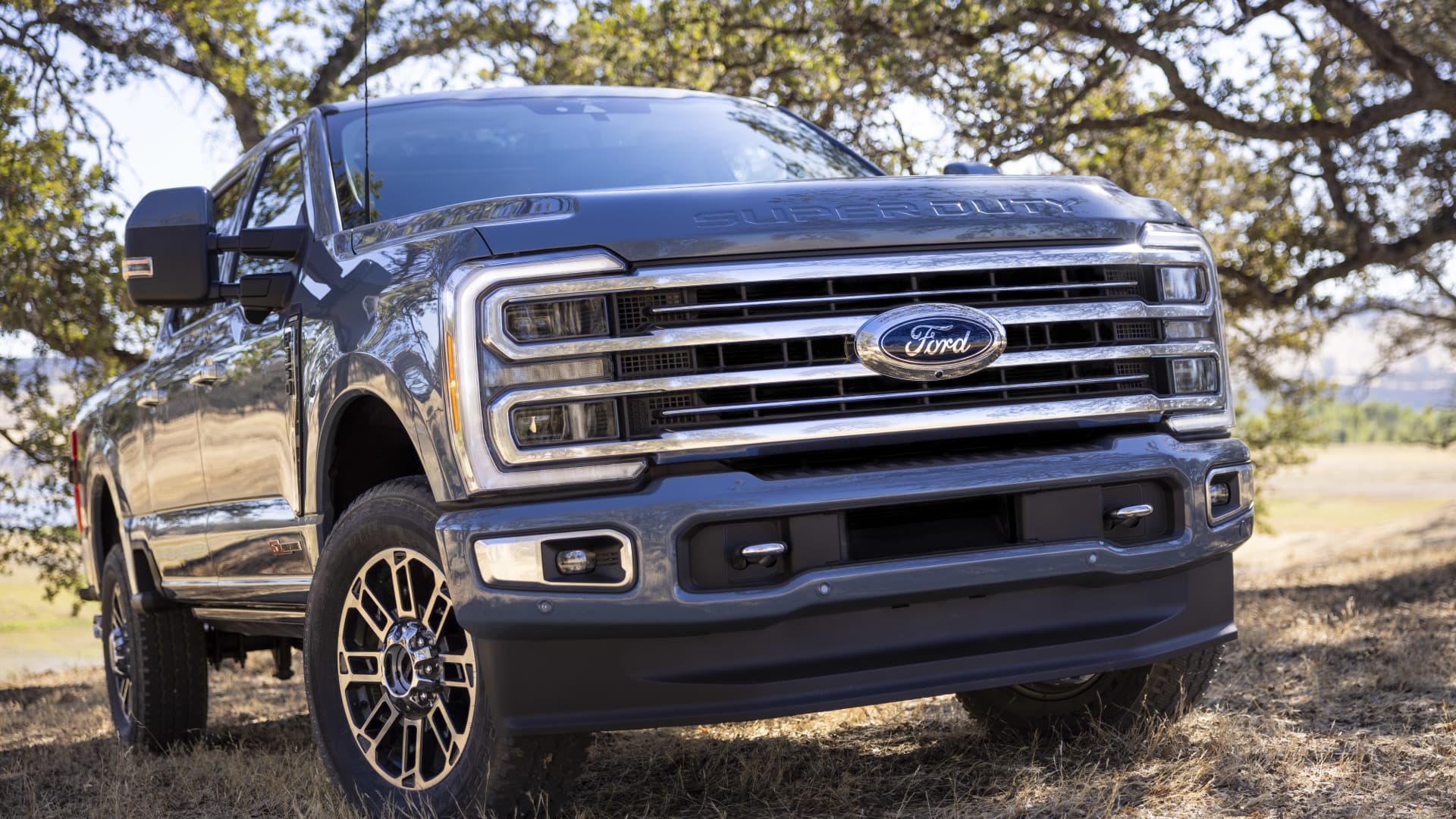
Ford’s fleet success is driven by its Super Duty trucks and Transit vans, which are an integral part of the “Ford Pro” business. This division also includes sales of midsize pickups in Europe and services for government and rental customers. Ford plans to use this base to expand into electric vehicles (EVs) and software services, targeting $1 billion in software sales by 2025.
Stellantis is also making moves, with its “Ram Professional” division targeting record profitability by 2025. The company is beefing up its product range and service offerings to grow its commercial business.
GM has rebranded its fleet business as “GM Envolve,” focusing on fleet sales, digital telematics and logistics. The restructuring aims to create a one-stop shop for fleet customers, improving profitability through comprehensive service offerings.
Electric vehicles represent another avenue for growth in fleet sales. GM’s BrightDrop division focuses on all-electric vans for last-mile deliveries, positioning itself as a key player in the EV fleet market. Ford and Stellantis are also expanding their EV offerings, underscoring the potential for significant returns despite high upfront investments.
Ford recently announced a $3 billion investment to expand its Super Duty production, including electrification plans. CEO Jim Farley outlined the company’s strategy: “We’ve moved to a multi-energy platform across all of our commercial vehicles, offering choices we believe no other competitor can match.”
As Detroit automakers revamp their fleet operations, they are preparing for a future where fleet sales generate significant revenue, with Ford currently leading the way.


